- Address:Zhengzhou, Henan, China
- Mon-Fri (8am - 6pm)
- sales@alummc.com

Advantages Of Using 3105 Aluminum Sheet For Bottle Closures
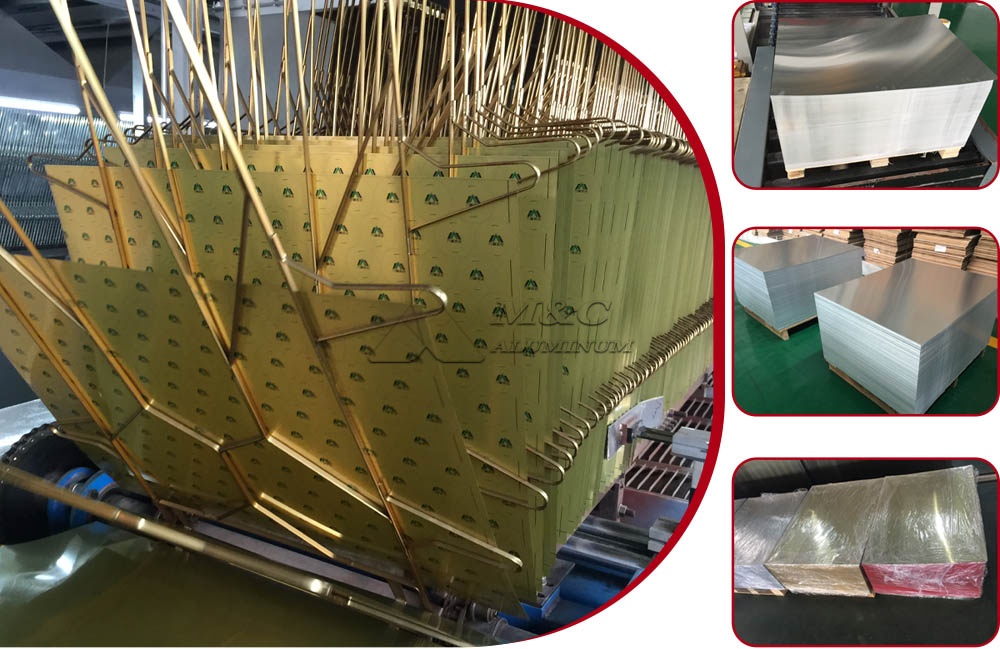
Bottle closures must protect product integrity while running reliably at high line speeds. For ROPP (roll-on pilfer-proof) caps, screw caps, and related packaging formats, closure stock is expected to combine controlled strength, stable forming behavior, uniform lacquer adhesion, and predictable surface quality. As a manufacturer of aluminum closure sheet and coil, we supply 3105 aluminum sheet for bottle closures designed for consistent conversion performance across punching, knurling, forming, and printing processes.
In this article we explain why 3105 aluminum closure sheet is widely selected, what technical characteristics matter in production, how we manufacture and control quality, and how 3105 compares with other common alloys used in caps and closures.
1) Why 3105 is used for aluminum bottle closures
Closures operate in a demanding environment that includes contact with humidity, alcohol or acidic beverages, and exposure to pasteurization or storage temperature cycles. At the same time, cap makers require tight tolerance strip, good flatness, and a stable surface for coating and printing.
AA3105 is an Al-Mn alloy with magnesium additions. In closure applications, it is typically supplied as coil or sheet in H18 or similar tempers depending on the forming design. In practice, 3105 offers a balanced property set:
Formability with controlled strength, supporting roll-on forming and thread definition without excessive cracking.
Good corrosion resistance, suitable for beverage and food packaging environments when combined with appropriate coatings.
Stable coating and printing performance, supported by uniform surface and controlled oiling.
Process stability, including predictable behavior in slitting, punching, and cap forming.
From a manufacturing viewpoint, the advantage of 3105 aluminum sheet for bottle closures is not a single parameter but the combination of mechanical consistency, surface condition, and dimensional control that can be reproduced coil after coil.
2) Material characteristics, and performance
Typical technical parameters (closure stock reference)
The table below summarizes typical ranges we produce for 3105 aluminum closure sheet. Final parameters should be confirmed against your cap design, liner system, and forming tooling.
| Item | Typical Range / Option | Notes for Bottle Closure Use |
|---|---|---|
| Alloy | AA3105 | Al-Mn-Mg family for closure stock |
| Temper | H19 (common), H18, H16 (on request) | Selected to balance formability and strength |
| Thickness | 0.18 to 0.30 mm | Commonly 0.20 to 0.28 mm for ROPP caps |
| Coil width | 300 to 1300 mm | Slit to customer width for punching lines |
| Coil ID | 505 mm, 610 mm | Per converter equipment |
| Coil OD | Up to approx. 1600 mm | Depends on thickness and logistics limits |
| Surface finish | Mill finish or pre-treated for coating | Coating line compatibility is critical |
| Flatness | Controlled for stamping and feeding | Targets agreed per application |
| Oiling | Light rolling oil, controlled | Supports coating and avoids stains |
| Edge | Slit edge, burr-controlled | Burr control reduces tool wear and dust |
| Packing | Eye-to-wall, eye-to-sky options | Moisture protection for export shipments |
Advantages in forming and sealing performance
1) Reliable roll-on forming (ROPP):3105 closure stock can be produced with stable yield and tensile behavior across the coil length and width. This helps converters maintain consistent thread forming, pilfer band formation, and knurling without frequent tool adjustments.
2) Controlled earing and anisotropy:In punching and drawing-related operations, reduced and stable earing behavior supports uniform skirt height and better material utilization. We manage rolling reductions and process controls to keep anisotropy within an application-appropriate window.
3) Corrosion resistance and coating synergy:3105 has good inherent corrosion resistance for typical closure environments. In practice, closures rely on lacquer systems and printing inks, so the critical factor is a clean, consistent surface for coating adhesion. Our process emphasizes surface cleanliness, controlled oiling, and defect prevention to support coating line stability.
3) Manufacturing capabilities, quality control, standards, and customization
Our manufacturing route for 3105 aluminum closure sheet
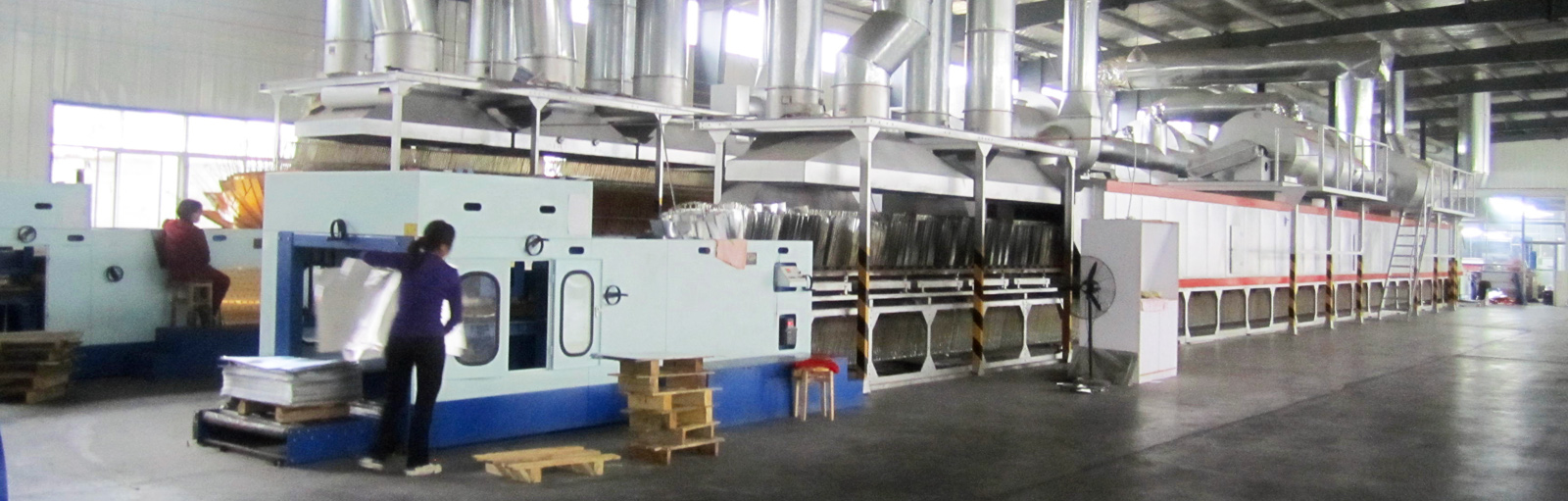
As a factory producing aluminum coil and sheet, we control the full production chain from melt chemistry to finishing operations. A typical route includes:
Melting and alloying with controlled Mn and Mg targets
Casting and scalping with defect prevention controls
Hot rolling to achieve sound structure and thickness control
Cold rolling to final gauge with property and flatness control
Annealing or temper control as required for the specified temper
Slitting to customer widths with burr control and edge quality monitoring
Inspection and packaging designed for export and coating line requirements
Quality control focus points for closure stock
Closure manufacturers typically experience problems not from nominal alloy selection, but from variation. Our QC plan focuses on reducing variation and preventing conversion issues:
Chemical composition verification per heat and batch
Thickness and width measurement with online and offline gauges
Mechanical testing (yield strength, tensile strength, elongation) by coil and lot
Surface inspection for scratches, dents, roll marks, inclusions, and stain risk
Flatness and residual stress monitoring to reduce feeding instability
Coating line compatibility controls through oiling consistency and cleanliness practices
Standards and documentation
We supply 3105 aluminum closure sheet against customer specifications and commonly referenced international practices for aluminum sheet. Documentation can include:
Mill test certificate (MTC) with chemistry and mechanical properties
Dimensional inspection records
Packing list and traceability labels
Compliance documents as required by destination markets
Customization options for bottle closure producers
Because closure forming lines and coating lines differ, we offer customization focused on conversion stability:
Temper selection: H19 or alternative per forming severity and cap geometry
Gauge optimization: balancing cap rigidity, opening torque, and weight targets
Slit width and edge requirements: burr limits and edge wave control
Surface requirements: mill finish targets and defect limits
Packing configuration: moisture barrier, corner protection, and palletization for export
4) Application scenarios and target industries
AA3105 aluminum sheet for bottle closures is used widely in:
Beverage closures: water, carbonated soft drinks, beer, wine, spirits
Food packaging closures: sauces, edible oils, condiments
Pharmaceutical and nutraceutical containers: where consistent sealing is required
Household and personal care: chemical-resistant cap designs with coated surfaces
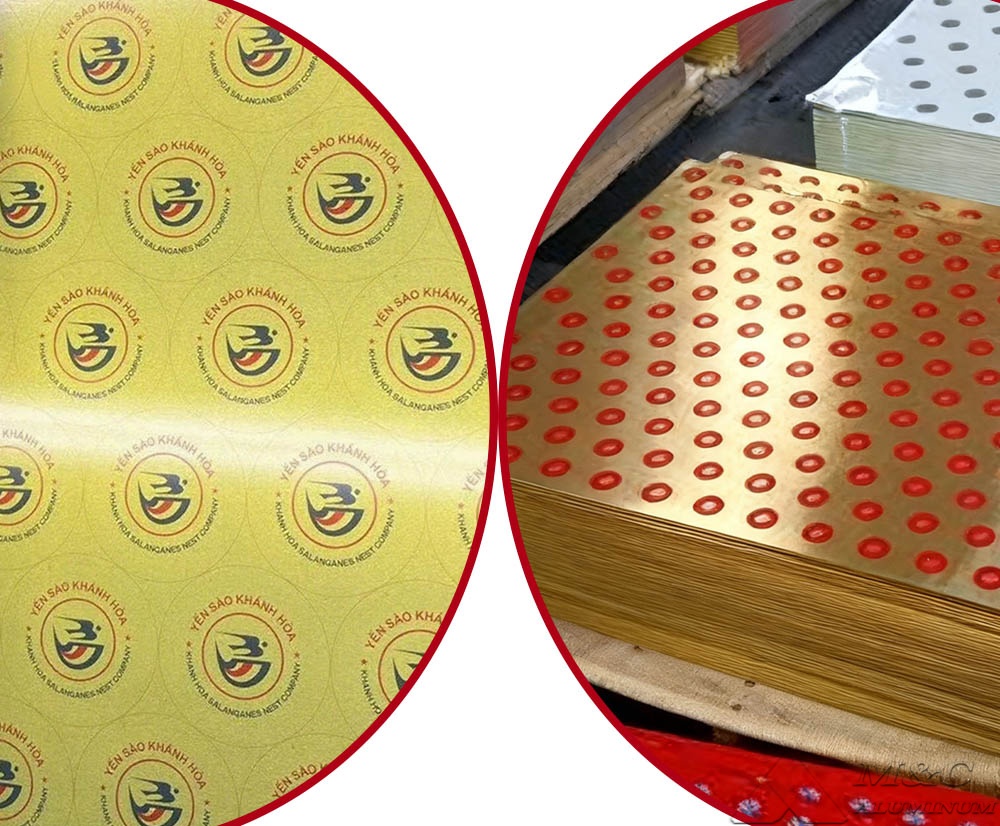
In these markets, 3105 aluminum coil for closures supports both high-volume standard caps and branded, printed closures where surface consistency matters.
5) Comparison with other alloys used for closures
Alloy selection depends on cap design, forming method, and performance targets. Below is a practical comparison from the perspective of closure stock manufacturing and conversion.
3105 vs 8011 aluminum closure stock
Forming behavior: 8011 is commonly used for packaging and can offer good formability. 3105 provides a strong balance between strength and formability for many ROPP designs.
Strength window: 3105 in H19 can provide controlled rigidity for closures that require better deformation resistance.
Supply and processing: Both alloys are widely produced, but converters often select based on established tooling and coating systems.
3105 vs 5052 aluminum sheet for caps
Strength and corrosion: 5052 has higher Mg content and can offer higher strength and good corrosion resistance, but can be less forgiving in certain forming operations depending on temper and geometry.
Cost and conversion stability: 3105 is frequently preferred when stable mass production and cost control are priorities, while still meeting performance needs.
3105 vs 3003 aluminum sheet
Similarity: 3003 and 3105 are both Al-Mn alloys.
Closure performance: 3105 includes Mg additions that can help tailor strength in closure tempers, supporting consistent forming and stiffness.
The key point is that closure performance depends on the entire system: alloy, temper, gauge, surface, coating, and forming tooling. We support customers by matching these variables rather than recommending alloy alone.
6) Conclusion: stable supply, technical support, and long-term cooperation
The advantages of using 3105 aluminum sheet for bottle caps come from a practical combination of controlled mechanical properties, reliable formability, corrosion resistance with coating compatibility, and consistent surface and dimensional quality. For cap makers, these factors translate into lower scrap, stable forming performance, and predictable coating and printing results.
As a dedicated aluminum closure sheet manufacturer, we focus on repeatability and traceability across production lots. We support customers with temper and gauge selection, slitting and packaging configuration, and quality documentation aligned with conversion requirements. For long-term programs, we can establish stable specifications, reference samples, and ongoing feedback loops between our QC team and your production line to maintain consistent closure performance over time.


Applications
Related Articles
- Printed aluminum plate for screw caps 3105, 8011
- 8011 3105 Aluminum closure sheet for Wine Screw Cap
- 8011 Aluminum foil bottle cap material
- What kind of aluminum alloy is the aluminum alloy bottle cap
- 1060 8011 Aluminum strip for injection bottle closure
- 3105 Aluminum Closure Sheet Vs 8011 Aluminum Alloy
-
Advisory Message
Alloy Grade Thickness, Application, etc.
-
Quick Reply
Quick reply within 30 minutes
-
Getting Information
One-to-one design and customized production plan