- Address:Zhengzhou, Henan, China
- Mon-Fri (8am - 6pm)
- sales@alummc.com

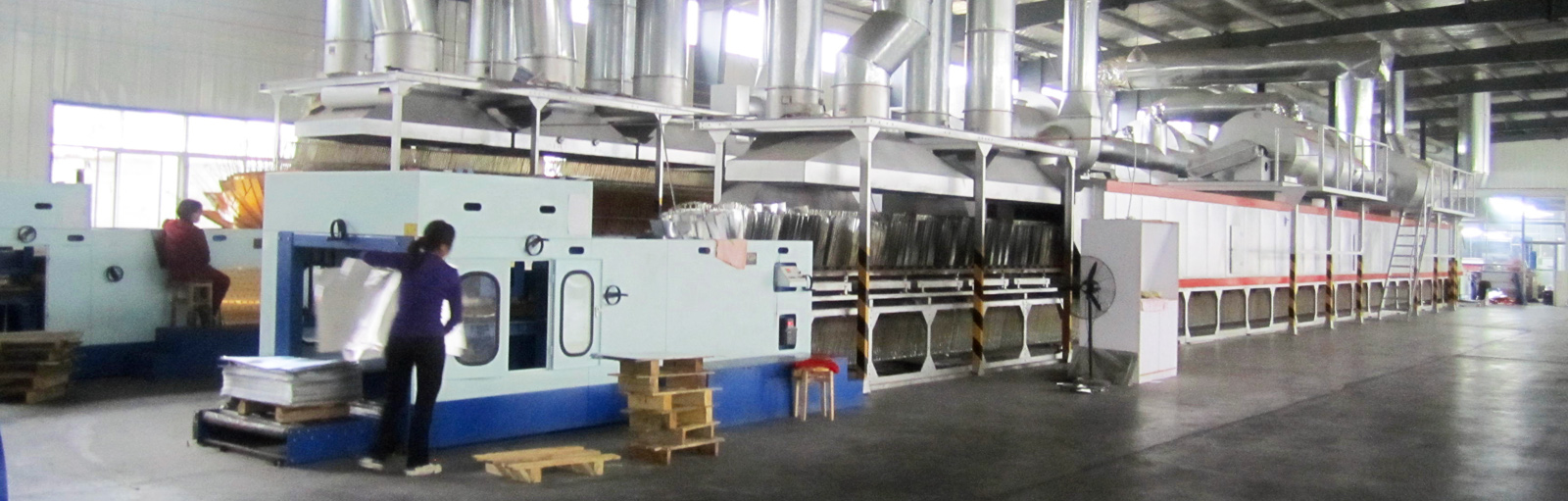
8011 H16 Aluminum Foil for Vial Seals
As a manufacturer with long-term experience in aluminum rolling and bottle cap material production, we supply 8011 H16 aluminum foil for vial seals for pharmaceutical packaging applications that require stable mechanical performance, clean surface quality, and reliable processing consistency. In vial seal production, the aluminum foil is not only a visible outer component, but also a functional material that must perform well during stamping, embossing, lacquering, and crimping.
For pharmaceutical closures, alloy selection and temper control directly influence production efficiency and final seal integrity. Among commonly used closure materials, 8011 H16 aluminum foil has become a widely adopted choice for vial seals because it combines good strength, controlled elongation, corrosion resistance, and compatibility with downstream coating and forming processes.
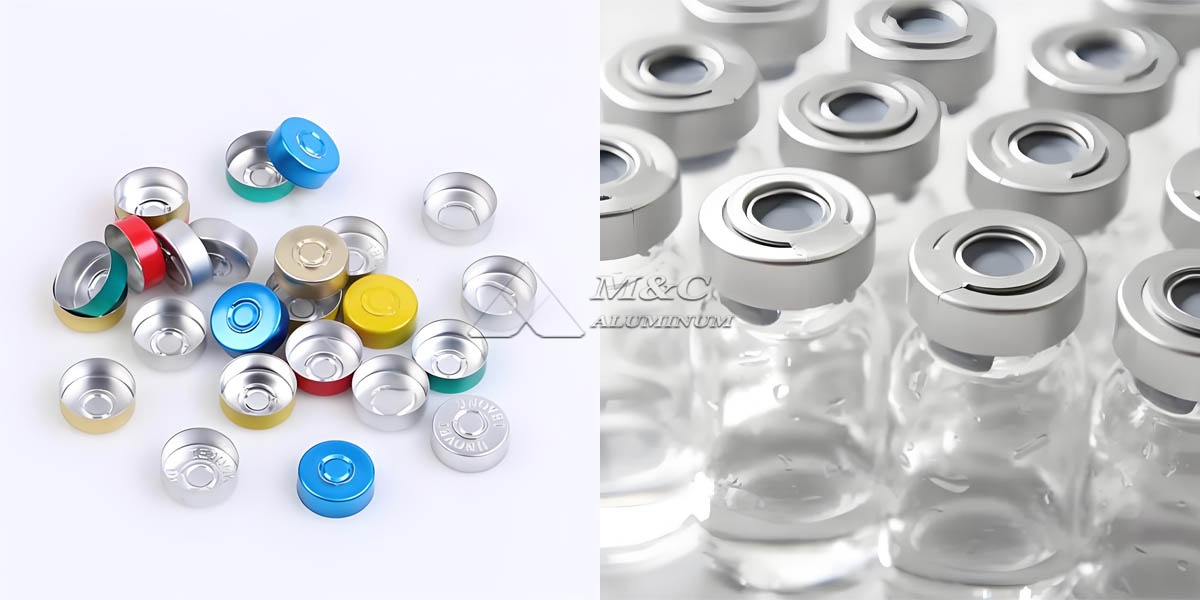
What Is 8011 H16 Aluminum Foil for Vial Seals
8011 is an aluminum alloy in the 8xxx series, primarily based on aluminum with controlled additions such as Fe and Si. It is widely used in packaging and closure applications. In the H16 temper, the material is strain hardened to a medium strength level, which helps it maintain sufficient rigidity while still allowing the forming operations required in vial seal shell manufacturing.
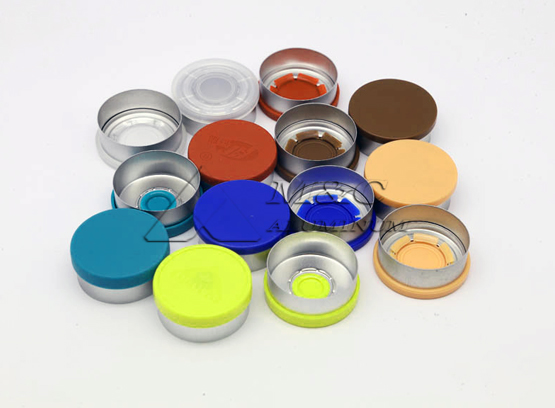
When used for vial seals, 8011 H16 aluminum foil is typically converted into aluminum disks or narrow strips, then processed into flip-off seals, tear-off seals, or other pharmaceutical cap components. The foil must meet several practical requirements:
Stable thickness tolerance for high-speed stamping
Clean surface suitable for coating and printing
Consistent mechanical properties across the coil width and length
Good earing control during deep drawing or shell forming
Adequate strength after forming and crimping
Good compatibility with sterilization and pharmaceutical packaging environments
From the manufacturing perspective, the quality of 8011 H16 aluminum foil for vial seals depends not only on chemical composition, but also on melting control, grain refinement, rolling schedule, intermediate annealing, final temper regulation, and surface cleanliness management.
Why 8011 H16 Is Used for Pharmaceutical Vial Seals
In pharmaceutical packaging, vial seals are required to protect injectable drugs and sensitive formulations. The aluminum shell functions together with a rubber stopper and glass vial, so its dimensional stability and forming behavior are critical. We use 8011 H16 for this application for several reasons.
Balanced Strength and Formability
Compared with softer tempers, H16 provides higher strength and better dimensional retention after forming. Compared with harder tempers, it still offers sufficient ductility for stamping and shell production. This balance is especially important for vial seal manufacturers running continuous production lines.
Good Surface Quality
Pharmaceutical aluminum foil must have a clean, uniform surface. A stable rolling and degreasing process helps ensure that the foil is suitable for protective lacquer, color coating, or printing. Surface defects such as oil marks, scratches, black lines, waviness, and edge cracks can affect both production yield and the final appearance of the seal.
Corrosion Resistance
8011 aluminum alloy has good corrosion resistance in common storage and transport environments. When combined with suitable coating systems, it provides reliable performance in pharmaceutical closure applications.
Suitability for High-Speed Processing
Modern vial seal production lines require aluminum foil with consistent thickness, flatness, and mechanical response. Properly produced 8011 H16 aluminum foil for vial caps and vial seals supports stable punching, drawing, embossing, and curling.
Typical Technical Parameters
The exact specification of 8011 H16 aluminum foil for vial seals depends on cap design, sealing structure, and customer processing conditions. The following table shows commonly supplied ranges.
| Item | Typical Range / Requirement |
|---|---|
| Alloy | 8011 |
| Temper | H16 |
| Thickness | 0.18 mm - 0.30 mm |
| Width | 50 mm - 1000 mm |
| Inner Diameter | 75 mm, 150 mm, 300 mm, or as required |
| Outer Diameter | According to coil weight and line requirement |
| Tensile Strength | Approx. 145 - 185 MPa |
| Elongation | Approx. 2% - 5%, depending on thickness |
| Surface Finish | Mill finish, one side or two sides suitable for coating |
| Surface Cleanliness | Free from excessive rolling oil, stains, and visible contamination |
| Flatness | Suitable for high-speed punching and stamping |
| Edge Condition | Trimmed, burr controlled |
| Coating Compatibility | Suitable for protective lacquer, color coating, printing |
| Application | Pharmaceutical vial seals, flip-off caps, tear-off seals |
| Standard Supply Form | Coil, strip, or circle/disc blank |
| MOQ | 1-3 tons |
The final values should be confirmed according to the specific vial seal design and processing route.
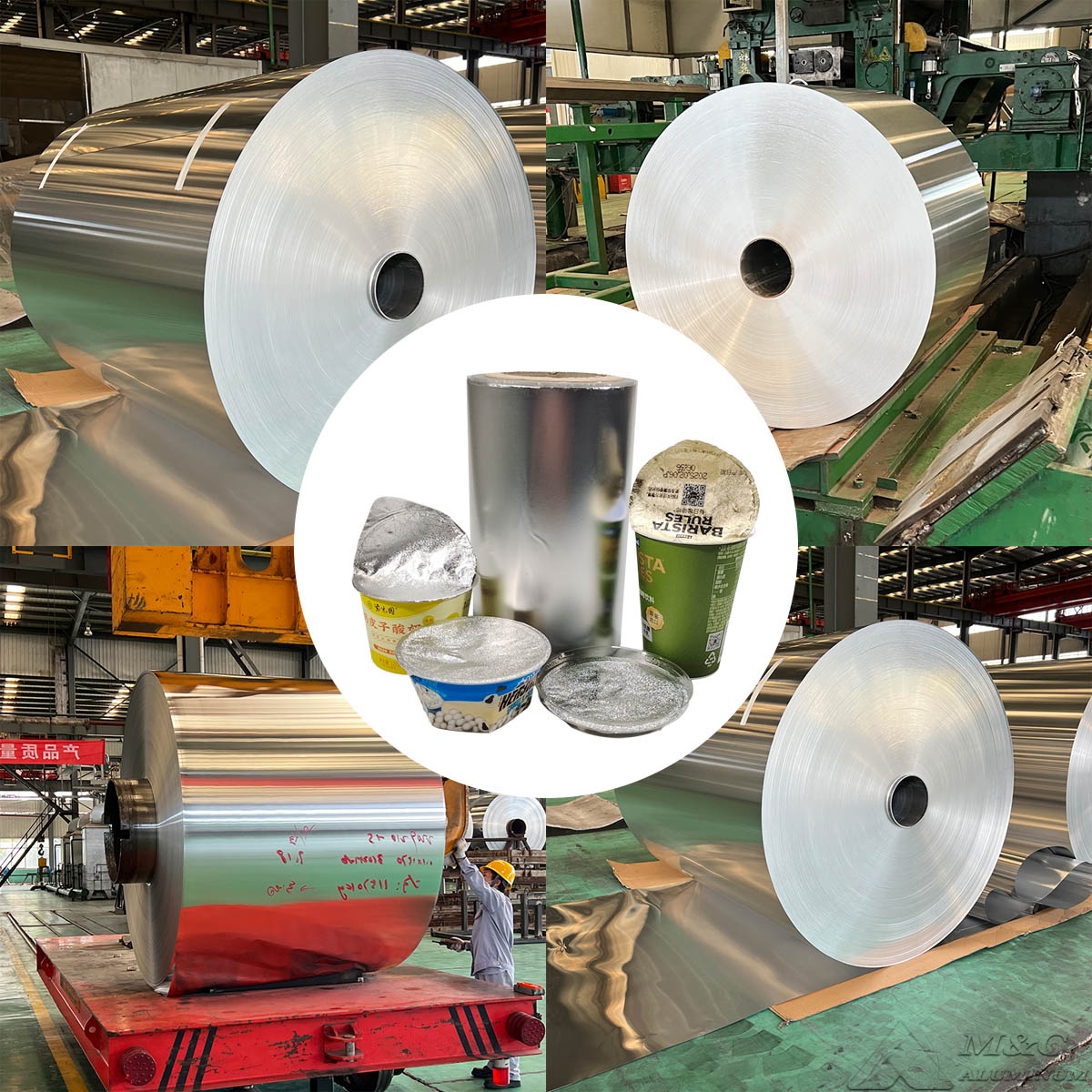
Manufacturing Considerations for Vial Seal Foil
As a factory, we pay close attention to each stage of production because pharmaceutical closure material requires more than nominal alloy compliance.
1. Melting and Composition Control
The first step is stable alloy chemistry. Tight control of Fe and Si content is important in 8011 alloy, as these elements influence strength, microstructure, and forming behavior. Clean melt practice also helps reduce inclusions, which can otherwise lead to pinholes, surface defects, or breakage during conversion.
2. Homogenization and Hot Rolling
Billet homogenization improves compositional uniformity before hot rolling. During hot rolling, temperature management affects grain structure and subsequent cold rolling response. Uniform hot band quality lays the foundation for stable foil performance.
3. Cold Rolling and Gauge Precision
For 8011 H16 aluminum foil for vial seals, thickness tolerance is a key control point. We use a rolling schedule designed to achieve the target gauge while maintaining flatness and minimizing shape defects. Stable gauge helps customers maintain die life and production efficiency during shell stamping.
4. Temper Control
H16 temper is obtained through controlled work hardening. If the temper is too soft, formed shells may lack rigidity. If it is too hard, cracking risk may increase during forming. Therefore, precise temper control is essential for pharmaceutical closure stock.
5. Surface Treatment and Cleanliness
Because vial seal foil often receives lacquer or color coating, the surface must be clean and uniform. Degreasing and inspection are important to ensure coating adhesion and visual consistency. In pharmaceutical packaging materials, cleanliness standards are more demanding than in many general industrial foil applications.
Key Performance Requirements in Downstream Cap Production
When customers convert aluminum foil into vial seals, several material characteristics are especially important.
Stamping Performance
The foil should enter high-speed punching lines without severe camber, telescoping, or shape instability. Uniform hardness across the coil improves consistency of shell dimensions.
Drawing and Forming Behavior
In vial seal shell production, material flow must remain stable. Excessive anisotropy or poor grain structure may increase earing or cracking. Proper rolling and temper control help reduce these issues.
Coating and Printing Adaptability
Many pharmaceutical vial seals require protective lacquer, color-coded tops, or printed markings. The aluminum foil surface should support these processes without coating loss, poor adhesion, or visible substrate defects.
Crimping Reliability
After the shell is assembled with the stopper and vial, the aluminum part is crimped into place. The material must retain adequate strength while accommodating forming at the skirt area.
Common Applications of 8011 H16 Aluminum Foil in Pharma Closures
Although this article focuses on 8011 H16 aluminum foil for vial seals, the material is also used in closely related pharmaceutical closure products, including:
Flip-off vial caps
Tear-off vial seals
Injection bottle seals
Antibiotic vial caps
Infusion bottle closure components
Aluminum shells for rubber-stoppered containers
Depending on the closure design, the foil may be supplied as plain mill finish, coated strip, or pre-lacquered stock.
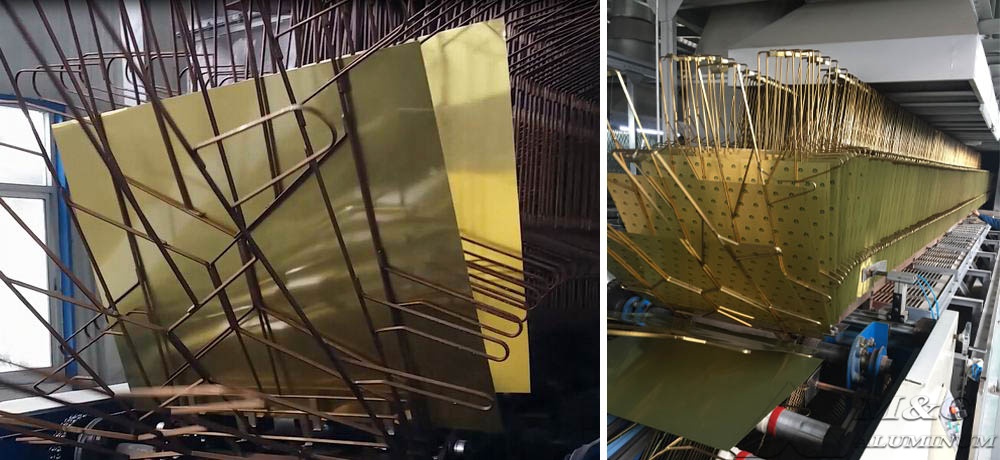
Quality Control Points We Focus On
As a direct manufacturer, we understand that closure producers need repeatable performance rather than broad material descriptions. For this reason, our production and inspection focus on the following points:
Chemical composition verification for each melt
Thickness and width tolerance control throughout the coil
Mechanical property testing by specification lot
Surface inspection for scratches, oil residue, roll marks, and stains
Flatness and shape monitoring
Edge quality inspection to reduce downstream handling issues
Coil packing suited to pharmaceutical packaging material transport requirements
For customers processing 8011 H16 aluminum foil for vial seals, consistency from batch to batch is often more important than achieving a single high property value. Stable conversion behavior supports higher line efficiency and lower scrap rates.
How to Select the Right Specification
When selecting 8011 aluminum foil for vial seals, buyers should evaluate the material in relation to the actual closure structure and manufacturing process. Important factors include:
Cap Diameter and Design
Different vial diameters require different foil gauges and forming depths. A larger seal may require adjusted strength and forming balance.
Production Equipment
High-speed stamping lines, coating lines, and shell-forming equipment may impose specific flatness and hardness requirements.
Coating System
If the foil will be lacquered or printed, surface cleanliness and coating compatibility should be confirmed in advance.
Regulatory and Cleanliness Expectations
For pharmaceutical packaging use, material traceability, clean handling, and suitable packaging conditions are important practical requirements.
Industry Trend: Higher Consistency for Pharmaceutical Packaging Materials
The pharmaceutical packaging sector continues to move toward tighter quality control, better appearance consistency, and more stable high-speed processing performance. In this context, 8011 H16 aluminum foil for vial seals is no longer evaluated only by alloy and temper designation. Customers increasingly assess the full manufacturing capability behind the material, including melt cleanliness, rolling precision, surface management, and coating adaptability.
From the factory side, this means production must be aligned with closure-making requirements rather than only basic aluminum foil standards. For vial seal stock, stable supply and process consistency are essential.
Conclusion
8011 H16 aluminum foil for vial seals is a practical and established material for pharmaceutical closure production. Its value lies in a balanced combination of strength, formability, surface quality, and processing reliability. For vial seal manufacturers, material consistency directly affects stamping efficiency, coating performance, shell integrity, and final closure quality.
As a manufacturer of aluminum materials for closure applications, we produce 8011 H16 aluminum foil with attention to alloy control, gauge precision, temper stability, and clean surface condition. These factors are fundamental for pharmaceutical vial seal production and remain the basis for dependable long-term supply.


Applications

-
Advisory Message
Alloy Grade Thickness, Application, etc.
-
Quick Reply
Quick reply within 30 minutes
-
Getting Information
One-to-one design and customized production plan