- Address:Zhengzhou, Henan, China
- Mon-Fri (8am - 6pm)
- sales@alummc.com

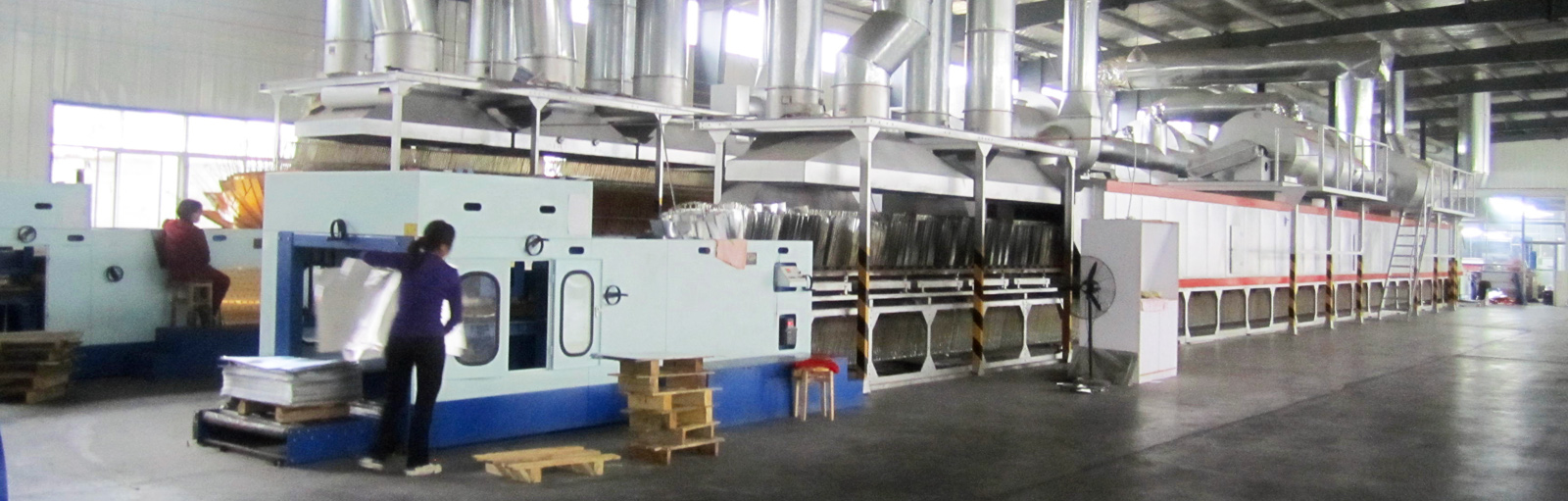
3105 Aluminum Closure Sheet Vs 8011 Aluminum Alloy
In the bottle cap manufacturing industry, material selection directly affects forming stability, sealing performance, decoration quality, and production efficiency. As a manufacturer with long experience in aluminum rolling and bottle cap material production, we are often asked about the practical difference between 3105 aluminum closure sheet and 8011 aluminum alloy. Both alloys are widely used in aluminum closure sheet applications, but they are not interchangeable in every case.
This article compares 3105 and 8011 from the perspective of a producing factory, focusing on chemical characteristics, mechanical performance, processing behavior, and typical use in bottle cap aluminum sheet production.
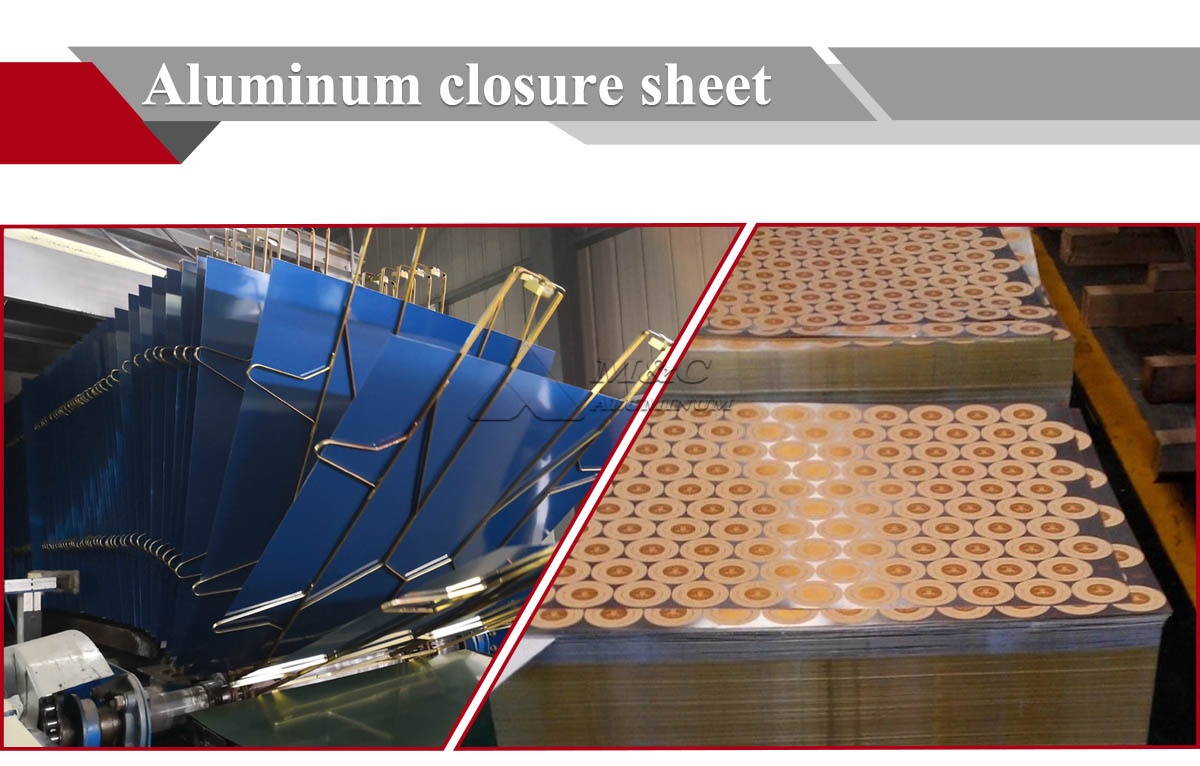
Why 3105 and 8011 Are Common in Closure Applications
Bottle caps, especially for beverage, liquor, pharmaceutical, and food packaging, require a combination of properties that is more demanding than general sheet applications. A qualified closure stock aluminum must offer:
Stable surface quality for printing and coating
Good formability for shell making and thread rolling
Proper strength after forming
Controlled earing performance during deep drawing or stamping
Consistent thickness and flatness for high-speed cap lines
Good compatibility with liners and sealing systems
Among the available alloys, 3105 and 8011 have become two mainstream options. In actual production, the better choice depends on cap type, processing route, customer equipment, and target balance between strength and formability.
Basic Alloy Positioning
3105 aluminum closure sheet
3105 is an Al-Mn series alloy with a small addition of magnesium. It is known for good strength, excellent surface performance, and reliable forming behavior. In cap stock production, 3105 is commonly used for screw caps, long caps, pilfer proof caps, and other applications requiring a good balance between rigidity and processing stability.
8011 aluminum alloy
8011 is an Al-Fe-Si series alloy. It is widely used in packaging aluminum products and is also a mature alloy for bottle cap aluminum sheet. In closure applications, 8011 is valued for its formability, process adaptability, and broad use across different cap structures, including ROPP cap material and PP cap stock.
Chemical Composition Comparison
The alloy system is the starting point for understanding the difference in performance. The following table shows typical standard composition ranges.
| Alloy | Si, % | Fe, % | Cu, % | Mn, % | Mg, % | Zn, % | Ti, % | Al |
|---|---|---|---|---|---|---|---|---|
| 3105 | 0.60 max | 0.70 max | 0.30 max | 0.30-0.80 | 0.20-0.80 | 0.40 max | 0.10 max | Remainder |
| 8011 | 0.50-0.90 | 0.60-1.00 | 0.10 max | 0.20 max | 0.05 max | 0.10 max | 0.08 max | Remainder |
From a metallurgical point of view, 3105 obtains its strength mainly through manganese and magnesium, while 8011 is more dependent on iron-silicon controlled structure. This leads to clear differences in work hardening, elongation, and final cap behavior.
Mechanical Properties for Closure Sheet
The exact property values depend on temper, thickness, and rolling route. For bottle caps, the most common tempers include H14, H16, H24, and customized closure tempers designed for stamping and thread forming.
| Alloy | Typical Temper | Tensile Strength, MPa | Yield Strength, MPa | Elongation, % | Typical Thickness, mm |
|---|---|---|---|---|---|
| 3105 | H14/H16 | 150-210 | 130-180 | 2-8 | 0.15-0.30 |
| 8011 | H14/H16/H24 | 125-190 | 110-170 | 3-10 | 0.15-0.30 |
In general production terms:
3105 aluminum closure sheet tends to provide slightly higher strength and rigidity.
8011 aluminum alloy usually offers more flexible forming response in some cap making conditions.
Final material selection must match the shell diameter, skirt design, thread depth, embossing requirement, and line speed.
Surface Quality Requirements in Bottle Cap Production
For closure stock, surface quality is not only a cosmetic issue. It also affects coating adhesion, lithographic printing, lubricated stamping, and defect control during shell punching.
As a factory producing cap stock, we normally control the following items for both 3105 and 8011:
Low surface roughness with uniform rolling texture
No oil stain, black line, dent, scratch, or edge crack
Tight gauge tolerance
Good flatness and coil winding quality
Stable wettability for coating systems
For high-end closures, especially liquor caps and decorative screw caps, both alloys can achieve strong surface results when the hot rolling, cold rolling, annealing, and cleaning processes are well controlled. However, 3105 is often preferred where higher body stiffness and premium shell appearance are required after forming.
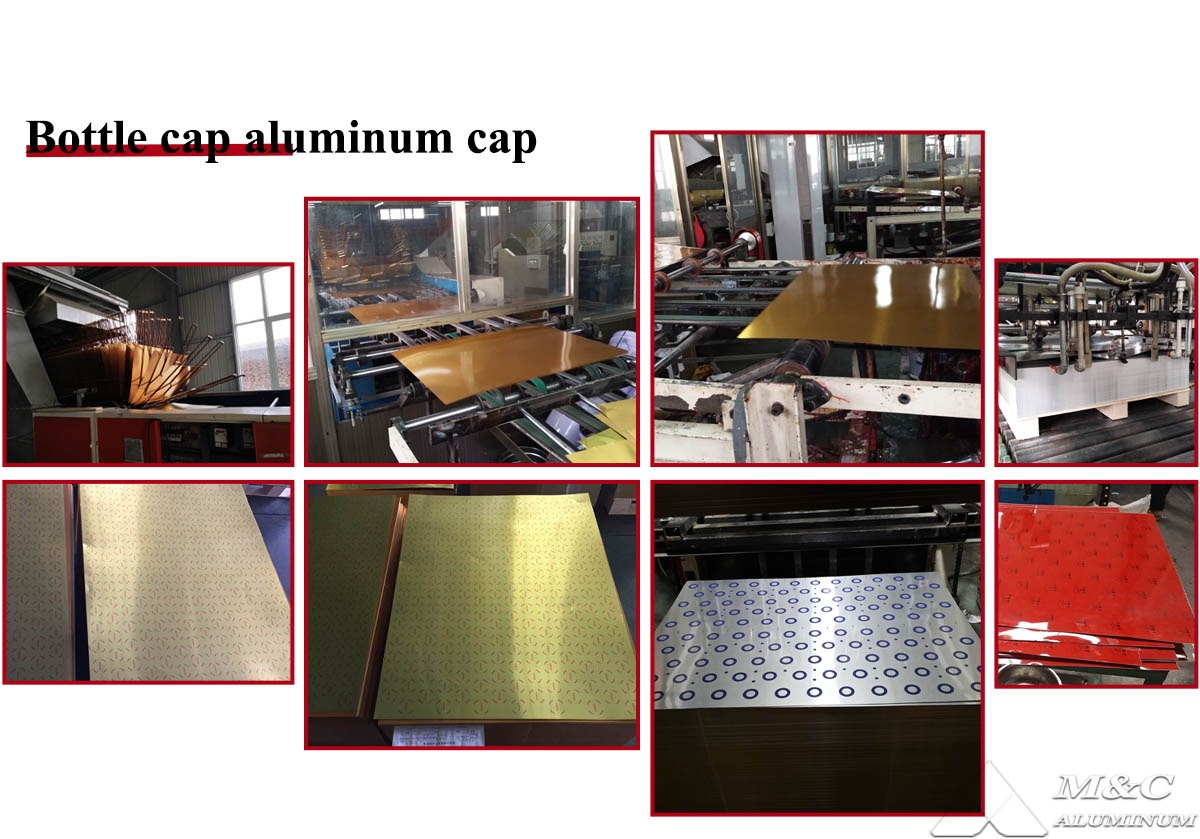
Forming Performance in ROPP and PP Closures
The most important practical comparison is how the material behaves during cap manufacturing.
3105 in closure forming
In our production experience, 3105 performs well in applications that require:
Stable shell stiffness
Good resistance to deformation during transport and capping
Clear thread definition after rolling
Better support for larger cap diameters or taller cap designs
For certain PP cap aluminum sheet applications, 3105 can help maintain cap geometry after multi-step forming. This is useful in lines where shell consistency and post-form dimensional control are critical.
8011 in closure forming
8011 is a mature choice for a wide range of cap styles. It is often selected for:
Standard pilfer proof closures
Pharmaceutical caps
Beverage closures with high-speed forming
Applications where a softer forming window is preferred
For many ROPP cap material applications, 8011 provides reliable shell forming and thread rolling when the temper is correctly matched to the equipment. It is especially practical where line conditions favor high productivity and broad process tolerance.
Process Route and Manufacturing Control
Although buyers often compare alloys only by standard datasheets, actual closure performance depends heavily on manufacturing control. From a producer's point of view, the following process steps are decisive:
Alloy melting and grain refiner control
Homogenization of cast slab
Hot rolling temperature window
Cold rolling reduction schedule
Intermediate and final annealing control
Surface cleaning and degreasing
Tension leveling and slit edge quality
For 3105 aluminum closure sheet, process control is especially important to maintain the right combination of strength and formability. If the rolling reduction or annealing path is not well designed, the sheet may become too hard for shell forming or too soft for thread retention.
For 8011 aluminum alloy, control of intermetallic distribution and final temper consistency is equally important. Stable microstructure helps reduce forming defects and supports smoother cap production.
Typical Technical Parameters for Bottle Cap Aluminum Sheet
The table below summarizes common supply parameters used in our closure sheet production.
| Item | 3105 Aluminum Closure Sheet | 8011 Aluminum Alloy Closure Sheet |
|---|---|---|
| Product form | Coil, strip, sheet | Coil, strip, sheet |
| Typical thickness | 0.15-0.30 mm | 0.15-0.30 mm |
| Typical width | 30-1250 mm | 30-1250 mm |
| Inner diameter | 405 mm, 505 mm | 405 mm, 505 mm |
| Surface finish | Mill finish, coated stock base | Mill finish, coated stock base |
| Temper | H14, H16, customized | H14, H16, H24, customized |
| Main applications | Screw caps, long caps, PP caps | ROPP caps, pharma caps, beverage caps |
| Key advantage | Higher rigidity and strength balance | Broad formability and process adaptability |
| MOQ | 1-3 tons | |
How to Choose Between 3105 and 8011
The question is not which alloy is universally better, but which alloy is better suited to the closure design and production conditions.
Choose 3105 when:
The cap requires higher rigidity after forming.
Shell appearance and structural stability are important.
The closure has greater height or more demanding geometry.
The customer needs a stronger balance between strength and decorative performance.
Choose 8011 when:
The cap line is optimized for standard 8011 aluminum alloy stock.
The application requires broad forming adaptability.
The closure type is a conventional ROPP or pharmaceutical cap.
The target is a mature, widely used material with stable industrial application.
In practice, many customers qualify both alloys but assign them to different cap models. That is often the most efficient approach for mixed product lines.
Cost and Production Considerations
Cost comparison should not be limited to metal price alone. The total manufacturing value includes:
Stamping yield
Thread rolling performance
Coating and printing pass rate
Scrap generation
Line speed stability
Finished closure rejection rate
A lower material price does not always mean lower closure cost. If one alloy gives better dimensional consistency or fewer forming defects on a specific line, it may produce lower total conversion cost. That is why we evaluate aluminum closure sheet by application testing, not by nominal specification only.
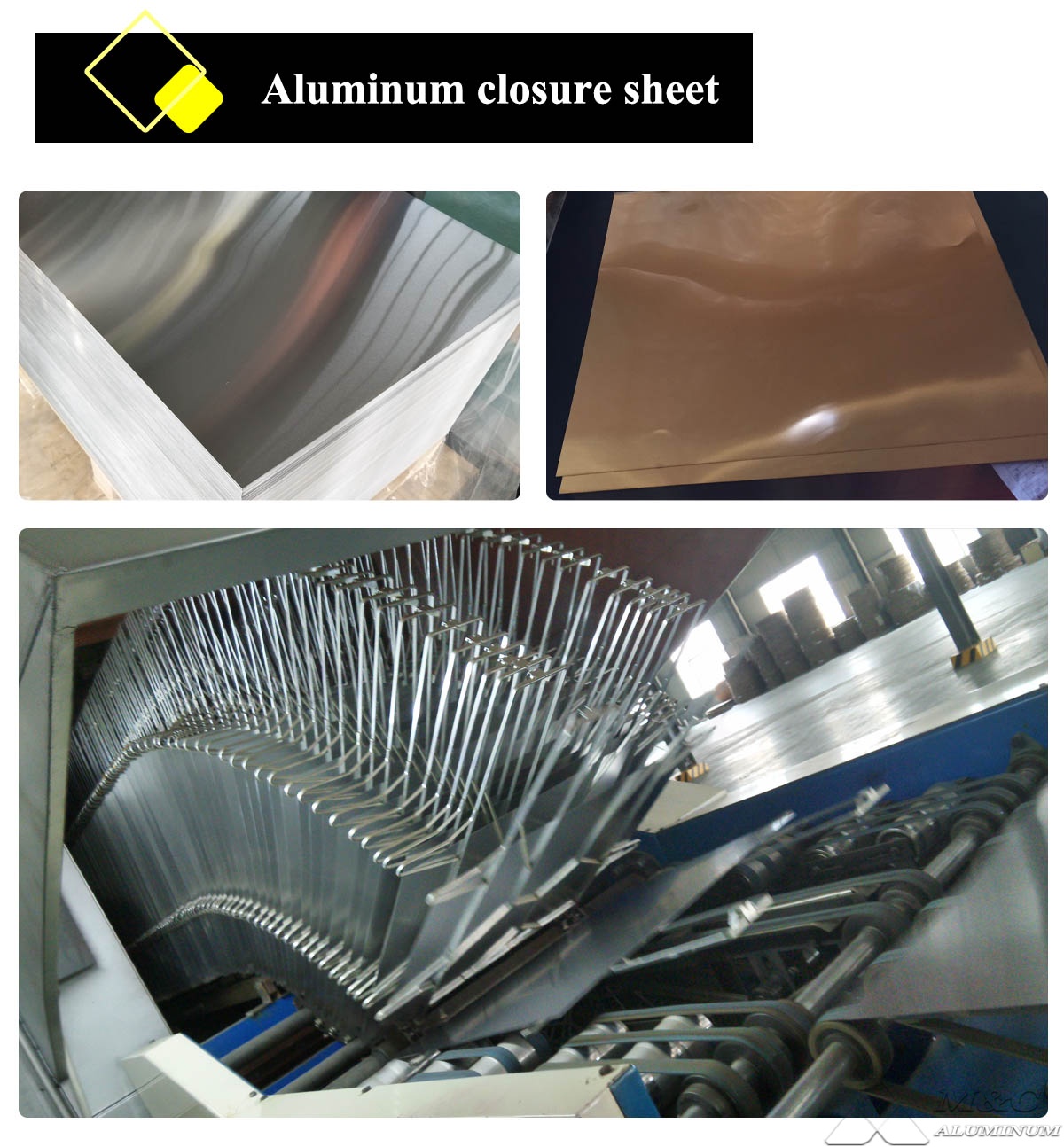
Industry Trend: Higher Consistency and Lighter Gauge
The closure market continues to move toward tighter process windows, lighter gauge designs, and better printing quality. In this context, both 3105 and 8011 remain important, but the focus has shifted from simple alloy designation to full process consistency.
Current development priorities include:
Better gauge uniformity for high-speed cap lines
Lower earing tendency
Improved surface cleanliness for advanced coatings
More stable mechanical properties coil to coil
Material optimization for lightweight closures
As a manufacturing plant, we see increasing demand for customized temper design rather than standard commodity supply. This applies to both 3105 aluminum closure sheet and 8011 aluminum alloy.
Conclusion
For bottle cap aluminum sheet, 3105 and 8011 are both proven industrial materials, but they serve different priorities.
3105 aluminum closure sheet is generally preferred where higher rigidity, stronger shell stability, and premium closure appearance are required. 8011 aluminum alloy remains a highly practical option for a broad range of conventional closure applications due to its mature processing performance and versatile forming behavior.
From a factory perspective, the final choice should be based on cap structure, forming route, temper design, and production line compatibility. When the alloy, temper, and rolling process are matched correctly, both materials can deliver stable performance in modern closure manufacturing.


Applications
Related Articles
-
Advisory Message
Alloy Grade Thickness, Application, etc.
-
Quick Reply
Quick reply within 30 minutes
-
Getting Information
One-to-one design and customized production plan