- Address:Zhengzhou, Henan, China
- Mon-Fri (8am - 6pm)
- sales@alummc.com

Properties of 3105 Aluminum Alloy for Closures
As a manufacturer of aluminum closure stock, we supply rolled aluminum sheet and strip for bottle caps, pilfer proof caps, screw caps, and related closure applications. Among the commonly used alloys in this field, 3105 aluminum alloy for closures is widely selected because it offers a practical balance of strength, formability, corrosion resistance, surface quality, and stable processability in high-speed cap production.
For closure manufacturers, material consistency is as important as nominal alloy composition. In actual production, the properties of 3105 aluminum closure sheets are closely tied not only to the alloy itself, but also to casting quality, homogenization, rolling route, intermediate annealing, final temper control, and surface cleanliness. From a factory perspective, these factors determine whether the material can perform reliably during punching, drawing, knurling, threading, lining, and external decoration.
Why 3105 Aluminum Alloy Is Used for Closures
3105 is an Al-Mn-Mg series wrought aluminum alloy. Compared with softer commercial purity grades, it provides higher strength while still maintaining the ductility required for closure forming. This combination makes 3105 aluminum closure sheet suitable for applications where the cap shell must retain its geometry, resist deformation in transport and capping, and still allow efficient forming on automated lines.
In closure production, the material must meet several practical requirements:
Stable blanking and slitting behavior
Good formability for shell shaping and thread forming
Adequate strength after forming
Good compatibility with internal and external coatings
Clean surface for printing and color coating
Resistance to corrosion from moisture, beverage environments, and storage conditions
These requirements explain why bottle cap aluminum sheet made from 3105 alloy is commonly used in wine caps, spirits closures, pharmaceutical caps, cosmetic caps, and some food packaging closures.
Chemical and Mechanical Characteristics of 3105 Aluminum Alloy
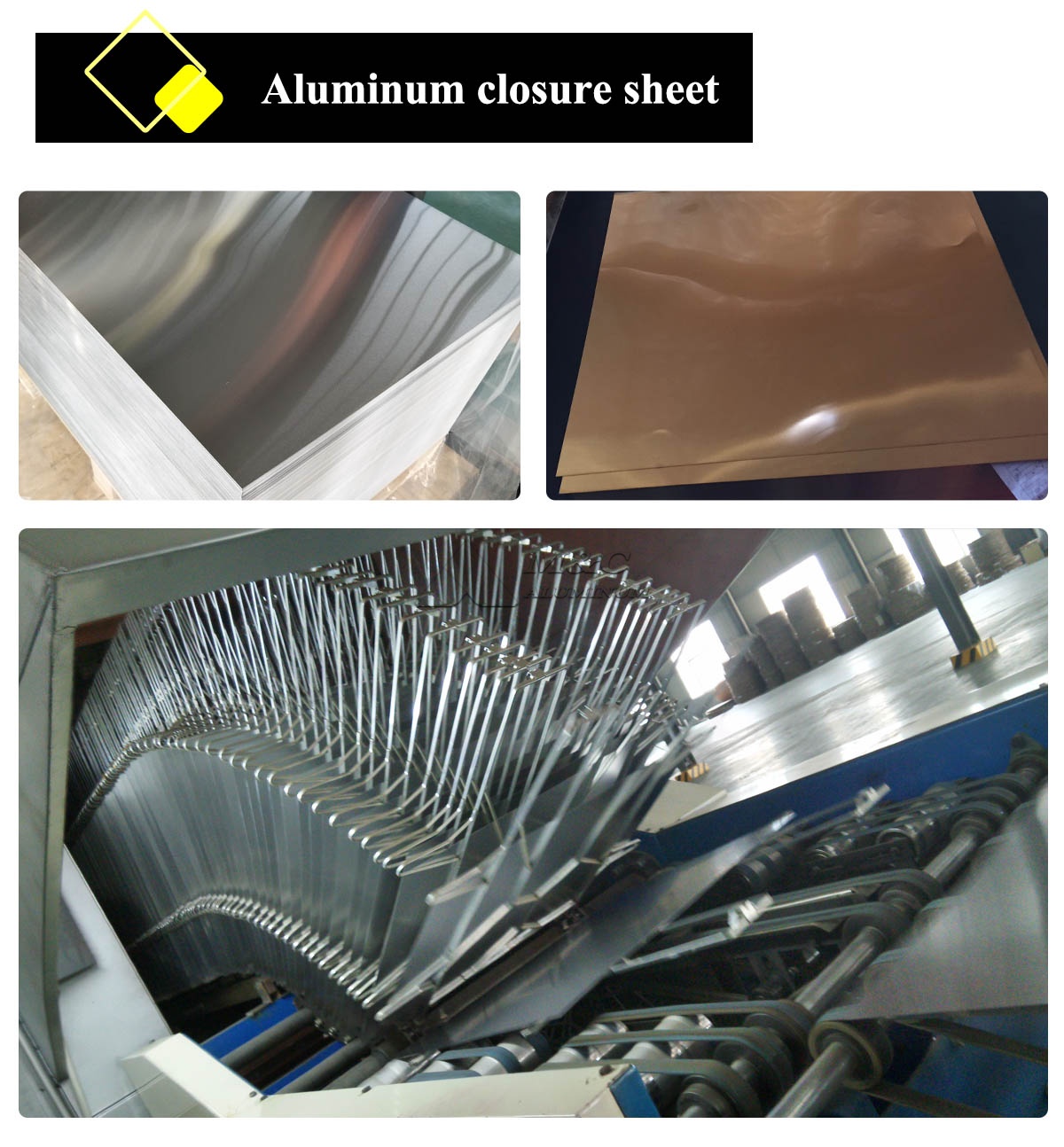
The properties of 3105 aluminum alloy for closures derive mainly from its manganese and magnesium additions. Manganese contributes to strength and structural stability, while magnesium supports moderate strengthening and helps preserve workable ductility. The alloy is not heat-treatable in the conventional precipitation-hardening sense, so its final performance is mainly achieved through rolling reduction and temper control.
Below is a typical technical overview for 3105 aluminum alloy closure stock. Exact values vary by applicable standard, temper, thickness, and customer specification.
Typical Technical Parameters of 3105 Aluminum Closure Sheet
| Item | Typical Range / Description |
|---|---|
| Alloy | 3105 aluminum alloy |
| Alloy series | Al-Mn-Mg wrought alloy |
| Common tempers for closures | H14, H16, H24, H26 |
| Typical thickness | 0.15 mm - 0.30 mm |
| Typical width | 30 mm - 1250 mm |
| Tensile strength | about 150 - 210 MPa |
| Yield strength | about 130 - 180 MPa |
| Elongation | about 2% - 10%, depending on temper and thickness |
| Surface finish | Mill finish, chemically treated, coated stock |
| Flatness | Controlled for high-speed punching and forming |
| Earing tendency | Low and controlled through rolling process optimization |
| Corrosion resistance | Good in normal packaging environments |
| Printability | Good after proper surface pretreatment |
| Coating compatibility | Suitable for epoxy, polyester, and other closure coating systems |
| Main applications | ROPP caps, screw caps, pilfer proof caps, cosmetic closures |
| MOQ | 1-3 tons |
Key Properties of 3105 Aluminum Closure Sheets
1. Balanced Strength and Formability
One of the most important properties of 3105 aluminum alloy for closures is its balanced mechanical profile. If closure stock is too soft, caps may deform during transportation, lining, or capping. If it is too hard, the material may crack during shell forming or thread rolling. 3105 alloy provides an intermediate strength level that supports both manufacturing efficiency and functional performance.
In our production practice, temper selection is made according to closure design. For example, thinner cap stock for deep forming may require a more carefully controlled temper to preserve elongation, while stock for anti-theft or pilfer proof structures may prioritize higher hardness and dimensional retention.
2. Good Surface Quality for Decoration
Closures are not only functional components but also visible packaging elements. The aluminum surface must support exterior printing, coating, embossing, and in some cases lacquer systems with strict appearance standards. A high-quality bottle cap aluminum sheet must therefore have:
Low surface oil residue
Minimal roll marks
Uniform roughness
Controlled color consistency after coating
Low defect rate for scratches, dents, and inclusions
As a manufacturer, we control molten metal cleanliness, filtration, hot rolling parameters, and final surface inspection to ensure the aluminum closure sheet performs well in decorating lines.
3. Reliable Corrosion Resistance
3105 alloy offers good corrosion resistance in normal atmospheric and packaging environments. For closure use, this is essential because caps may be exposed to humidity, condensation, filling line conditions, and long storage cycles. In addition, closures often receive internal coatings or liners, and the substrate must remain stable beneath those systems.
While bare aluminum is naturally protected by its oxide film, closure stock usually requires further coating or treatment depending on end use. The alloy's compatibility with standard coating systems is one reason 3105 aluminum alloy for closures remains widely used in global cap manufacturing.
4. Excellent Process Stability in Mass Production
Closure plants run at high speed, and even small fluctuations in material properties can affect punching yield, cap geometry, thread quality, and scrap rate. For that reason, process stability is a critical material property, even though it is not always highlighted in simple datasheets.
In manufacturing aluminum closure sheet, we focus on:
Consistent coil-to-coil mechanical properties
Tight thickness tolerance
Uniform strip shape
Controlled residual stress
Stable slit edge quality
These characteristics help closure makers maintain smooth production and reduce downtime.
Processing Considerations for 3105 Aluminum Closure Sheet
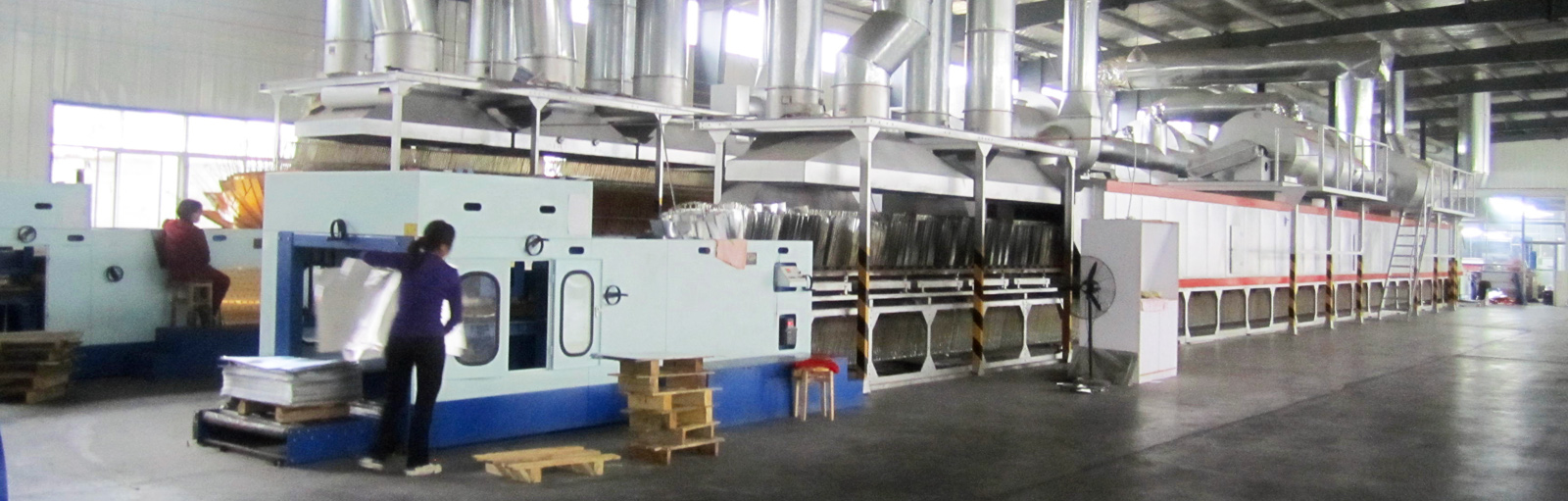
The performance of 3105 H14 aluminum or related tempers depends heavily on how the material is produced. In our factory, closure stock quality is built through the full process chain rather than at a single step.
Melting and Casting
The starting point is alloy composition control and melt cleanliness. Excess inclusions, gas content, or segregation can create later problems in rolling and cap forming. Clean metal and stable casting conditions are therefore essential for bottle cap aluminum sheet.
Homogenization
Proper homogenization reduces segregation and improves the workability of the cast structure. This step supports more uniform deformation during hot and cold rolling, which is important for achieving consistent closure material properties.
Hot and Cold Rolling
Rolling reduction and temperature control strongly influence final grain structure, strength, and anisotropy. In closure applications, low earing and good formability are important. These are directly related to rolling schedule optimization. We adjust rolling parameters according to target thickness, temper, and end-use cap geometry.
Annealing and Temper Control
Since 3105 is a non-heat-treatable alloy, final temper is achieved through work hardening and, where required, controlled annealing. This is especially important for ROPP cap material, where the cap must be formable during manufacture and still retain enough strength for sealing performance and tamper evidence.
Surface Preparation
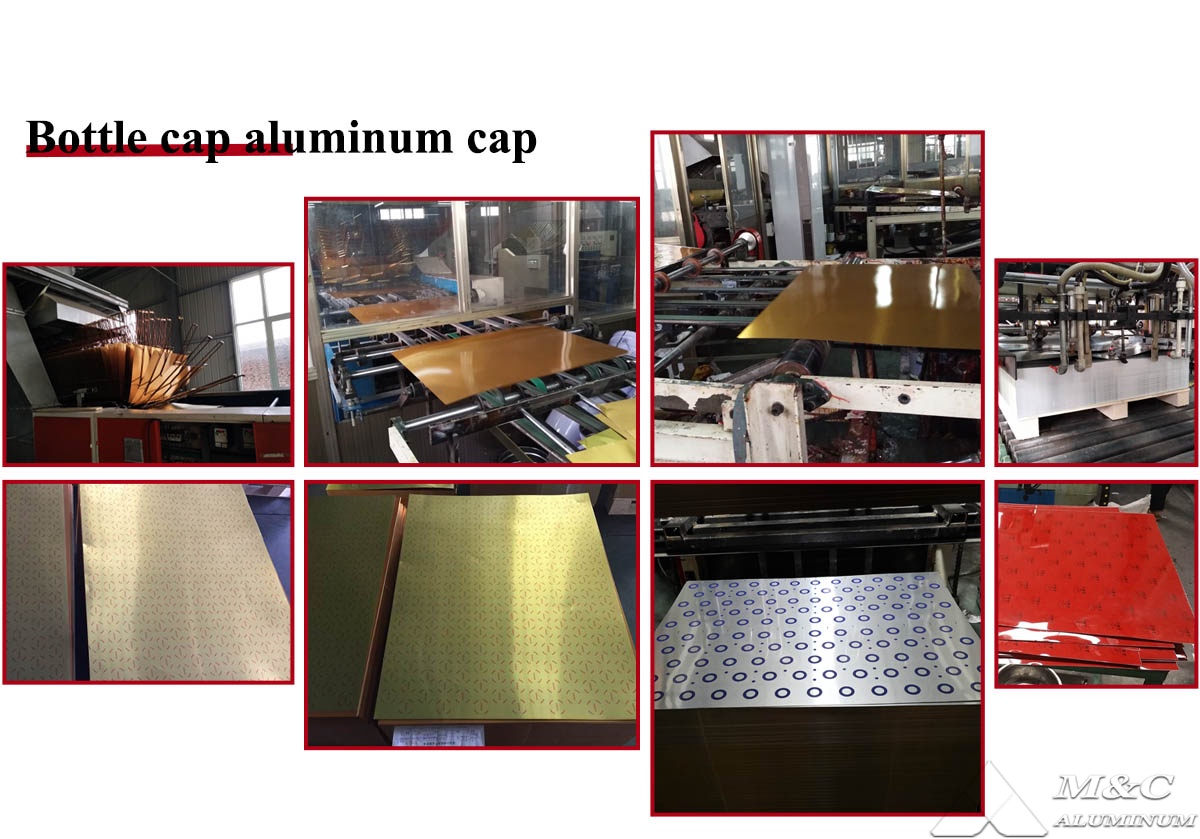
For coated closure sheet, degreasing and surface pretreatment must be stable and repeatable. Uneven surface chemistry can affect lacquer adhesion, print quality, and corrosion performance. This is a practical issue in industrial closure stock production and should be managed from the aluminum sheet stage onward.
Typical Closure Applications of 3105 Alloy
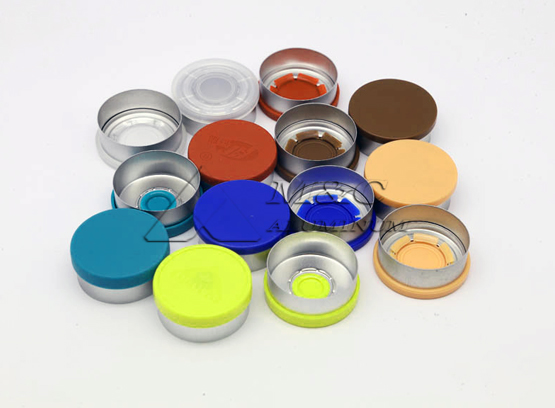
The use of 3105 aluminum alloy for closures covers a broad range of packaging segments. Common applications include:
ROPP caps for wine and spirits bottles
Pilfer proof cap aluminum for beverage and edible oil packaging
Screw cap shells for food and pharmaceutical containers
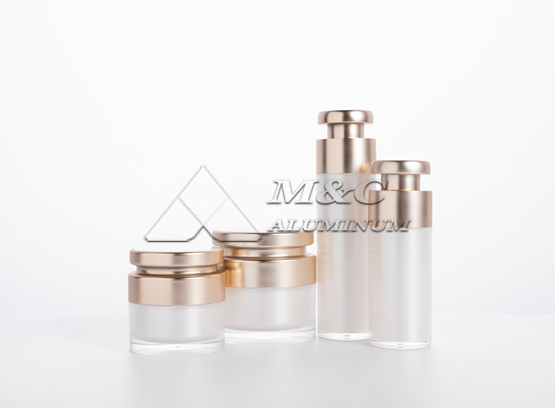
Cosmetic and personal care closures
Aluminum cap stock for specialty industrial packaging
In many of these applications, closure performance depends on the combined effects of alloy temper, cap design, liner system, and decoration process. Therefore, material selection should be matched to the actual forming route and sealing requirements rather than based on alloy name alone.
How Manufacturers Evaluate 3105 Closure Stock
From a factory perspective, evaluating the properties of 3105 aluminum alloy for closures involves more than checking basic strength. We typically assess the following points:
Thickness tolerance across the strip width
Mechanical consistency between coils and lots
Cup forming behavior and crack resistance
Edge quality after slitting
Surface cleanliness for coating and printing
Coating adhesion after curing
Resistance to denting and deformation in handling
This practical evaluation is especially important for international customers producing high-volume closures on automated lines. A material that is acceptable on paper may still cause production issues if flatness, residual stress, or surface condition are not properly controlled.
Development Trend of 3105 Aluminum for Closures
The closure industry continues to demand tighter quality control, lighter gauge material, higher line speed compatibility, and improved sustainability. In response, manufacturers of aluminum closure sheet are focusing on several directions:
Better control of surface defects for premium printing applications
Improved gauge consistency for lightweight closures
Lower earing and better forming efficiency
More stable coated stock for diversified closure designs
Increased use of recycled aluminum while maintaining process stability
For 3105 alloy, future competitiveness will depend on process refinement as much as on alloy selection. Customers increasingly expect not just standard material supply, but engineered closure stock tailored to actual cap manufacturing conditions.
Conclusion
The properties of 3105 aluminum closure sheet make it a dependable material for bottle cap and pilfer proof cap production. Its main advantages are balanced strength, good formability, reliable corrosion resistance, and stable surface quality for coating and printing. However, the real value of 3105 aluminum closure sheet depends on manufacturing control across melting, rolling, temper adjustment, and surface preparation.
As a producer of bottle cap aluminum sheet, we regard 3105 alloy not simply as a standard grade, but as a process-sensitive closure material that must be matched precisely to cap design and production conditions. When composition control, rolling accuracy, and temper consistency are properly managed, 3105 aluminum closure sheets can provide reliable performance in both large-scale industrial packaging and premium closure applications.


Applications

Related Articles
-
Advisory Message
Alloy Grade Thickness, Application, etc.
-
Quick Reply
Quick reply within 30 minutes
-
Getting Information
One-to-one design and customized production plan