- Address:Zhengzhou, Henan, China
- Mon-Fri (8am - 6pm)
- sales@alummc.com

3105 Aluminum Closure Sheet for Beverage Bottle Caps
As a manufacturer with long-term experience in aluminum rolling and closure stock production, we supply 3105 aluminum closure sheet for beverage bottle caps to cap makers and packaging manufacturers that require stable forming performance, clean surface quality, and reliable batch consistency. In beverage packaging, the closure material directly affects shell forming, liner compatibility, decoration quality, and sealing reliability. For this reason, alloy selection and process control must be aligned with the requirements of high-speed cap production.
Among commonly used closure alloys, 3105 aluminum closure sheet is widely applied in beverage bottle caps because it combines moderate strength, good ductility, strong corrosion resistance, and excellent suitability for coating and printing. When produced under controlled rolling and finishing conditions, 3105 closure stock can support efficient stamping, drawing, knurling, and thread forming while maintaining a smooth appearance and low defect rate.
Why 3105 Aluminum Is Used for Beverage Bottle Caps
3105 is an Al-Mn series alloy with a small addition of magnesium. This alloy design provides a balanced combination of mechanical strength and formability, which is especially important for aluminum bottle cap sheet applications. Beverage closures are typically formed on high-speed production lines, so the material must tolerate repeated deformation without excessive earing, cracking, or surface damage.
From a manufacturing perspective, 3105 offers several practical advantages:
Good deep drawing and stamping performance.
Stable behavior in shell forming and thread rolling.
Excellent compatibility with internal and external coating systems.
Suitable surface quality for color printing and decorative finishes.
Good resistance to beverage filling, storage, and transportation environments.
Consistent mechanical properties when supplied in tightly controlled tempers.
These characteristics make 3105 aluminum closure sheet for beverage bottle caps a standard choice for ROPP caps, pilfer proof caps, screw caps, and other formed aluminum closures used in bottled water, carbonated beverages, juice, tea drinks, and selected alcoholic beverages.
Typical Applications in Beverage Packaging
In our factory production program, 3105 closure stock is mainly supplied for the following uses:
Aluminum screw caps for bottled water.
Pilfer proof beverage caps.
ROPP cap material for juice and tea bottles.
Aluminum caps for carbonated soft drink packaging.
Decorative closure shells requiring printing and embossing.
Bottle cap stock requiring lacquered, pretreated, or mill finish surfaces.
Depending on the cap design, customers may require different thickness ranges, coil widths, temper conditions, and surface cleanliness levels. For this reason, closure sheet manufacturing is not only about chemical composition. It also depends on rolling precision, flatness control, surface inspection, and slitting accuracy.
Chemical and Mechanical Characteristics of 3105 Closure Stock
For bottle cap aluminum sheet, consistency is more important than nominal values alone. We manufacture 3105 alloy in accordance with relevant international standards and customer-specific process windows. Typical technical parameters are shown below.
Typical Chemical Composition of 3105 Aluminum Alloy
| Element | Content, % |
|---|---|
| Silicon, Si | 0.60 max |
| Iron, Fe | 0.70 max |
| Copper, Cu | 0.30 max |
| Manganese, Mn | 0.30 - 0.80 |
| Magnesium, Mg | 0.20 - 0.80 |
| Chromium, Cr | 0.20 max |
| Zinc, Zn | 0.40 max |
| Titanium, Ti | 0.10 max |
| Aluminum, Al | Balance |
Typical Mechanical Properties for Closure Sheet
| Temper | Tensile Strength, MPa | Yield Strength, MPa | Elongation, % | Typical Use |
|---|---|---|---|---|
| H14 | 150 - 190 | 130 min | 2 - 8 | General beverage caps |
| H16 | 170 - 210 | 145 min | 2 - 6 | Higher strength closure shells |
| H24 | 140 - 185 | 115 min | 3 - 8 | Forming-sensitive cap designs |
Typical Supply Specifications
| Item | Typical Range |
|---|---|
| Product form | Coil, slit coil, sheet |
| Thickness | 0.15 - 0.30 mm |
| Width | 30 - 1500 mm |
| Inner diameter | According to line requirements |
| Surface | Mill finish, pretreated, coated |
| Flatness | Controlled for high-speed stamping |
| Edge condition | Slit edge |
Actual supply condition depends on cap structure, production speed, coating route, and customer equipment.
Manufacturing Requirements for 3105 Aluminum Closure Sheet
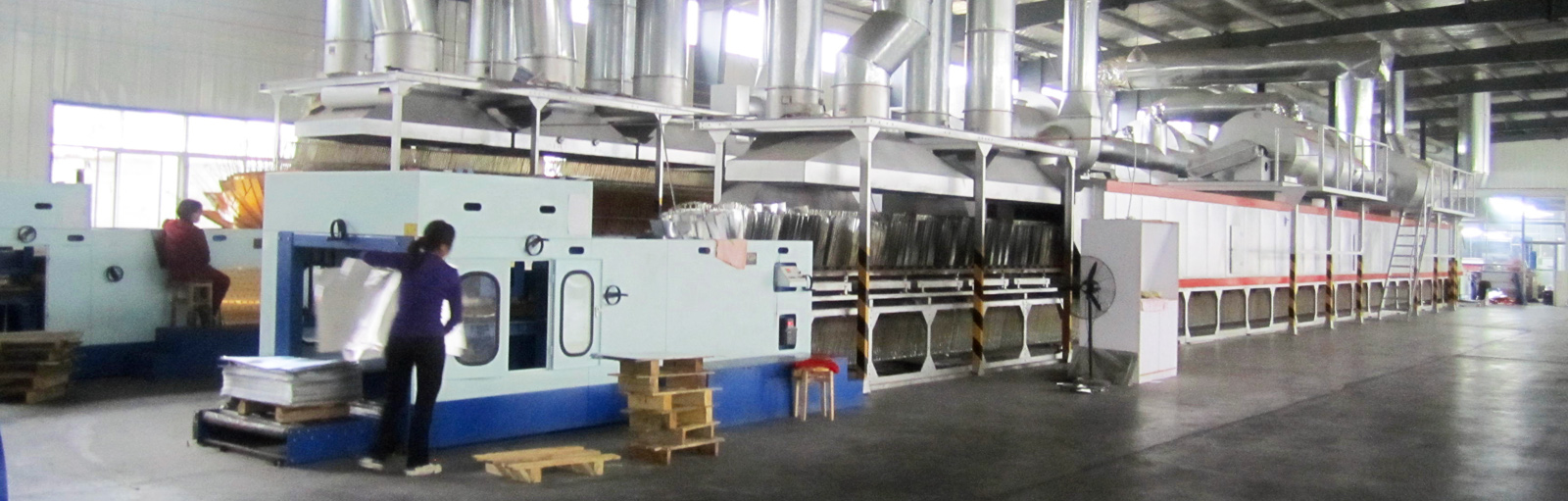
From the standpoint of a rolling mill, closure stock is a precision product rather than a standard commodity sheet. The quality requirements for 3105 aluminum closure sheet are stricter than those of many general industrial applications because cap manufacturers evaluate the material not only by basic mechanical properties, but also by its behavior during decorating and forming.
The main production controls include:
1. Melt Quality and Composition Control
We start with strict furnace management and alloy composition adjustment. The Mn and Mg balance in 3105 must be kept within a stable range to ensure both adequate strength and workable ductility. Melt purification and filtration are important for reducing inclusions that could later cause pinholes, coating defects, or forming failures.
2. Hot Rolling and Cold Rolling Stability
The rolling schedule has a direct influence on gauge tolerance, flatness, strip shape, and final grain structure. For beverage bottle caps, thickness uniformity is especially critical because cap shell height, thread geometry, and skirt performance all depend on stable metal distribution. We maintain process discipline during hot rolling, intermediate annealing where required, and final cold reduction.
3. Surface Quality Management
Closure stock requires a clean, uniform surface suitable for printing and lacquering. Rolling oil residue, scratches, dents, roll marks, stains, and waviness can affect downstream decoration and customer yield. In our plant, surface inspection is integrated into the finishing stage to ensure the sheet is fit for coating, color printing, and embossing.

4. Temper Control for Forming Performance
For 3105 H14 aluminum sheet and related tempers, the mechanical window must be narrow enough to support stable cap conversion. Excessive hardness can increase cracking risk during shell forming or knurling, while insufficient strength may reduce cap integrity after application. Therefore, temper control is one of the key points in closure stock production.
5. Slitting and Packaging for Cap Production Lines
Cap manufacturers often process narrow coils at high speed. Burr control, slit edge quality, coil winding tightness, and packaging protection all influence line efficiency. We prepare closure stock with attention to internal cleanliness and transport protection so that the material arrives ready for direct conversion.
Performance Advantages in Cap Manufacturing
When 3105 closure sheet is properly produced and matched with the correct temper, it delivers practical benefits in bottle cap manufacturing:
Smooth blanking and shell drawing.
Good resistance to skirt cracking.
Reliable thread and tamper band formation.
Stable adhesion of internal protective lacquer.
Uniform external printing appearance.
Lower risk of cosmetic defects during high-speed handling.
Good compatibility with sealing liners and compounds.
For beverage packaging, these points are not independent. Forming behavior affects decoration yield, and surface cleanliness affects coating performance. This is why a factory producing 3105 aluminum closure sheet for beverage bottle caps must manage the entire process chain, from alloy melting to finished coil inspection.
Comparison with Other Closure Alloys
In the closure market, 8011 and 3105 are among the most commonly discussed alloys. From our manufacturing experience, each has its own use profile.
8011 aluminum closure sheet is often selected for applications requiring very good formability and broad packaging adaptability.
3105 aluminum closure sheet is preferred where a balanced combination of strength, surface quality, and processing stability is required, particularly in beverage cap systems with demanding decorating or forming conditions.
The final material choice should be based on cap design, conversion equipment, coating route, and sealing requirements rather than on price alone. In practice, many customers validate the alloy by running forming trials under actual production conditions.
Key Quality Indicators Buyers Should Evaluate
When sourcing closure stock aluminum for beverage caps, buyers should focus on more than certificate data. The following indicators are usually decisive in actual use:
Thickness tolerance consistency across the coil.
Surface cleanliness for coating and printing.
Earing tendency during shell drawing.
Mechanical property uniformity from coil head to tail.
Flatness and strip shape on high-speed feeding equipment.
Edge quality after slitting.
Coating adhesion and corrosion resistance after conversion.
A reliable manufacturer should be able to discuss these points clearly and match material supply to the specific cap type, such as ROPP cap material or pilfer proof cap aluminum.
Development Trend of 3105 Aluminum Closure Sheet
The beverage packaging industry continues to move toward lighter, more efficient, and more decorative closure systems. As a result, the development of aluminum closure sheet is focused on several directions:
Tighter thickness tolerance for lighter cap designs.
Better surface control for premium printing and branding.
Improved temper consistency for faster conversion lines.
Enhanced compatibility with water-based and BPA-free coating systems.
Greater emphasis on recycled aluminum utilization with stable quality control.
For manufacturers, this means that alloy production alone is not sufficient. Future competitiveness depends on integrated control of metallurgy, rolling, surface engineering, and application support.
Conclusion
As a factory specializing in aluminum processing, we regard 3105 aluminum closure sheet for beverage bottle caps as a technical product that must perform consistently in real cap-making conditions. Its value lies in the combination of alloy design, rolling precision, temper control, and surface quality. When these factors are properly controlled, 3105 closure stock provides dependable formability, decoration performance, and sealing support for modern beverage packaging.
For cap manufacturers, selecting the right bottle cap aluminum sheet means selecting a material system that supports stable production yield and closure quality. In that context, 3105 remains an important and practical alloy for beverage bottle cap applications worldwide.


Applications

Related Articles
- The battle between aluminum bottle caps and plastic bottle caps
- 1060 3105 5052 8011 Aluminum Closure Sheet for Bottle Caps
- 8011 H14 aluminum foil for chromated bottle cap materials
- 3105 H14 / H16 Aluminum Closure Sheet for Screw Caps
- Aluminum PP cap sheet manufacturer
- Printing aluminum bottle cap material
-
Advisory Message
Alloy Grade Thickness, Application, etc.
-
Quick Reply
Quick reply within 30 minutes
-
Getting Information
One-to-one design and customized production plan