- Address:Zhengzhou, Henan, China
- Mon-Fri (8am - 6pm)
- sales@alummc.com

8011 Aluminum Foil for Beverage Caps
As an aluminum rolling manufacturer, we produce 8011 aluminum foil for beverage caps with a focus on stable alloy composition, controlled thickness tolerance, clean surface quality, and reliable forming performance. Beverage packaging places strict requirements on materials because the cap is not only a sealing component, but also a part of the consumer safety system. For this reason, aluminum foil used for caps must support printing, coating, laminating, sealing, punching, and forming operations without surface defects or inconsistent mechanical behavior.
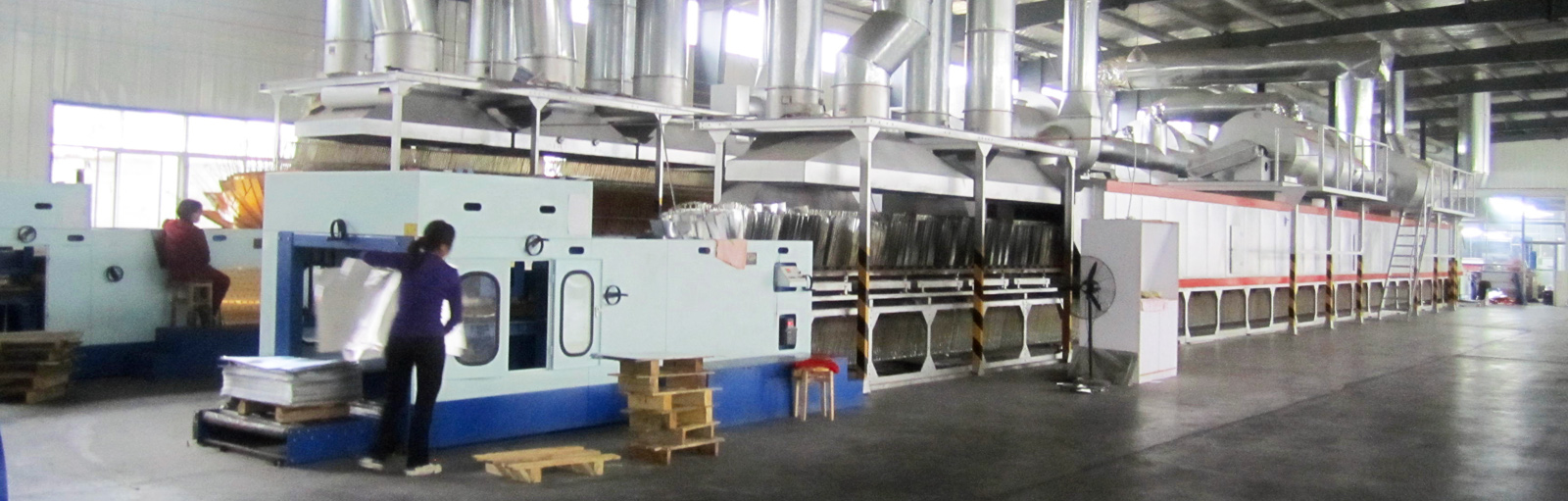
8011 aluminum foil is widely used in beverage cap structures, sealing membranes, peel-off lids, anti-counterfeit closures, and related packaging components. Compared with general-purpose foil, beverage cap aluminum foil requires more precise control of rolling oil residue, pinhole level, surface wetting, mechanical properties, and food-contact compatibility. In our production practice, the material is manufactured through melting, casting, hot rolling or continuous casting, cold rolling, foil rolling, annealing, slitting, and inspection, with process parameters adjusted according to the final cap design.
Why 8011 Alloy Is Used for Beverage Caps
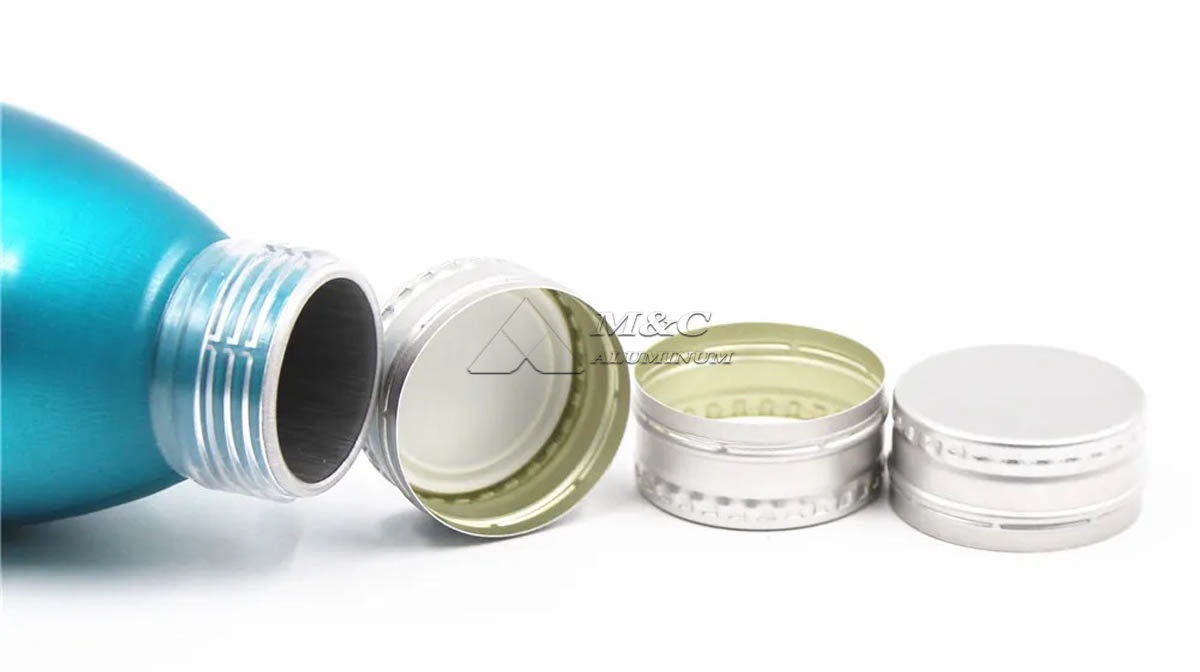
8011 is an Al-Fe-Si series aluminum alloy. The controlled addition of iron and silicon gives the foil a useful balance of strength, ductility, barrier performance, and processability. For beverage cap applications, this balance is important because the material may be printed, lacquered, laminated with plastic film, embossed, punched into discs, or sealed to a container mouth.
The main advantages of 8011 aluminum foil for beverage caps include good formability, stable tensile strength after annealing, excellent light and moisture barrier properties, and compatibility with food-grade coatings. Its natural corrosion resistance can be further improved through coating or lamination when the packaged product contains acids, carbonation, sugar, or functional ingredients. For beverage brands and cap manufacturers, consistent material properties help maintain sealing reliability and reduce line stoppage during high-speed production.
Although some rigid closure applications use 3105, 5182, or 5052 aluminum sheet, 8011 aluminum foil is especially suitable where a thinner gauge, good dead-fold behavior, heat sealing performance, or easy peeling function is required. This makes it a practical choice for dairy drinks, juices, energy drinks, water, coffee beverages, and other sealed beverage packaging formats.
Manufacturing Control in Our Rolling Plant
We manufacture beverage cap aluminum foil from selected aluminum ingots and master alloys. Before rolling, the chemical composition is tested to ensure that Fe, Si, Cu, Mn, Mg, Zn, and other elements remain within the required range. Stable chemistry is the foundation for stable mechanical properties, especially when the foil must pass through coating, printing, sealing, and die-cutting equipment.
During cold rolling and foil rolling, we control reduction rate, rolling speed, roll surface condition, oil cleanliness, and strip tension. These factors influence thickness deviation, surface brightness, flatness, and pinhole distribution. For beverage cap foil, surface cleanliness is particularly important because residual oil or fine particles can reduce coating adhesion and heat sealing strength.
Annealing is another key process. Depending on the final temper, the foil may be supplied in O, H14, H16, H18, or customized tempers. Soft temper foil is commonly selected for sealing membranes and easy-peel applications, while harder tempers may be used when higher stiffness or punching accuracy is required. Our annealing process is designed to achieve uniform mechanical properties across the full coil width and length.
Typical Technical Parameters
The following table lists typical specifications for 8011 aluminum foil for beverage caps. Final values can be adjusted according to customer drawings, coating structure, sealing method, and applicable standards.
| Item | Typical Specification |
|---|---|
| Alloy | 8011 |
| Temper | O, H14, H16, H18, or customized temper |
| Thickness range | 0.006 mm to 0.200 mm, commonly selected according to cap structure |
| Width range | 100 mm to 1600 mm, slit to order |
| Coil inner diameter | 76 mm, 152 mm, 300 mm, or as required |
| Tensile strength | Approx. 80 MPa to 165 MPa, depending on temper and thickness |
| Elongation | Typically 2 percent to 18 percent, depending on temper |
| Surface | One side bright, double side bright, or matte finish by agreement |
| Thickness tolerance | Controlled according to order specification and rolling standard |
| Wettability | Suitable for printing, coating, and lamination after agreed surface treatment |
| Pinhole control | Inspected according to thickness grade and application requirement |
| Edge condition | Trimmed, clean edge, suitable for slitting and die-cutting |
| Packaging | Export wooden pallets, moisture protection, coil eye to sky or eye to wall |
Surface Quality Requirements for Cap Production
For beverage cap production, the surface of 8011 aluminum closure foil must be clean, uniform, and free from defects that could affect printing, coating, or sealing. Typical unacceptable defects include heavy oil stains, corrosion spots, wrinkles, serious roll marks, holes, black lines, inclusions, and edge cracks. Minor surface characteristics are evaluated according to the actual end use, but beverage packaging generally requires a high and stable surface grade.
We pay close attention to degreasing performance and surface tension because many cap manufacturers apply primer, heat-seal lacquer, epoxy coating, vinyl coating, or laminated films. Poor surface wetting can cause coating pinholes, delamination, incomplete printing, or weak sealing strength. By controlling rolling oil quality, final rolling parameters, and annealing atmosphere, we reduce the risk of adhesion problems in later processing.
Flatness is also important. Foil that is too wavy or has uneven tension may cause feeding deviation during printing, laminating, or die-cutting. In our slitting workshop, coil tension and edge quality are controlled to help customers maintain stable production on high-speed lines.
Performance in Beverage Cap Manufacturing
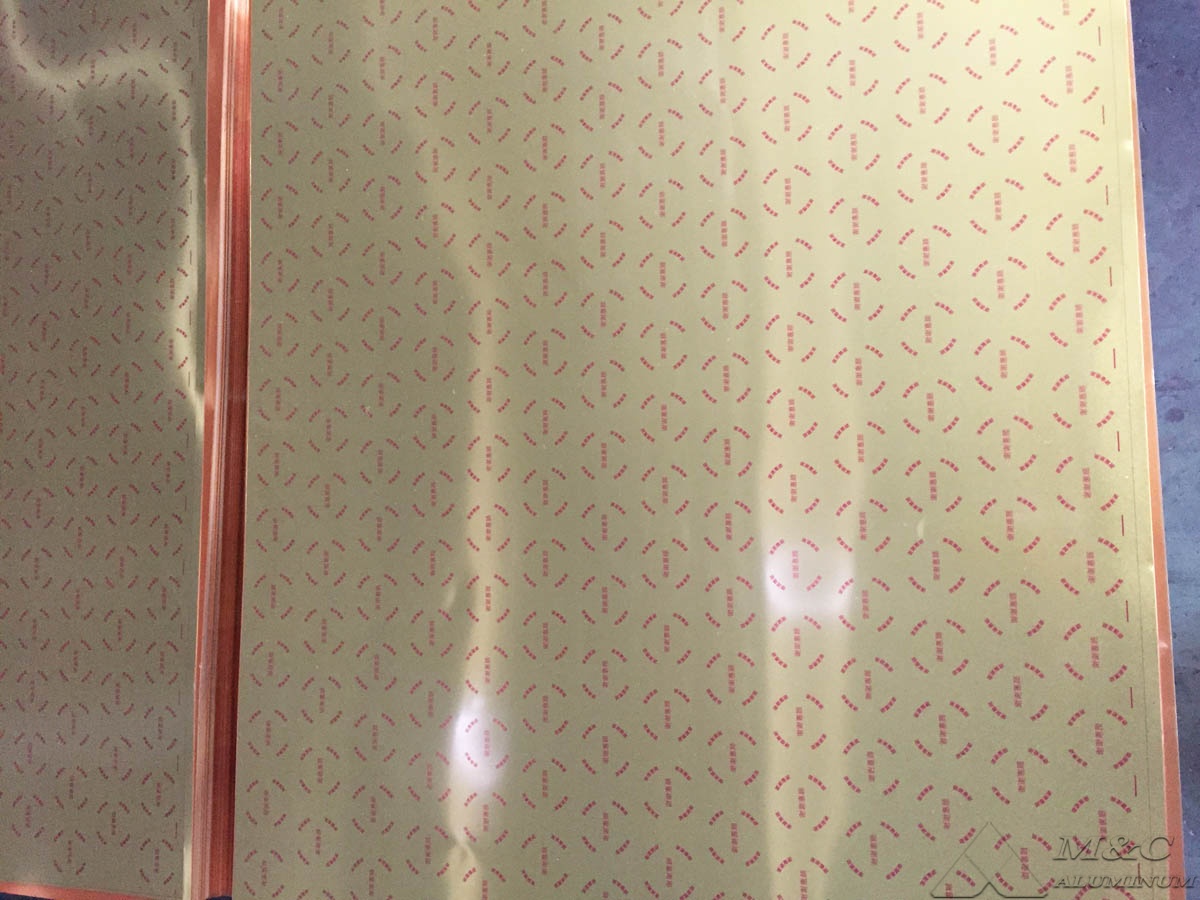
8011 aluminum foil for beverage caps must perform reliably through several downstream processes. In printing, the foil should accept ink or coating layers evenly. In lacquering, it should provide stable adhesion and resist blistering after drying. In lamination, it should bond with polymer films without delamination. In punching and forming, it should maintain clean edges and avoid excessive burrs. In sealing, it should support stable heat transfer and sealing strength.
For peel-off caps and sealing membranes, easy opening performance is often a key requirement. The foil must be strong enough to protect the beverage before opening, but not so hard or brittle that it tears unpredictably. This requires correct temper selection and careful control of elongation. For embossed or logo-printed caps, the material must also maintain surface integrity after deformation.
Different beverage products have different chemical environments. Carbonated drinks, fruit juices, dairy beverages, tea drinks, and functional beverages may require different coating systems. As a base foil manufacturer, we coordinate foil properties with the coating or lamination structure specified by the customer, so that the final cap system can meet sealing, barrier, and shelf-life requirements.
Comparison with Other Aluminum Closure Materials
In the closure industry, several aluminum alloys are used. 3105 aluminum closure sheet is often selected for roll-on pilfer-proof caps because it offers suitable strength and formability at sheet thicknesses. 5182 aluminum sheet is common in some ring-pull or can-end related applications due to higher strength. 8011 aluminum foil is different because it is typically used where a thinner foil structure is needed, especially for sealing membranes, lidding foil, and flexible cap components.
This distinction is important for material selection. If the application requires deep drawing into a rigid screw cap, a closure sheet alloy may be more suitable. If the application requires heat sealing, easy peeling, light barrier, or laminated foil construction, 8011 aluminum foil for beverage caps is often more appropriate. Our technical team reviews cap drawings, processing route, and final packaging environment before recommending thickness, temper, and surface requirements.
Quality Inspection Before Delivery
As a manufacturer, we carry out inspection throughout the production process instead of relying only on final coil testing. Incoming raw materials are tested for chemical composition. During rolling, thickness is monitored with gauge control systems, and coil surface is checked at each key stage. After annealing and slitting, finished coils are inspected for appearance, width, thickness, mechanical properties, pinholes, edge quality, and packaging condition.
Typical inspection items include tensile strength, elongation, thickness deviation, width tolerance, surface cleanliness, coil shape, pinhole count, and oil residue. For orders involving food packaging, we can align production and documentation with agreed food-contact requirements, coating compatibility requirements, and customer-specific inspection standards. Traceability is maintained by coil number, production batch, and test records.
Reliable packaging is also part of quality control. Beverage cap aluminum foil is sensitive to moisture, impact, and edge damage during transportation. We use moisture-proof wrapping, protective end covers, wooden pallets, and clear coil identification. Proper packaging helps ensure that the foil reaches the cap manufacturer in a condition suitable for direct processing.
Application Areas
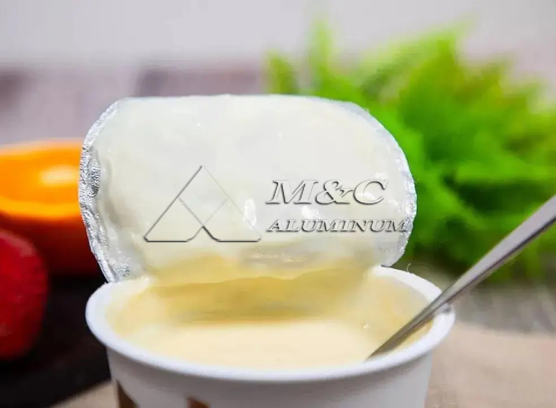
8011 aluminum foil for beverage caps is used in a range of packaging formats where sealing performance, hygiene, and appearance are required. Typical applications include foil sealing membranes for bottled water, juice and tea drink caps, dairy beverage lidding foil, coffee and functional drink closures, induction sealing liners, laminated cap foil, printed foil caps, and easy-peel beverage container seals.
In these applications, the foil functions as a barrier against oxygen, water vapor, light, and external contamination. It also supports branding through printing and embossing. Because beverage packaging lines often run at high speed, uniform coil quality can directly influence output efficiency, rejection rate, and sealing consistency.
Sustainability and Recycling Considerations
Aluminum is widely recognized for its recyclability. In beverage packaging, using an aluminum foil structure can help reduce material thickness while maintaining barrier performance. Production scrap generated during cap punching or slitting can also be collected and recycled. In our plant, process optimization focuses on improving yield, reducing oil consumption, controlling energy use in annealing, and increasing material utilization.
For customers developing lighter beverage caps, 8011 aluminum foil offers opportunities for downgauging when the cap structure, coating, and sealing process are properly matched. However, downgauging should be evaluated carefully. The material must still meet sealing strength, puncture resistance, peeling behavior, and shelf-life requirements.
Ordering Guidance for 8011 Aluminum Foil for Beverage Caps
To manufacture suitable 8011 aluminum foil for beverage caps, we recommend confirming several details before production: final cap type, foil thickness, width, temper, coating or lamination process, sealing temperature, printing requirement, pinhole standard, coil inner diameter, and packaging method. If the foil will be used with aggressive beverage contents, the coating system and corrosion resistance requirement should also be specified.
A clear technical specification helps us control production more accurately and reduces adjustment time during customer trials. For new cap projects, trial coils can be produced under defined parameters, then optimized according to coating adhesion, punching quality, sealing strength, and opening performance.
Conclusion
8011 aluminum foil for beverage caps is a specialized packaging material that combines barrier protection, formability, surface compatibility, and stable processing performance. Its successful use depends not only on alloy selection, but also on rolling control, annealing quality, surface cleanliness, slitting precision, and inspection discipline.
As a factory with long-term experience in aluminum processing and bottle cap materials, we manufacture 8011 aluminum foil according to practical cap production requirements. By controlling the material from melt to finished coil, we provide beverage cap manufacturers with consistent foil for sealing, printing, laminating, punching, and forming applications.


Applications
Related Articles
- Premium 3105-H16 Aluminum Sheet, Ideal for Bottle Cap Stamping Blanks
- Standards for aluminum plates for bottle caps
- Aluminum closure sheet for cosmetic sealing 1070 1080
- Aluminum bottle cap materials that are everywhere in life
- Best Aluminum Alloys for Wine Bottle Caps
- 1235 Aluminum Foil for Flexible Yogurt Lids
-
Advisory Message
Alloy Grade Thickness, Application, etc.
-
Quick Reply
Quick reply within 30 minutes
-
Getting Information
One-to-one design and customized production plan