- Address:Zhengzhou, Henan, China
- Mon-Fri (8am - 6pm)
- sales@alummc.com

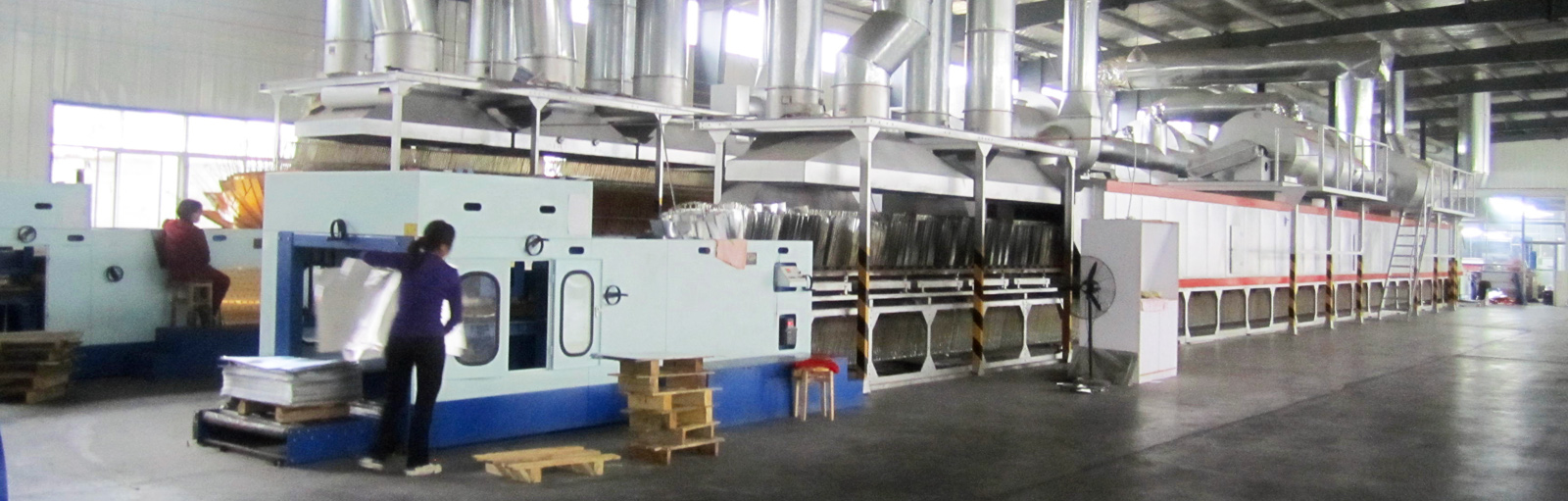
Bottle Cap Aluminum Sheet With Excellent Stamping Performance
As a manufacturer of bottle cap aluminum sheet with more than ten years of aluminum processing experience, we understand that stamping performance is one of the most important factors affecting closure production efficiency, appearance, and sealing reliability. Aluminum closure sheet must withstand blanking, deep drawing, shell forming, knurling, threading, embossing, and coating processes without cracking, wrinkling, excessive springback, or surface defects.
Our bottle cap aluminum sheet is developed for manufacturers of ROPP caps, screw caps, wine bottle closures, spirits closures, pharmaceutical vial seals, and other aluminum packaging components. Through controlled alloy selection, melting, hot rolling, cold rolling, annealing, leveling, and surface inspection, we produce aluminum closure sheet with stable mechanical properties and uniform formability across the coil.
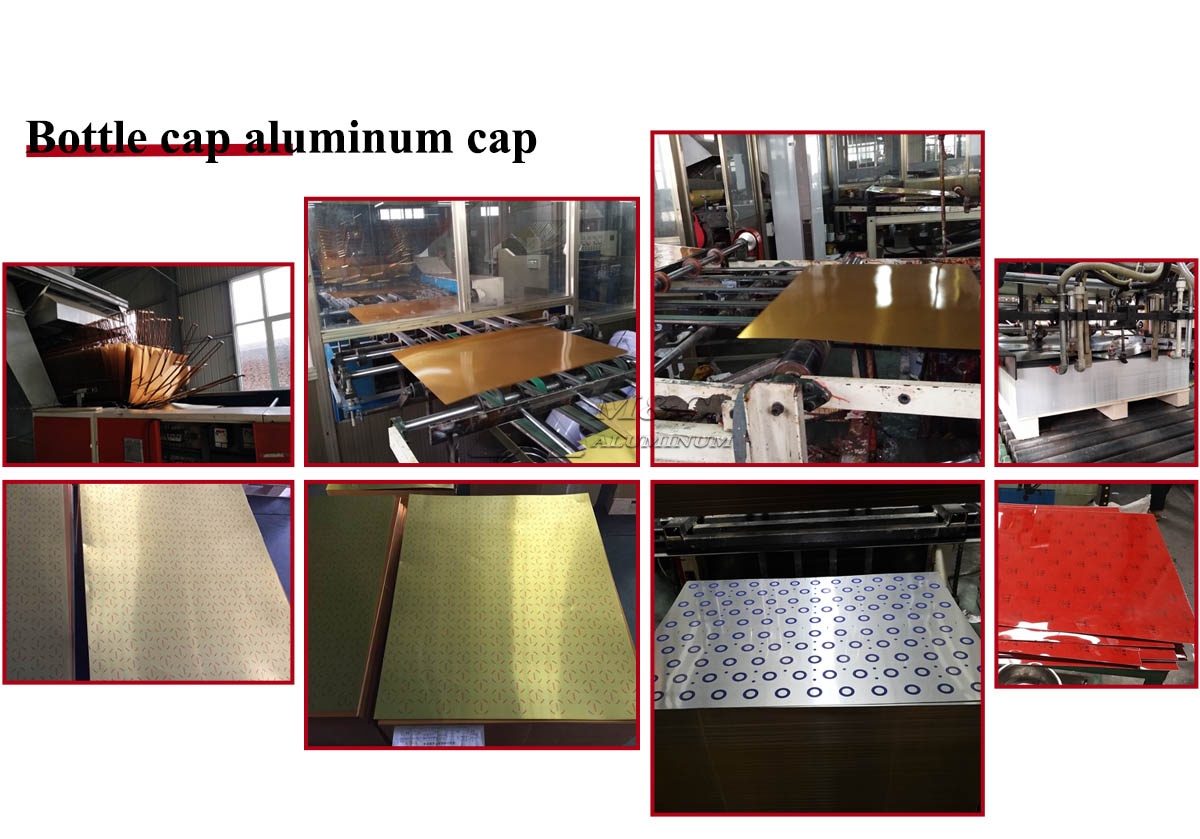
Why Stamping Performance Matters in Bottle Cap Production
Bottle caps are generally produced from thin-gauge aluminum sheet through high-speed press operations. During the conversion process, the material is subjected to localized tensile stress, bending, compression, and repeated deformation. If the aluminum sheet has inconsistent hardness, excessive inclusions, uneven grain structure, or poor surface quality, the cap manufacturer may experience production interruptions and increased scrap rates.
Excellent stamping performance allows the aluminum closure sheet to form smoothly into the required cap geometry while maintaining a clean surface for printing, varnishing, embossing, and further decoration. It also supports consistent skirt formation and thread quality for ROPP closures, which are widely used for wine, spirits, edible oil, beverages, and pharmaceutical packaging.
From our manufacturing perspective, good stamping behavior is not determined by one parameter alone. It results from the coordinated control of alloy chemistry, rolling reduction, final temper, thickness tolerance, flatness, surface cleanliness, and coil edge condition.
Suitable Alloys for Bottle Cap Aluminum Sheet
The most commonly used material for aluminum bottle cap stock is 3105 aluminum alloy. This alloy belongs to the Al-Mn series and offers a balanced combination of moderate strength, good ductility, corrosion resistance, and coating compatibility. It is especially suitable for ROPP caps and other drawn aluminum closures.
Other alloys may be selected according to the cap type, required strength, decoration method, and downstream conversion process. For example, 8011 aluminum sheet may be used for certain pharmaceutical or general closure applications where excellent workability is required. However, 3105 aluminum closure sheet remains a widely preferred option for premium beverage and wine bottle caps because it provides reliable drawing performance together with sufficient rigidity after forming.
| Alloy | Typical Temper | Main Characteristics | Typical Closure Applications |
|---|---|---|---|
| 3105 | H14, H16, H18 | Balanced strength, ductility, surface quality, and coating performance | ROPP caps, wine caps, spirits caps, screw caps |
| 8011 | H14, H16, H18 | Good formability and corrosion resistance | Pharmaceutical closures, vial seals, general caps |
| 5052 | H32, H34 | Higher strength and corrosion resistance | Special-purpose closures and industrial packaging |
Technical Parameters of Our Aluminum Closure Sheet
We manufacture bottle cap aluminum sheet according to the forming requirements of the customer's cap-making equipment and end-use application. The following values represent common production ranges. Final specifications can be adjusted according to the required cap diameter, skirt length, decoration process, and stamping method.
| Parameter | Typical Range | Control Purpose |
|---|---|---|
| Alloy | 3105, 8011, 5052 | Matches strength, ductility, and corrosion requirements |
| Thickness | 0.15 mm to 0.30 mm | Supports different closure designs and drawing depths |
| Width | 500 mm to 1,600 mm | Suitable for press feeding and coil utilization |
| Coil inner diameter | 508 mm or 610 mm | Compatible with standard processing equipment |
| Coil weight | As agreed with customer | Supports line handling and production efficiency |
| Temper | H14, H16, H18, or customized | Controls stamping response and final cap rigidity |
| Tensile strength | Approx. 145 MPa to 205 MPa | Ensures balanced formability and strength |
| Elongation | Approx. 2% to 8%, depending on temper | Supports drawing and deformation during cap forming |
| Thickness tolerance | Controlled according to applicable specification | Reduces variation during stamping and forming |
| Surface | Mill finish, degreased, one-side or two-side treated | Supports coating, printing, and lacquer adhesion |
| Edge condition | Trimmed, burr-controlled | Helps prevent press defects and feeding issues |
How We Achieve Excellent Stamping Performance
Controlled Chemical Composition
The production of high-quality bottle cap aluminum sheet begins with raw material selection and alloy composition control. For 3105 aluminum sheet, manganese is an important element because it contributes to strength while preserving good workability. We control the chemical composition carefully to maintain stable performance from batch to batch.
Excessive variation in composition can influence recrystallization behavior, grain structure, and mechanical properties after annealing. For closure manufacturers operating high-speed stamping lines, stability is more valuable than simply achieving a single mechanical-property target. Our process management focuses on consistent coil performance throughout long production runs.
Optimized Rolling Process
Hot rolling and cold rolling have a direct influence on the thickness accuracy, surface condition, and internal structure of aluminum closure sheet. During rolling, we apply controlled reduction schedules to obtain uniform thickness and a suitable deformation structure before final annealing.
A stable rolling process is essential for reducing thickness variation across the strip width and along the coil length. Consistent gauge helps cap manufacturers maintain repeatable press settings, while uniform strip properties contribute to even material flow during drawing and shell forming.
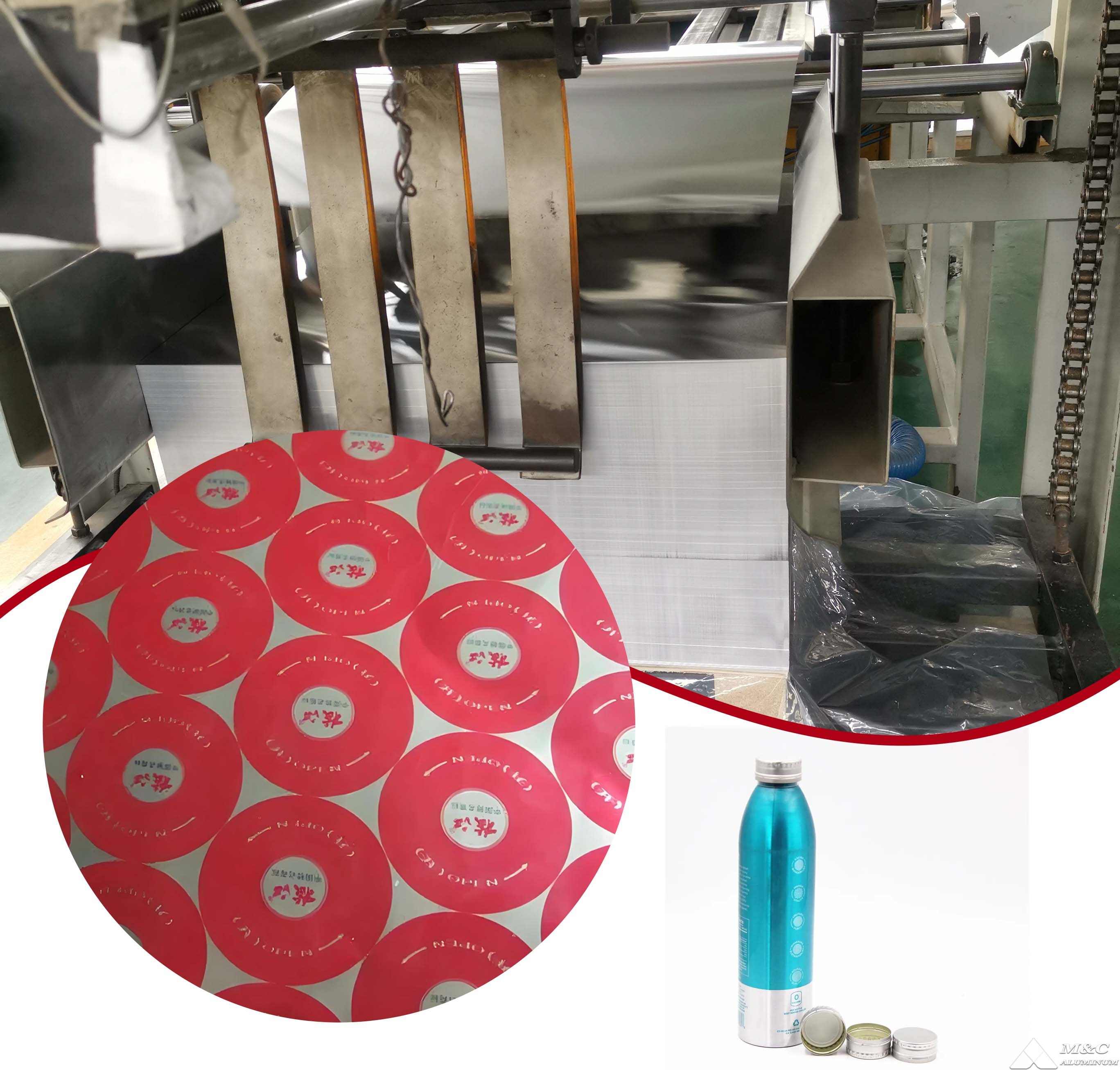
Accurate Annealing and Temper Control
Temper selection is closely related to stamping performance. Material that is too hard may crack at the cap skirt, shoulder, or thread-forming area. Material that is too soft may cause wrinkling, deformation, or insufficient rigidity after forming. Our annealing process is designed to achieve the appropriate balance between strength and ductility.
For many ROPP cap applications, 3105 aluminum closure sheet in H14 or H16 temper provides dependable formability. Higher temper material may be selected when increased cap stiffness is required, provided that the cap geometry and stamping process allow for reduced elongation. We monitor the final mechanical properties to ensure that the selected temper is suitable for downstream forming.
Clean Surface and Reliable Coating Compatibility
The surface of aluminum bottle cap stock must support conversion coating, base coating, color printing, varnishing, and protective lacquer application. Surface contamination, rolling oil residue, scratches, pits, or embedded particles can reduce coating adhesion and affect the visual quality of the finished closure.
We apply controlled cleaning and surface inspection procedures to produce aluminum closure sheet with a uniform mill finish and low contamination level. This supports stable coating performance and reduces the risk of visible defects after printing. For customers using colored, embossed, or high-gloss closures, surface consistency is particularly important because small imperfections can become more visible after decoration.
Advantages for ROPP Caps and Wine Bottle Closures
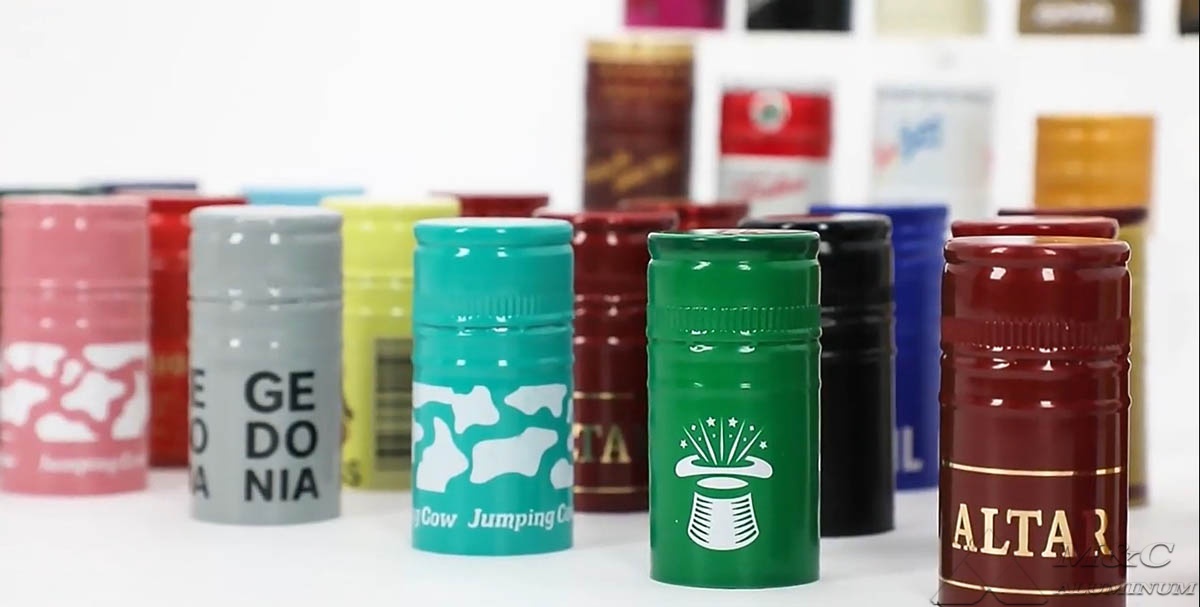
ROPP closures require precise deformation during the capping process. After the cap shell is formed, the thread and tamper-evident band are shaped around the bottle finish by capping equipment. The aluminum closure sheet must have sufficient ductility to follow this deformation without cracking, while retaining adequate strength to provide a secure finished cap.
Our 3105 aluminum sheet for wine bottle caps is designed to provide the following practical benefits:
Stable blanking and drawing performance during cap shell production.
Reduced risk of cracking at the skirt and shoulder area.
Uniform response during thread rolling and knurling.
Good surface suitability for printing, coating, and embossing.
Controlled thickness and width for efficient press feeding.
Consistent mechanical properties across coils and production lots.
Good corrosion resistance for beverage, wine, spirits, and food packaging environments.
Quality Control for Aluminum Bottle Cap Stock
As a closure sheet manufacturer, we perform quality control throughout the production process rather than relying only on final inspection. Incoming materials, molten metal, cast slabs, hot-rolled coils, cold-rolled coils, annealed products, and finished coils are evaluated according to relevant process requirements.
Our typical inspection items include chemical composition, thickness, width, flatness, tensile strength, elongation, surface condition, edge quality, coil winding, and packaging integrity. For applications with specific forming requirements, we can align material properties with the customer's stamping trials and closure design parameters.
| Inspection Item | Typical Method | Importance for Cap Production |
|---|---|---|
| Chemical composition | Spectral analysis | Confirms alloy consistency |
| Thickness | Automated gauge measurement | Supports stable press operation |
| Tensile strength and elongation | Tensile testing | Evaluates stamping and drawing behavior |
| Surface inspection | Visual and instrument-assisted inspection | Supports coating and decoration quality |
| Edge inspection | Visual inspection and burr control | Helps prevent feeding and blanking defects |
| Flatness and coil shape | Shape measurement | Improves unwinding and press performance |
Material Selection Based on Closure Design
The correct bottle cap aluminum sheet specification should be selected according to the final closure design, not only according to thickness. Cap diameter, skirt depth, thread profile, tamper-evident band design, coating system, embossing depth, and press speed can all influence the preferred alloy and temper.
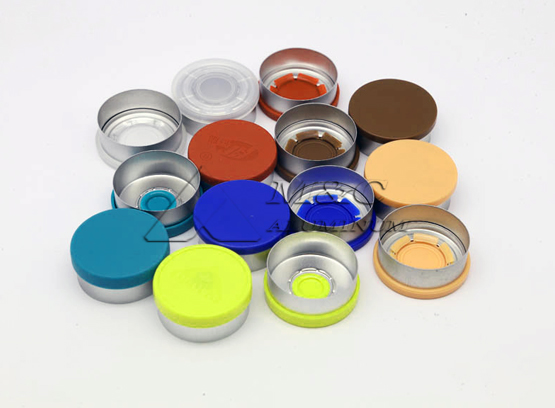
For standard wine and spirits ROPP caps, 3105 aluminum closure sheet in a moderate temper is often an effective choice. For pharmaceutical vial seals, thinner material and specific surface or lacquer requirements may apply. For decorative closures with deep embossing or complex shaping, higher elongation and more controlled surface quality may be needed.
We work from a manufacturing perspective to match aluminum sheet properties with the actual conversion process. This approach helps customers reduce trial-and-error adjustments and establish more stable cap production conditions.
Conclusion
Bottle cap aluminum sheet with excellent stamping performance is the result of disciplined alloy control, rolling precision, appropriate annealing, stable temper, and strict surface inspection. For closure producers, these material characteristics directly influence forming efficiency, scrap control, decoration quality, and the sealing performance of finished caps.
Our 3105 aluminum sheet, aluminum closure sheet, and related bottle cap stock products are manufactured for consistent processing on modern cap-making lines. By controlling the material from alloy preparation through finished coil inspection, we provide closure-grade aluminum sheet that supports reliable stamping, drawing, coating, and forming for a wide range of aluminum bottle caps.


Applications
Related Articles
- What are the raw material requirements for aluminum covers?
- 25mm Anti-theft aluminum bottle cap material supply
- 8011-H14 Lacquered Aluminum Sheet for Whisky Bottle Caps
- Medical aluminum-plastic cap manufacturer
- Printed aluminum plate for screw caps 3105, 8011
- Heat-Sealable Aluminum Foil for Yogurt Cups
-
Advisory Message
Alloy Grade Thickness, Application, etc.
-
Quick Reply
Quick reply within 30 minutes
-
Getting Information
One-to-one design and customized production plan