- Address:Zhengzhou, Henan, China
- Mon-Fri (8am - 6pm)
- sales@alummc.com

4' x 8' 3015 / 8011 Aluminum Sheet for Wine Bottle Caps
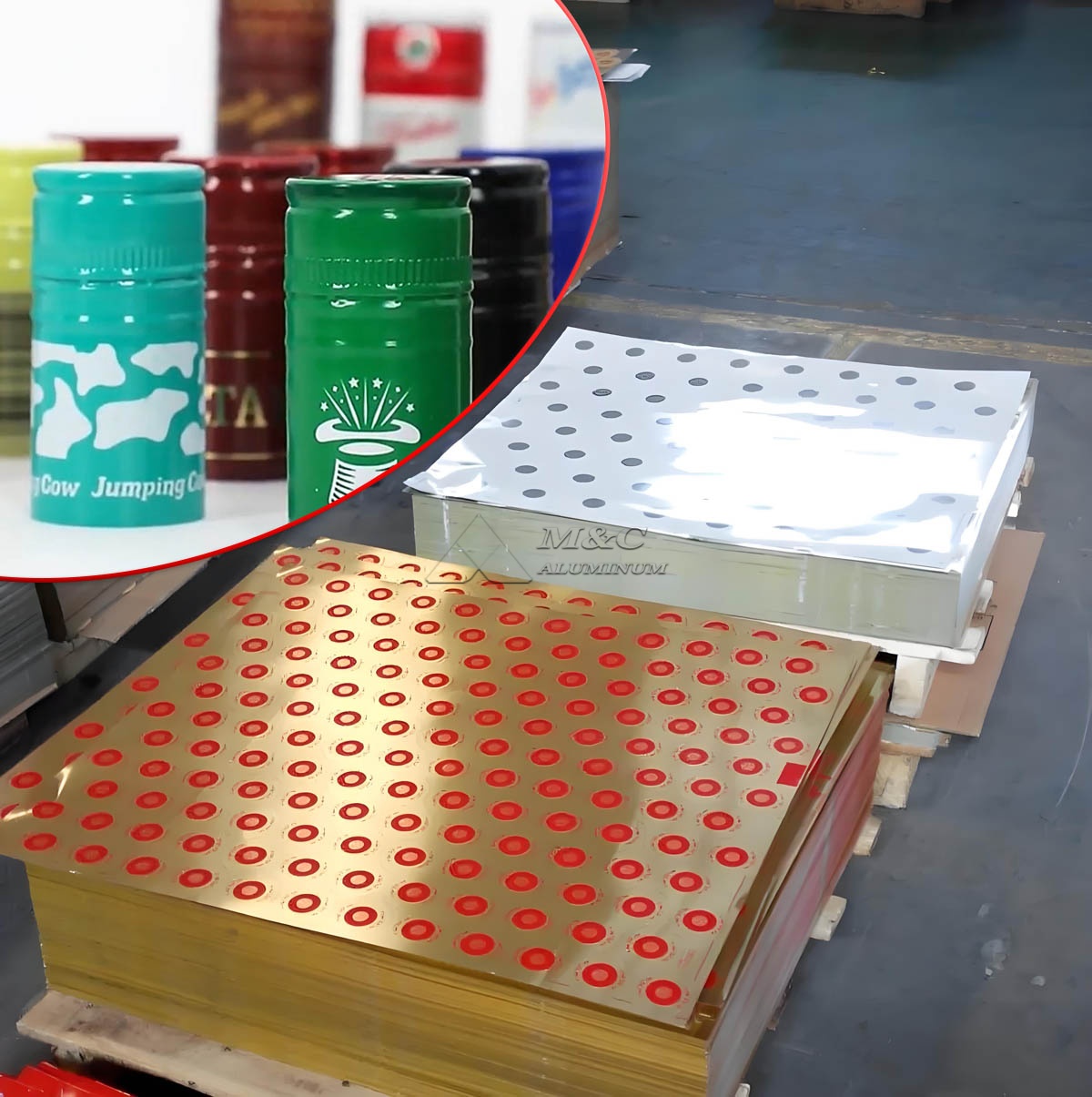
As a manufacturer of bottle cap aluminum sheet, we produce 3015 and 8011 aluminum sheet for wine bottle caps with controlled thickness, surface quality, mechanical properties, and coating compatibility. These aluminum closure sheets are designed for the production of ROPP caps, screw caps, and decorative wine bottle closures requiring reliable deep drawing, knurling, threading, embossing, and printing performance.
The 4' x 8' aluminum sheet format, equivalent to approximately 1219 x 2438 mm, is a practical size for many cap-making operations. It supports efficient blanking and feeding while allowing converters to optimize material use according to cap diameter, shell height, and production equipment configuration. We supply mill-finish, pretreated, and coated aluminum sheet options according to the subsequent processing route.
Why 3015 and 8011 Aluminum Are Used for Wine Bottle Caps
Wine bottle caps must combine decorative appearance with functional sealing performance. During cap manufacture, the aluminum sheet is normally blanked, deep drawn into a shell, trimmed, decorated, internally lacquered where required, and formed with threads or pilfer-proof bands. The material must remain stable through each step without excessive cracking, wrinkling, orange peel, coating loss, or variation in final cap dimensions.
8011 aluminum sheet is a widely used aluminum closure material due to its balanced strength, formability, corrosion resistance, and processing consistency. It is suitable for standard wine screw caps, including ROPP closures with tamper-evident bands. Its performance is particularly reliable in high-speed cap production lines where uniformity between coils or sheets is essential.
3015 aluminum closure sheet is an aluminum-manganese alloy option used when controlled strength and good forming behavior are required. Depending on the selected temper and thickness, 3015 can provide a suitable balance between shell rigidity and drawing capability. For wine cap converters, the final alloy selection should consider cap geometry, draw ratio, thread design, decoration process, and closure-line speed.
Our manufacturing team evaluates these requirements before confirming the alloy and temper. Rather than treating all bottle cap aluminum sheet as interchangeable, we match the sheet condition to the actual cap-making process.
Technical Parameters for 4' x 8' Aluminum Closure Sheet
The following table presents typical production ranges for 3015 and 8011 aluminum sheet for wine bottle caps. Final specifications can be adjusted according to the converter's technical agreement, cap design, and applicable standards.
| Item | 3015 Aluminum Sheet | 8011 Aluminum Sheet |
|---|---|---|
| Main application | Wine screw caps, decorative closures | ROPP wine caps, screw caps, pilfer-proof closures |
| Standard sheet size | 4' x 8', 1219 x 2438 mm | 4' x 8', 1219 x 2438 mm |
| Thickness range | 0.18 to 0.30 mm | 0.18 to 0.30 mm |
| Common cap thickness | 0.20 to 0.25 mm | 0.20 to 0.25 mm |
| Typical temper | H14, H16, customized | H14, H16, customized |
| Surface condition | Mill finish, degreased, treated, coated | Mill finish, degreased, treated, coated |
| Width tolerance | According to agreed sheet cutting tolerance | According to agreed sheet cutting tolerance |
| Length tolerance | According to agreed sheet cutting tolerance | According to agreed sheet cutting tolerance |
| Flatness | Controlled for blanking and feeding | Controlled for blanking and feeding |
| Edge condition | Trimmed edge, burr controlled | Trimmed edge, burr controlled |
| Coating options | Clear lacquer, base coat, color coating | Clear lacquer, base coat, color coating |
| End-use processing | Drawing, embossing, printing, threading | Drawing, knurling, threading, printing |
Mechanical property targets are established according to the required forming route. A cap shell with a deep draw and pronounced thread profile may require a different hardness level from a short decorative closure. Our process engineers review tensile strength, elongation, hardness, and earing tendency together, because a single mechanical value does not fully determine closure-making performance.
Manufacturing Control from Ingot to Cut Sheet
Bottle cap aluminum sheet requires tighter process control than general-purpose aluminum sheet. Small variations in gauge, surface cleanliness, or temper can become visible after printing or can affect forming stability on the cap press.
Our production process begins with alloy preparation and slab casting under controlled chemical composition. The material then proceeds through hot rolling and cold rolling to obtain the target thickness. Intermediate annealing and final temper processing are managed to achieve the intended balance of strength and elongation.
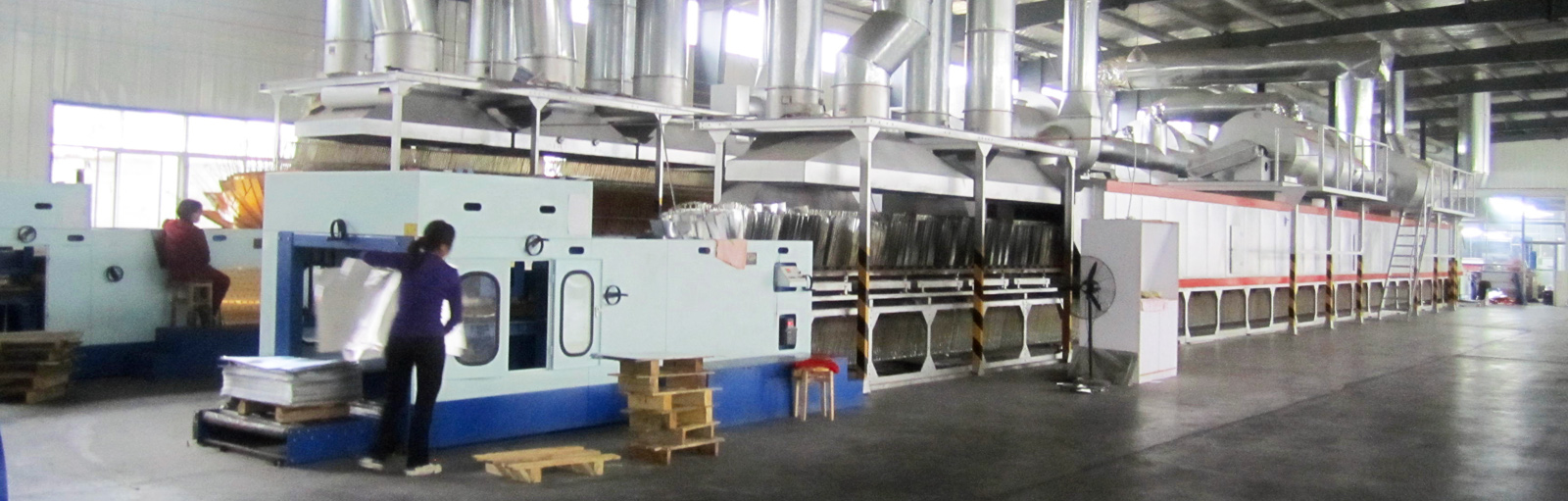
For 4' x 8' aluminum sheet, the rolled material is leveled and cut using controlled shearing equipment. During this stage, we monitor sheet dimensions, squareness, edge quality, and flatness. Clean edges are important because poor trimming can introduce burrs that interfere with blanking tools or create defects on the finished closure edge.
Surface control is equally important. Wine bottle cap aluminum must provide a consistent substrate for printing inks, varnishes, and internal lacquers. We control rolling oil residue, surface marks, scratches, dents, and inclusions before the material is released for coating or shipment. Where coated aluminum closure sheet is required, the pretreatment and coating process is aligned with the customer's printing and forming sequence.
Surface Quality and Coating Compatibility
Wine closures are often a visible component of the final package. The aluminum surface may be printed with brand colors, metallic effects, text, logos, embossing patterns, or matte finishes. For this reason, surface consistency is not only a manufacturing concern but also a packaging-quality requirement.
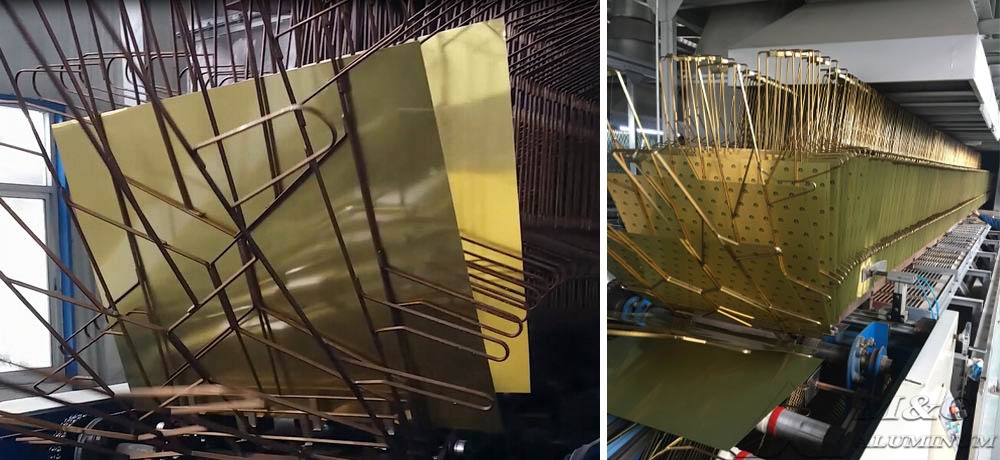
We supply aluminum sheet for wine bottle caps with surface conditions suitable for subsequent decoration. Depending on the project, this may include mill-finish sheet for customer-side coating, chemically pretreated sheet, or coated material with a specified base coat, color coat, and protective lacquer system.
The coating system must withstand cap forming without cracking or delamination. It must also retain appearance after threading, knurling, and contact with closure equipment. Internal lacquer selection is determined by the wine producer's filling conditions, storage environment, and potential contact requirements. For this reason, we recommend confirming the complete coating and liner system through forming trials before commercial production.
Forming Performance for ROPP Wine Closures
ROPP caps are produced by forming aluminum shells and applying threads around the bottle finish during capping. The sheet must draw uniformly into the shell shape and maintain enough ductility to form the thread profile and tamper-evident features.
For 8011 aluminum sheet, the combination of formability and stable temper makes it suitable for widely used wine screw-cap designs. For 3015 aluminum sheet, the material condition can be selected for projects requiring a specific balance of strength, panel stiffness, or decorative closure appearance.
Key forming-related characteristics we control include:
Thickness uniformity across the sheet and from batch to batch.
Consistent temper for stable press behavior.
Adequate elongation for drawing and thread formation.
Low and controlled earing tendency.
Smooth surface for coating adhesion and printed appearance.
Burr-controlled edges for efficient blanking.
Flatness suitable for automatic sheet feeding.
In practice, the best aluminum closure sheet is selected based on the entire cap design, not only on alloy number. Cap diameter, skirt length, shell depth, thread shape, pilfer-proof band design, and decoration method all influence the preferred material condition.
Quality Inspection for Bottle Cap Aluminum Sheet
Our quality control procedures are integrated into production rather than limited to final inspection. Incoming materials, rolling stages, annealing conditions, cutting operations, and finished sheets are checked against the agreed specification.
Typical inspection items include chemical composition verification, thickness measurement, width and length measurement, tensile testing, elongation testing, hardness testing, surface inspection, flatness evaluation, and packaging inspection. When the product is intended for coated closures, we can also coordinate coating-related evaluations such as adhesion, solvent resistance, gloss, color consistency, and forming performance.
For critical wine bottle cap projects, sample sheets can be validated on the customer's blanking, drawing, printing, and capping equipment. This practical verification is valuable because it confirms the compatibility of the 3015 or 8011 aluminum sheet with the complete conversion process.
Packaging and Supply Considerations
4' x 8' aluminum sheets for wine bottle caps are protected with interleaving materials where required and packed to reduce the risk of moisture exposure, edge damage, surface abrasion, and deformation during transport. Packaging configuration is selected according to sheet thickness, coating status, handling method, and destination conditions.
We also provide supply in other sheet sizes, slit coils, and custom-cut formats where production yield or equipment requirements make these formats more suitable. However, the 4' x 8' size remains a common option for closure converters using sheet-fed blanking systems.
Selecting the Right Alloy for Your Wine Cap Program
3015 and 8011 aluminum sheets are both practical materials for wine bottle caps when their tempers, thicknesses, and surface treatments are matched correctly to the application. 8011 aluminum closure sheet is commonly selected for its reliable overall performance in ROPP and screw-cap manufacture. 3015 aluminum sheet can be specified for projects that require tailored strength and forming characteristics.
As a bottle cap aluminum sheet manufacturer, we support alloy and temper selection through production experience, material testing, and conversion-focused quality control. Our objective is to supply aluminum closure sheet that performs consistently from blanking through cap forming, decoration, and final sealing on the wine bottle line.


Applications

Related Articles
- Lacquered 3105 Aluminum Closure Sheet For Wine Caps
- Coated Aluminum Sheet for Vial Sealing
- 25mm Anti-theft aluminum bottle cap material supply
- 8011 Double-Sided Painted Aluminum Foil Coil for Flip-Off Tear Caps
- 8011 H14/H16 DOS treated aluminum closure sheet for Ropp Caps
- 3105 Aluminum sheet for wine lid material
-
Advisory Message
Alloy Grade Thickness, Application, etc.
-
Quick Reply
Quick reply within 30 minutes
-
Getting Information
One-to-one design and customized production plan