- Address:Zhengzhou, Henan, China
- Mon-Fri (8am - 6pm)
- sales@alummc.com

4'x8' 3105 Aluminium Sheet for Wine Bottle Cap
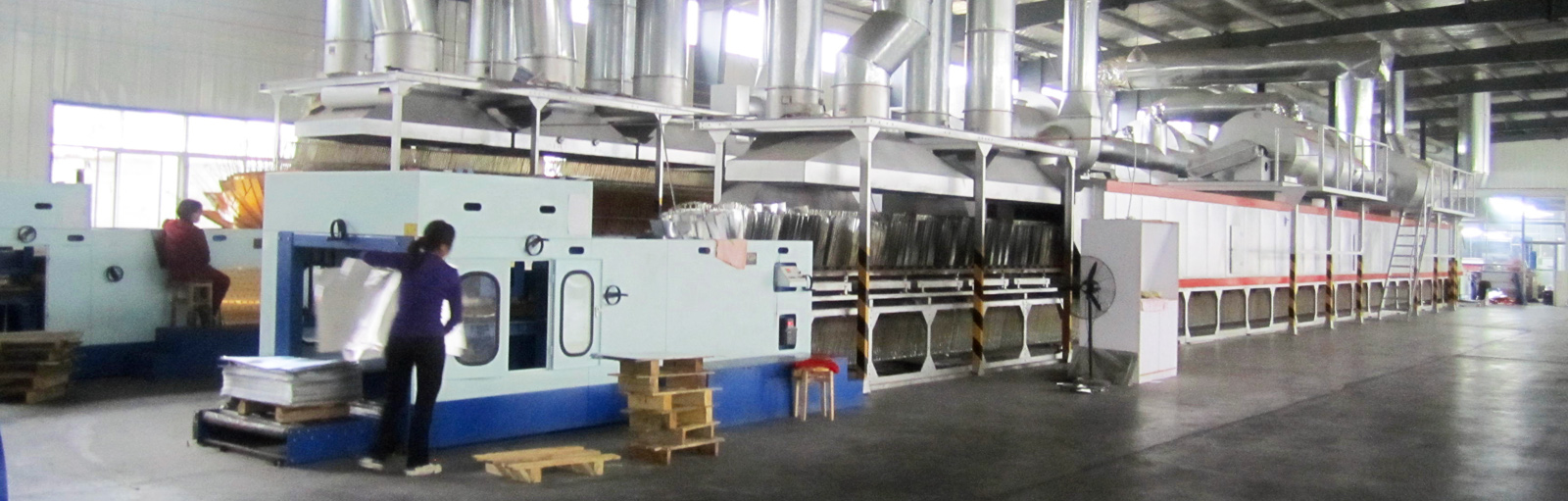
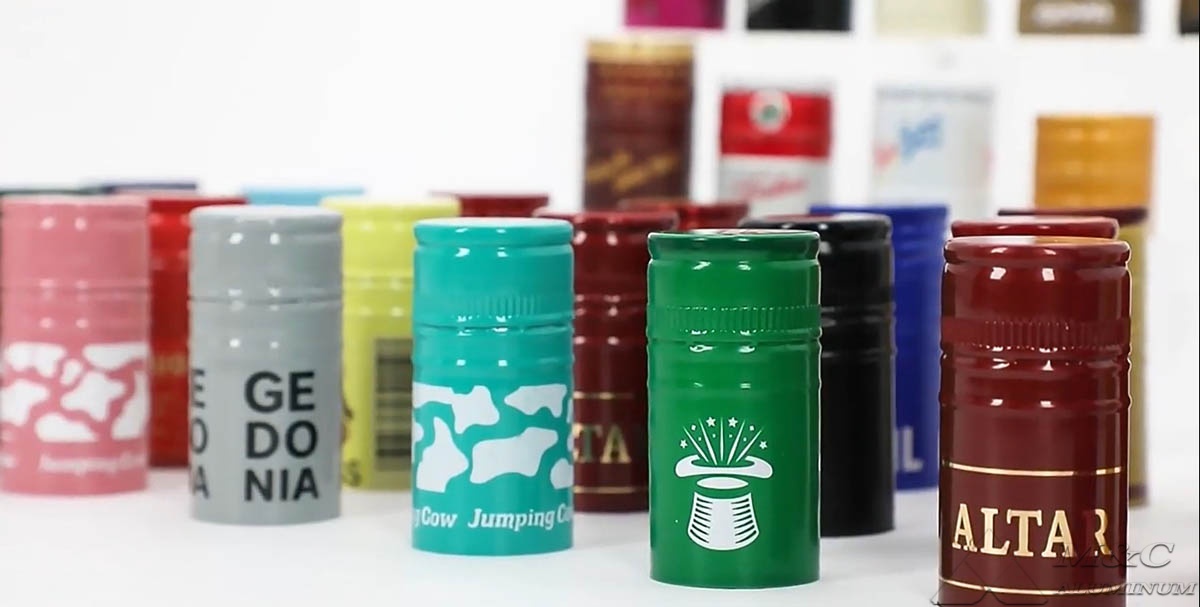
As an aluminium sheet manufacturer specializing in bottle cap materials, we produce 4'x8' 3105 aluminium sheet for wine bottle cap processing, including roll-on pilfer-proof closures, screw caps, and decorative wine closures. This material is designed for conversion operations that require consistent blanking, deep drawing, knurling, thread forming, printing, and coating performance.
The 3105 aluminium alloy belongs to the Al-Mn-Mg series. It offers a practical balance of moderate strength, formability, corrosion resistance, and surface quality. For wine closure production, these properties are important because the cap shell must retain a clean appearance while undergoing multiple forming steps at high production speeds.
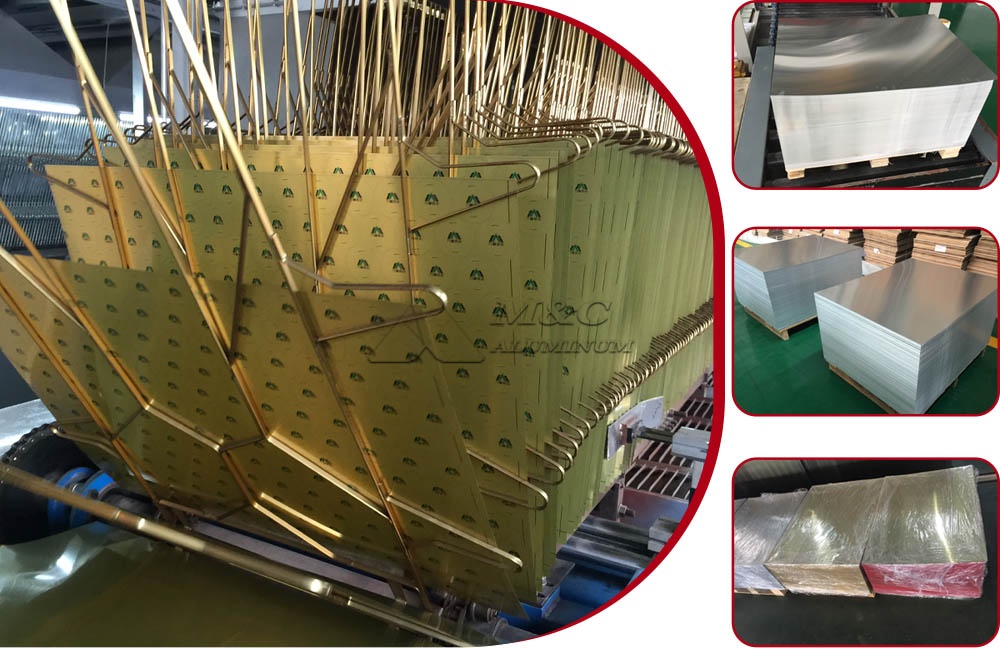
Our 4'x8' 3105 aluminium closure sheet is supplied in accurately controlled dimensions of 1219 mm x 2438 mm. We manufacture the sheet through integrated melting, hot rolling, cold rolling, annealing, leveling, slitting, and surface inspection processes. This production control helps ensure stable performance from incoming sheet to finished wine bottle cap.
Why 3105 Aluminium Is Used for Wine Bottle Caps
Wine bottle caps require more than visual appeal. The aluminium sheet must be sufficiently ductile to form into a skirted closure without edge cracking, while also maintaining enough strength to support thread formation and tamper-evident band performance. The material surface must also accept base coats, decorative printing inks, varnishes, and embossing treatments consistently.
3105 aluminium sheet is a commonly selected closure material because it provides the following manufacturing advantages:
Good cold-forming capability for cap shell drawing and skirt formation.
Stable mechanical properties for thread rolling and knurling.
Good corrosion resistance in normal wine packaging and storage conditions.
Clean surface quality suitable for coating, printing, and decorative finishing.
Reliable compatibility with standard closure-making equipment.
Moderate strength that supports cap integrity without excessive forming load.
Consistent flatness for efficient blanking and feeding operations.
Compared with higher-strength aluminium alloys, 3105 aluminum closure sheet can offer better processing tolerance during deep drawing and complex cap-shell shaping. Compared with softer commercial-purity alloys, it provides improved strength and handling stability for finished closures.
Temper
4'x8' 3105 aluminum sheets are used for wine bottle caps, with the most common tempers being H14, H16, and H24.
| Temper | Characteristics and Typical Applications | Tensive Strength (MPa) | Elongation (%) |
| H14 | Semi-hard. Good balance of strength and formability, one of the most commonly used states. 1 | 50 - 200 | ≥ 1 |
| H16 | Harder.Higher strength, suitable for scenarios requiring greater structural strength in bottle caps. | 175 - 225 | ≥ 1 |
| H24 | It has comparable strength to H14 but better formability. Suitable for bottle caps requiring more complex deep-drawing processes. | 150 - 200 | 2 |
Standard Technical Parameters
The following table shows typical technical parameters for our 4'x8' 3105 aluminium sheet for wine bottle cap applications. Final specifications can be adjusted according to cap diameter, closure height, forming method, coating system, and customer production requirements.
| Item | Typical Specification | Notes |
|---|---|---|
| Alloy | AA 3105 | Al-Mn-Mg alloy for closure applications |
| Temper | H14, H16, H18, O | H14 is commonly used for wine cap forming |
| Standard sheet size | 4 ft x 8 ft | 1219 mm x 2438 mm |
| Thickness range | 0.18 mm to 0.30 mm | Common wine closure range: 0.20 mm to 0.23 mm |
| Width tolerance | As agreed | Controlled to suit blanking and feeding equipment |
| Length tolerance | As agreed | Suitable for sheet-fed cap production |
| Surface finish | Mill finish, coated-ready finish | Free from defects affecting coating or printing |
| Tensile strength | Approx. 130 MPa to 180 MPa | Depends on thickness and temper |
| Yield strength | Approx. 110 MPa to 165 MPa | Depends on temper and processing route |
| Elongation | Approx. 2% to 8% | Evaluated according to temper and gauge |
| Flatness | Controlled sheet flatness | Important for blanking and automatic feeding |
| Coil or sheet form | Sheet, slit coil, jumbo coil | Supplied according to conversion process |
| Coating compatibility | Base coat, lacquer, printing ink | Subject to coating system qualification |
Chemical Composition of 3105 Aluminium Alloy
The chemical composition of 3105 aluminium is controlled to obtain the formability and strength needed for aluminium closure sheet production. Manganese is the main alloying element, while magnesium contributes to strength and processing stability.
| Element | Typical Specification, % by Weight |
|---|---|
| Silicon, Si | 0.60 max |
| Iron, Fe | 0.70 max |
| Copper, Cu | 0.30 max |
| Manganese, Mn | 0.30 to 0.80 |
| Magnesium, Mg | 0.20 to 0.80 |
| Zinc, Zn | 0.40 max |
| Titanium, Ti | 0.10 max |
| Aluminium, Al | Balance |
The final metallurgical condition is influenced not only by alloy composition but also by casting quality, homogenization, hot rolling reduction, cold rolling schedule, annealing conditions, and final leveling. For this reason, material consistency should be assessed through the full manufacturing route rather than chemical composition alone.
Manufacturing Process for 3105 Aluminum Closure Sheet
We manufacture 3105 aluminium sheet for wine bottle caps through a controlled process designed to achieve uniform thickness, stable temper, and a clean surface. Each major stage affects the final closure-forming result.
1. Melting and Casting
We begin by melting primary aluminium and approved recycled aluminium inputs under controlled conditions. Alloying elements are added according to the 3105 composition requirement. After melt treatment and filtration, the metal is cast into rolling slabs. Melt cleanliness is important because inclusions can affect surface quality, drawing performance, and coating appearance.
2. Homogenization and Hot Rolling
Cast slabs are homogenized to improve internal structural uniformity before hot rolling. The slabs are then reduced to hot-rolled coil. Temperature control at this stage supports grain structure development and reduces the risk of uneven mechanical properties across the coil width.
3. Cold Rolling and Annealing
The hot-rolled coil is cold rolled to the required gauge. For wine bottle cap aluminium sheet, thickness consistency is especially important because variations can influence blanking weight, cap-wall uniformity, and forming pressure. Intermediate or final annealing is applied when required to obtain the specified temper and elongation level.
4. Leveling, Shearing, and Surface Inspection
After rolling, the material is leveled and cut into 4'x8' sheets or processed into coil form. We inspect the sheet surface, edges, flatness, thickness, and mechanical properties before packing. Our quality control focuses on defects that may affect cap conversion, including scratches, roll marks, oil staining, edge waves, buckling, pinholes, and surface contamination.
Surface Requirements for Decorative Wine Closures
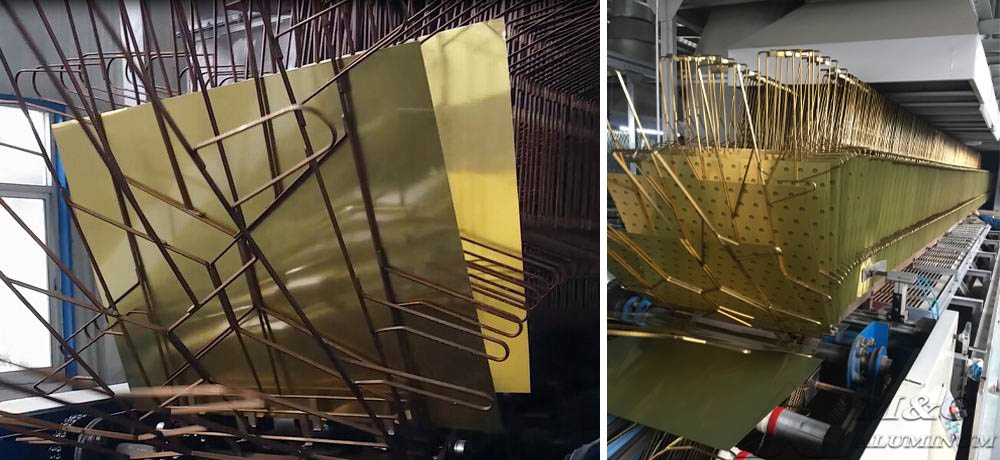
Wine closures often serve as both a functional seal and a brand-identification component. Therefore, surface quality is a critical requirement for 3105 aluminium closure sheet. The material may be coated in solid colors, printed with brand graphics, embossed, brushed, varnished, or finished with metallic effects.
For coated and printed wine cap production, our aluminium sheets are prepared with attention to surface cleanliness and uniformity. A stable substrate supports consistent paint adhesion and color appearance. Excessive surface roughness, rolling marks, residual oil, or local defects can create visible issues after coating, particularly on glossy or light-colored closure designs.
Typical surface expectations include:
No scratches, dents, corrosion marks, or inclusions that affect decorative appearance.
No heavy rolling lines or stains that become visible after coating.
Controlled residual rolling oil for coating preparation.
Clean, burr-controlled edges for blanking safety and stable die performance.
Consistent surface condition across sheet batches.
For customers applying coatings in-house, the coating formulation, pretreatment method, oven temperature, and line speed should be validated with the selected 3105 aluminium sheet temper. We can align material parameters with the intended coating and conversion process during technical confirmation.
Forming Performance in Wine Bottle Cap Production
A typical wine bottle cap manufacturing sequence includes blanking, drawing, redrawing or shell shaping, skirt formation, threading, knurling, tamper-evident band forming, coating, printing, and liner insertion. The exact sequence varies by closure design and equipment configuration.
The role of 3105 aluminum sheet is to provide predictable behavior during these operations. Proper temper selection is essential. If the sheet is excessively hard, the risk of cracking, wrinkling, or high forming load can increase. If it is too soft, the finished cap may not provide sufficient dimensional stability or thread definition.
For many wine closure applications, 3105 H14 aluminum sheet provides a suitable balance between forming ability and strength. However, alloy temper should not be selected by a general rule alone. Cap diameter, cap height, wall design, blank diameter, drawing ratio, die clearance, lubrication condition, and line speed should all be considered.
Quality Control for 4'x8' 3105 Aluminium Sheet
As a manufacturer, we control bottle cap aluminium sheet quality through raw material management, process monitoring, laboratory testing, and final inspection. The objective is to reduce variation that could affect cap-making efficiency or finished closure appearance.
Our routine quality control may include:
| Inspection Item | Control Purpose |
|---|---|
| Chemical composition analysis | Confirms 3105 alloy chemistry |
| Thickness measurement | Supports uniform blanking and forming |
| Width and length inspection | Confirms 4'x8' sheet dimensional accuracy |
| Tensile and elongation testing | Verifies temper and forming suitability |
| Surface inspection | Identifies scratches, stains, dents, and roll marks |
| Flatness inspection | Supports automatic sheet feeding and blanking |
| Edge condition inspection | Helps prevent feeding issues and die damage |
| Packaging inspection | Protects sheets during transportation and storage |
For closure converters with defined technical standards, we can manufacture according to agreed thickness tolerances, temper ranges, surface classifications, and packaging requirements.
Packaging and Storage Considerations
4'x8' 3105 aluminium sheets are typically packed with interleaving protection where required, moisture-resistant wrapping, reinforced pallets, and external protective boards or steel straps. Proper packing helps prevent movement, edge damage, moisture exposure, and surface abrasion during transport.
Before conversion, aluminium closure sheets should be stored in a dry, clean warehouse away from aggressive chemicals and substantial temperature fluctuations. Condensation should be avoided because moisture trapped between sheets may contribute to staining or oxidation. Sheets should also be handled with clean gloves or suitable lifting equipment to maintain coating-ready surface quality.
Selecting the Right 3105 Sheet Specification
When specifying 4'x8' 3105 aluminium sheet for wine bottle caps, closure manufacturers should define the required thickness, temper, surface condition, coating route, cap design, and sheet feeding method. A technically suitable material specification improves production consistency and helps reduce forming defects, coating variation, and scrap rates.
Our manufacturing team works from the actual needs of bottle cap conversion. We supply 3105 aluminium closure sheet in 4'x8' dimensions with controlled rolling quality, stable mechanical properties, and surface conditions appropriate for wine bottle cap production. By matching alloy temper and sheet condition to the closure process, the material can support reliable forming and a consistent finished appearance.


Applications

-
Advisory Message
Alloy Grade Thickness, Application, etc.
-
Quick Reply
Quick reply within 30 minutes
-
Getting Information
One-to-one design and customized production plan