- Address:Zhengzhou, Henan, China
- Mon-Fri (8am - 6pm)
- sales@alummc.com

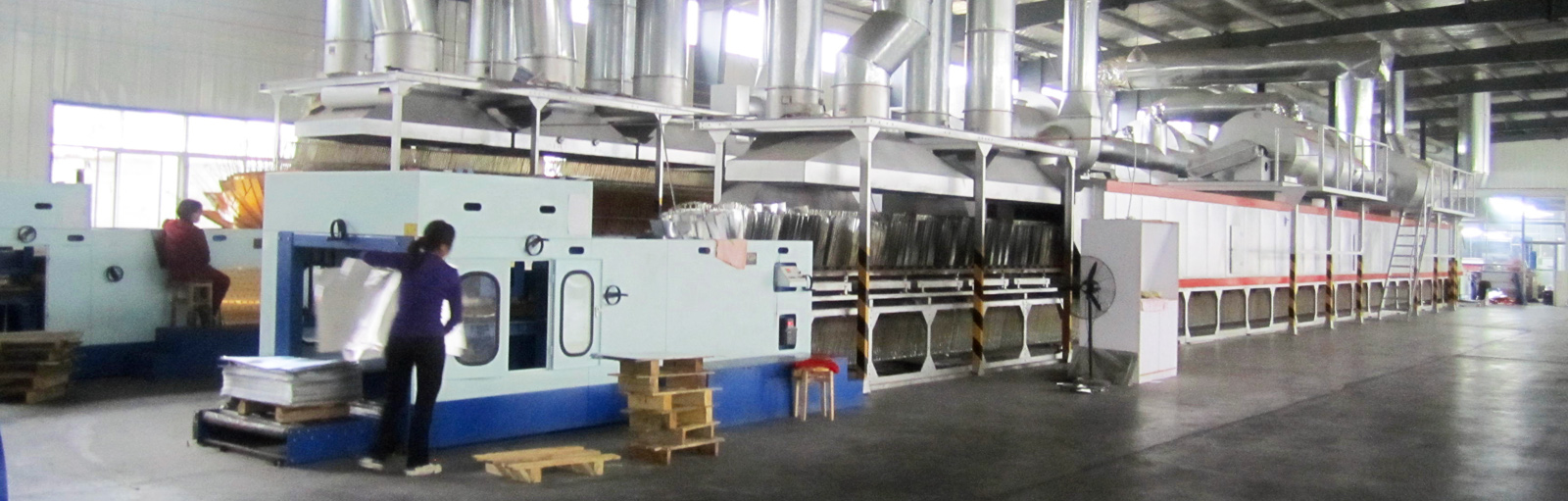
Color-Printed Aluminum Sheet | Suitable for Anti-Theft Cap Production
As a manufacturer of bottle cap aluminum sheet, we produce color-printed aluminum sheet engineered for the conversion of aluminum anti-theft caps. These materials are used for wine closures, spirits caps, beverage caps, olive oil caps, pharmaceutical closures, and other threaded aluminum packaging applications.
Anti-theft cap production places combined requirements on the aluminum substrate, coating system, printing surface, lubricity, and forming behavior. The sheet must retain a consistent appearance while withstanding blanking, deep drawing, knurling, threading, and tamper-band forming. For this reason, color-printed aluminum sheet is not simply standard aluminum coil with decorative paint. It is a functional aluminum closure sheet developed around the practical needs of cap-making lines.
Our factory controls the process from alloy selection and rolling through surface preparation, coil coating, color printing, curing, slitting, and final inspection. This integrated approach helps us maintain stable mechanical properties and coating quality across production batches.
What Is Color-Printed Aluminum Sheet?
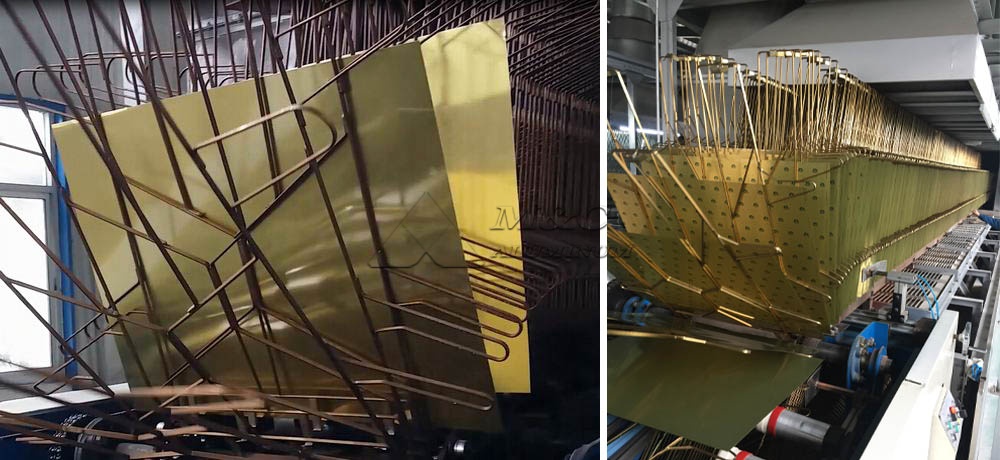
Color-printed aluminum sheet is an aluminum closure material supplied with a pre-applied coating, solid color layer, decorative pattern, logo, or customized graphic design. It is generally delivered in coils or sheets for subsequent stamping and cap forming.
For anti-theft cap applications, the material commonly includes several functional layers:
Aluminum alloy substrate with controlled temper and thickness.
Chemical conversion layer to improve corrosion resistance and coating bonding.
Base coating or color coating on the external surface.
Printed design layer when logos, text, patterns, or multicolor graphics are required.
Protective varnish to improve abrasion resistance and visual durability.
Internal lacquer appropriate for contact with the packaged product and closure liner system.
Optional lubricating treatment to support smooth forming on high-speed cap-making equipment.
The printed surface becomes the visible identity of the finished closure. At the same time, the substrate must maintain sufficient ductility for cap shell drawing and adequate strength for thread definition, bridge formation, and tamper-evident band performance.
Why Aluminum Is Used for Anti-Theft Caps
Aluminum is widely used in anti-theft cap production because it combines low weight, good formability, corrosion resistance, and excellent decorative compatibility. Compared with uncoated metal, color-printed aluminum sheet allows cap manufacturers to simplify downstream decoration steps and improve appearance consistency.
The key material advantages include:
High elongation for drawing, rolling, and thread forming.
Uniform thickness for reliable blanking and cap dimensions.
Good surface quality for coating and printing.
Low density, supporting lightweight packaging.
Strong barrier and corrosion-resistance performance when used with suitable lacquer systems.
Compatibility with embossing, knurling, perforation, and tamper-band designs.
Efficient coil-fed processing for high-volume closure production.
In our production experience, the best anti-theft cap aluminum must achieve a balance between strength and formability. Excessive hardness can increase the risk of cracking at the skirt or bridge area. Material that is too soft may reduce thread definition or compromise handling stability during cap manufacture. Therefore, alloy, temper, thickness, and coating construction must be selected together rather than independently.
Recommended Alloys for Printed Aluminum Closure Sheet
3105 and 8011 are commonly selected alloys for bottle cap aluminum sheet and printed aluminum closure plate. The appropriate grade depends on cap dimensions, forming depth, closure design, and the operating conditions of the cap-making line.
| Parameter | 3105 Aluminum Sheet | 8011 Aluminum Sheet |
|---|---|---|
| Main alloy type | Al-Mn-Mg alloy | Al-Fe-Si alloy |
| Typical application | Wine caps, spirits caps, screw caps | Beverage caps, ROPP caps, general closures |
| Formability | Very good | Very good |
| Surface quality | Suitable for high-quality coating and printing | Suitable for coating, printing, and embossing |
| Typical temper | H14, H16, H18, H19, or customized | H14, H16, H18, or customized |
| Strength level | Medium, adjustable by temper | Medium, stable for closure conversion |
| Corrosion resistance | Good with suitable coating system | Good with suitable coating system |
| Processing suitability | Drawing, threading, knurling, bridge forming | Stamping, drawing, threading, cap shell forming |
3105 aluminum sheet is often preferred for premium wine and spirits closures because it offers a balanced combination of mechanical strength, stable surface quality, and forming performance. 8011 aluminum sheet is also widely used for aluminum closure sheet applications where reliable conversion behavior and production efficiency are required.
Technical Parameters of Our Color-Printed Aluminum Sheet
The following specifications represent common production ranges. Final parameters are confirmed according to cap type, drawing depth, printing design, coating system, and customer processing conditions.
| Item | Typical Specification | Notes |
|---|---|---|
| Alloy | 3105, 8011 | Other suitable alloys can be evaluated for special applications |
| Temper | H14, H16, H18, H19 | Selected according to cap-forming requirements |
| Thickness | 0.20 mm to 0.35 mm | Common anti-theft cap range: 0.21 mm to 0.30 mm |
| Width | 300 mm to 1,300 mm | Slit width supplied according to equipment requirements |
| Coil inner diameter | 150 mm, 300 mm, 505 mm | Customized coil configuration available |
| Coil outer diameter | Up to 1,800 mm | Subject to coil weight and handling requirements |
| Coil weight | 2 t to 8 t | Depends on width, thickness, and customer preference |
| Surface finish | Mill finish, coated, color-printed | External and internal surfaces may have different treatments |
| External coating | Polyester, epoxy-modified, or customized system | Selected for appearance and forming durability |
| Internal lacquer | Food-contact suitable lacquer, as specified | Matched to filling product and liner system |
| Printing method | Gravure printing or customized decorative printing | Suitable for solid colors, logos, and patterns |
| Color | RAL reference, Pantone reference, or approved sample | Color tolerance agreed before mass production |
| Coating thickness | Typically 3 microns to 8 microns per layer | Depends on coating construction |
Manufacturing Process for Printed Anti-Theft Cap Aluminum
The quality of a color-printed aluminum sheet depends on the stability of every manufacturing stage. As a factory, we manage critical process parameters to ensure that the coated material performs reliably on cap conversion lines.
1. Aluminum Substrate Preparation
We begin with aluminum coil produced to controlled thickness, width, flatness, and mechanical-property requirements. Surface cleanliness is particularly important because rolling oil residue, dust, or surface defects can affect coating adhesion and printing definition.
The substrate is inspected for thickness consistency, edge condition, surface marks, and coil shape. Stable flatness supports accurate feeding and registration during printing and cap production.
2. Cleaning and Chemical Pretreatment
Before coating, the aluminum surface is cleaned to remove residual oil and contamination. A chemical conversion treatment is then applied to improve the bonding between the aluminum substrate and coating layers.
Proper pretreatment is essential for preventing coating delamination during deep drawing, thread rolling, and long-term storage. It also supports corrosion resistance where the finished cap may be exposed to humidity, acidic products, alcohol-containing contents, or transportation temperature changes.
3. Base Coating and Color Application
The prepared aluminum coil passes through a controlled coating line. Depending on the required design, we apply a primer, a colored topcoat, or a multilayer system. The coating is oven-cured under controlled conditions to create a uniform film with sufficient flexibility for subsequent forming.
For anti-theft cap aluminum, coating flexibility is as important as visual appearance. A coating that looks satisfactory on flat coil can still fail during cap drawing if its elongation performance is inadequate. We therefore evaluate cured film adhesion, bend resistance, solvent resistance, and forming behavior.
4. Decorative Printing
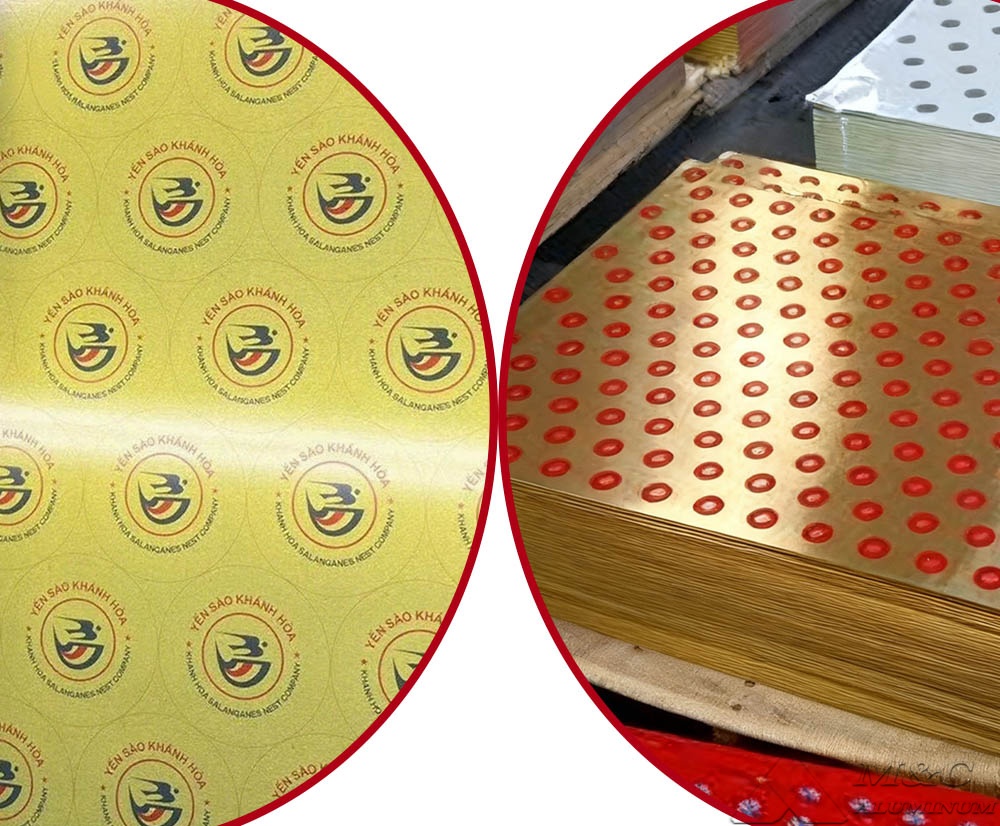
For branded closures, printing may include company logos, product names, decorative stripes, metallic effects, wood-grain patterns, or custom graphics. Printing registration and ink consistency are monitored across the coil length.
The printed design must remain clear after the cap skirt is formed and the thread area is rolled. We consider cap circumference, artwork repeat length, seam position, and deformation during forming when preparing a printing layout.
5. Protective Varnish, Slitting, and Inspection
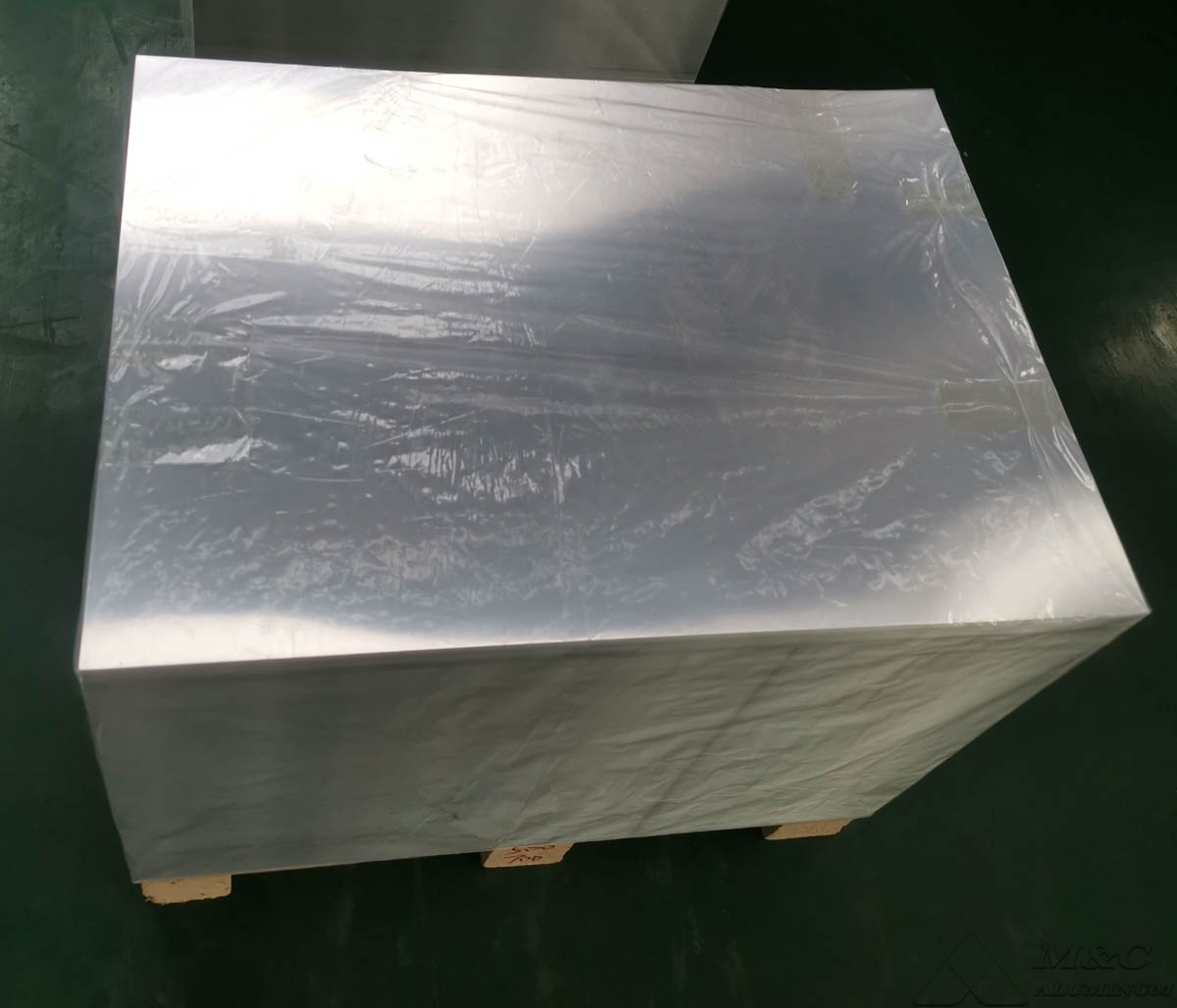
A protective overvarnish can be applied where additional scratch resistance or gloss control is required. After curing, the coil is slit to the specified width and packed to prevent edge damage, surface abrasion, and moisture exposure.
Our final inspection typically includes visual surface examination, color comparison, coating adhesion testing, film thickness checks, dimensional inspection, and confirmation of coil winding quality. For projects with demanding conversion conditions, we can also evaluate cup drawing or simulated forming performance.
Key Performance Requirements for Cap Makers
When selecting color-printed aluminum sheet for anti-theft cap production, cap manufacturers should focus on functional performance instead of color alone. The following factors are especially relevant.
Formability
The aluminum closure sheet must pass through stamping and drawing operations without cracking, excessive wrinkling, or coating failure. Formability is influenced by alloy composition, temper, thickness tolerance, grain structure, and coating flexibility.
Coating Adhesion
The coating must remain firmly bonded during blanking, deep drawing, knurling, and threading. Poor adhesion can result in peeling around high-deformation areas, especially at the cap skirt and tamper-evident bridges.
Print Definition
For printed anti-theft caps, text and graphics must remain legible after forming. Consistent ink transfer, controlled repeat length, and accurate registration help maintain a stable visual result in mass production.
Lubricity
Cap-forming equipment operates at high speed and places significant friction on the material surface. Appropriate lubricity reduces die wear, supports smooth material flow, and lowers the risk of surface scratches during production.
Internal Coating Compatibility
The internal lacquer must be selected according to the intended product, such as wine, edible oil, carbonated beverages, spirits, or pharmaceutical products. The coating system should be compatible with the closure liner and meet relevant food-contact or packaging requirements specified for the destination market.
Typical Applications
Our color-printed aluminum sheet is designed for a broad range of aluminum anti-theft cap formats, including:
ROPP wine bottle caps.
Spirits and liquor closures.
Olive oil bottle caps.
Non-carbonated beverage closures.
Mineral water and functional drink caps.
Pharmaceutical bottle closures.
Condiment and sauce bottle caps.
Cosmetic and personal-care packaging closures.
Different applications require different coating and mechanical-property combinations. For example, wine caps may emphasize premium decoration and stable thread formation, while beverage closures may require high-speed conversion efficiency and abrasion resistance during transport.
Quality Control and Batch Consistency
For large-scale cap production, consistent material is necessary to maintain production yield. Variation in thickness, hardness, coating weight, color, or lubricity can affect tooling performance and finished-cap appearance.
Our quality-control process is structured around incoming material verification, in-process monitoring, and finished-coil inspection. We record key production data by coil to support traceability. This approach allows us to align the bottle cap aluminum sheet with the customer's cap dimensions, forming method, coating design, and packaging requirements.
Color control is performed against approved references. For custom printed aluminum closure sheet, artwork confirmation, repeat accuracy, and sample approval are completed before regular production. Packaging is designed to protect coil edges and coated surfaces during handling and shipment.
Conclusion
Color-printed aluminum sheet is a practical and efficient material solution for anti-theft cap production. Its performance depends on the coordinated design of the aluminum alloy, temper, thickness, pretreatment, coating, printing, internal lacquer, and lubricating treatment.
As a bottle cap aluminum sheet manufacturer, we supply 3105 aluminum sheet, 8011 aluminum sheet, and customized printed aluminum closure plate for cap-making applications. By controlling rolling, coating, printing, slitting, and inspection within our manufacturing process, we provide aluminum closure sheet that supports stable forming performance, consistent decoration, and dependable anti-theft cap production.


Applications

-
Advisory Message
Alloy Grade Thickness, Application, etc.
-
Quick Reply
Quick reply within 30 minutes
-
Getting Information
One-to-one design and customized production plan