- Address:Zhengzhou, Henan, China
- Mon-Fri (8am - 6pm)
- sales@alummc.com

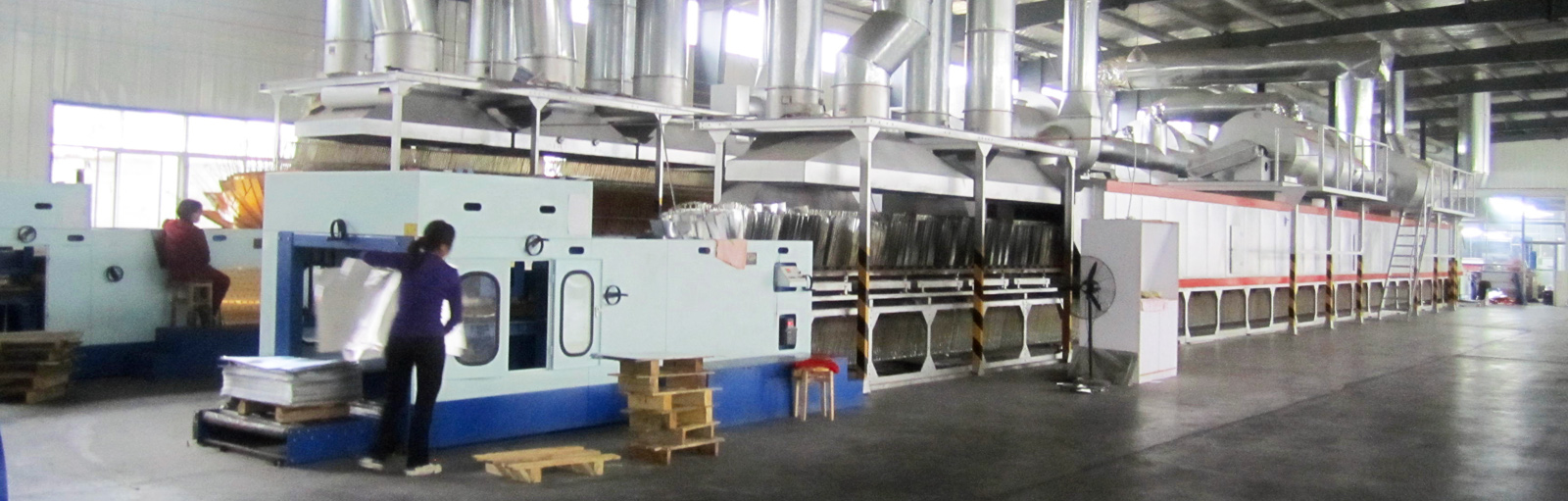
Deep Drawing 3105 Aluminum Closure Sheet
As a manufacturer with long-term experience in aluminum rolling and closure stock production, we understand that bottle cap materials must meet two requirements at the same time: stable deep drawing performance and consistent downstream processing quality. For this reason, deep drawing 3105 aluminum closure sheet has become one of the practical choices for pilfer-proof caps, screw caps, and other drawn aluminum closures.
In our factory production, 3105 aluminum closure sheet is widely used where cap makers require reliable cup forming, controlled earing, good surface finish, and stable mechanical properties across coil length and width. The performance of the material is not defined by alloy designation alone. It depends on chemistry control, homogenization, hot rolling, cold rolling reduction schedule, intermediate annealing, final temper control, flatness management, and clean surface treatment.
This article introduces the characteristics, technical parameters, production control points, and application value of deep drawing 3105 aluminum closure sheet from a manufacturer perspective.
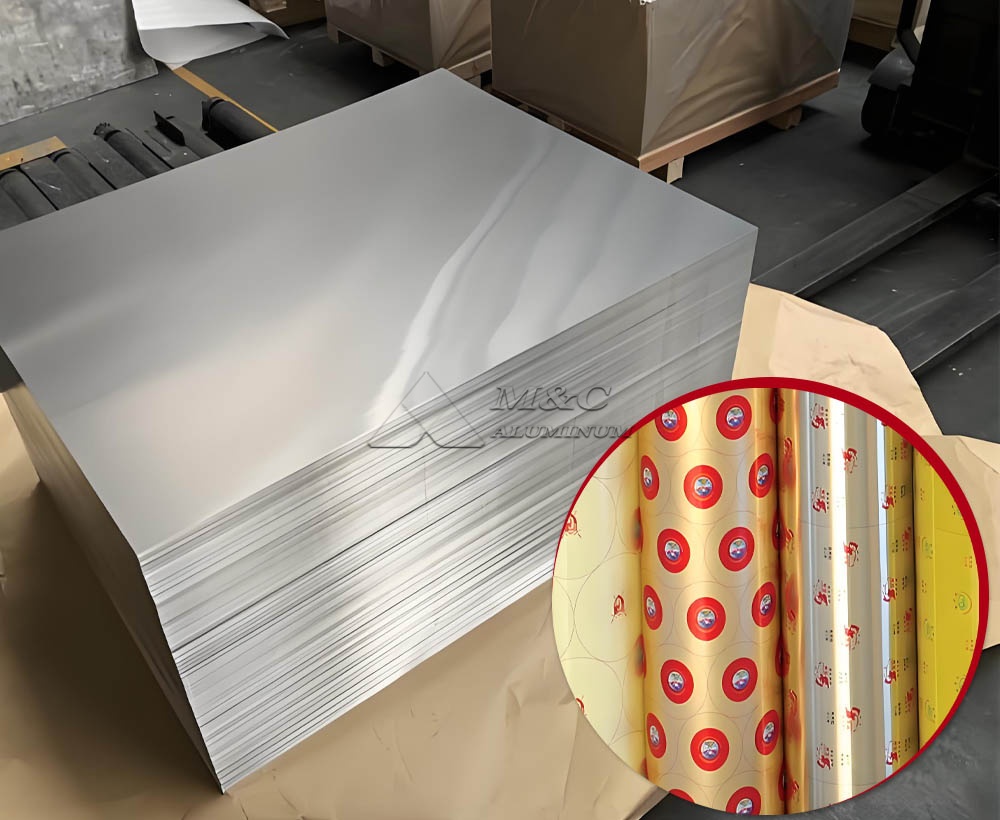
What Is Deep Drawing 3105 Aluminum Closure Sheet
3105 is an Al-Mn series aluminum alloy with moderate strength, good corrosion resistance, and favorable processing properties. When produced specifically for closure applications, 3105 aluminum closure sheet is designed to support subsequent blanking, multi-stage drawing, threading, liner insertion, printing, and sealing operations.
Compared with general-purpose rolled aluminum sheet, closure-grade 3105 requires stricter process consistency. In actual cap production, the sheet must perform well not only during initial blanking, but also during high-speed deep drawing and neck forming. Small variations in thickness, hardness, lubrication condition, or surface cleanliness can directly affect cap crack rate, wall thickness distribution, thread formation quality, and decoration yield.
For this reason, our manufacturing focus is not simply to produce 3105 alloy sheet, but to produce deep drawing aluminum closure sheet with controlled anisotropy, excellent surface integrity, and repeatable forming behavior.
Why 3105 Alloy Is Used for Deep Drawn Closures
From the closure manufacturing point of view, 3105 offers a practical balance between formability and strength. It has enough strength to support cap geometry after forming, while still maintaining the ductility required for deep drawing and shell shaping.
The main advantages of deep drawing 3105 aluminum closure sheet include:
Good deep drawing performance for cap shell forming
Stable strength after forming, suitable for closure integrity
Good corrosion resistance for beverage, liquor, pharmaceutical, and food packaging environments
Excellent surface quality for coating, printing, and color decoration
Suitable compatibility with high-speed closure making lines
Good dimensional stability after rolling and slitting
For ROPP caps and related aluminum closures, these features are important because the material passes through several deformation stages before becoming a finished product. Material instability often appears later in the process, not at incoming inspection. That is why factory-level metallurgy and rolling control are essential.
Typical Applications of 3105 Aluminum Closure Sheet
In our production practice, bottle cap aluminum sheet in 3105 alloy is commonly supplied for:
ROPP caps for wine and spirits bottles
Pilfer-proof aluminum caps
Long skirt closures
Beverage bottle closures
Pharmaceutical caps
Cosmetic container closures
Threaded aluminum screw caps
The exact temper and thickness selection depend on the closure design, cap diameter, drawing depth, and customer line speed.
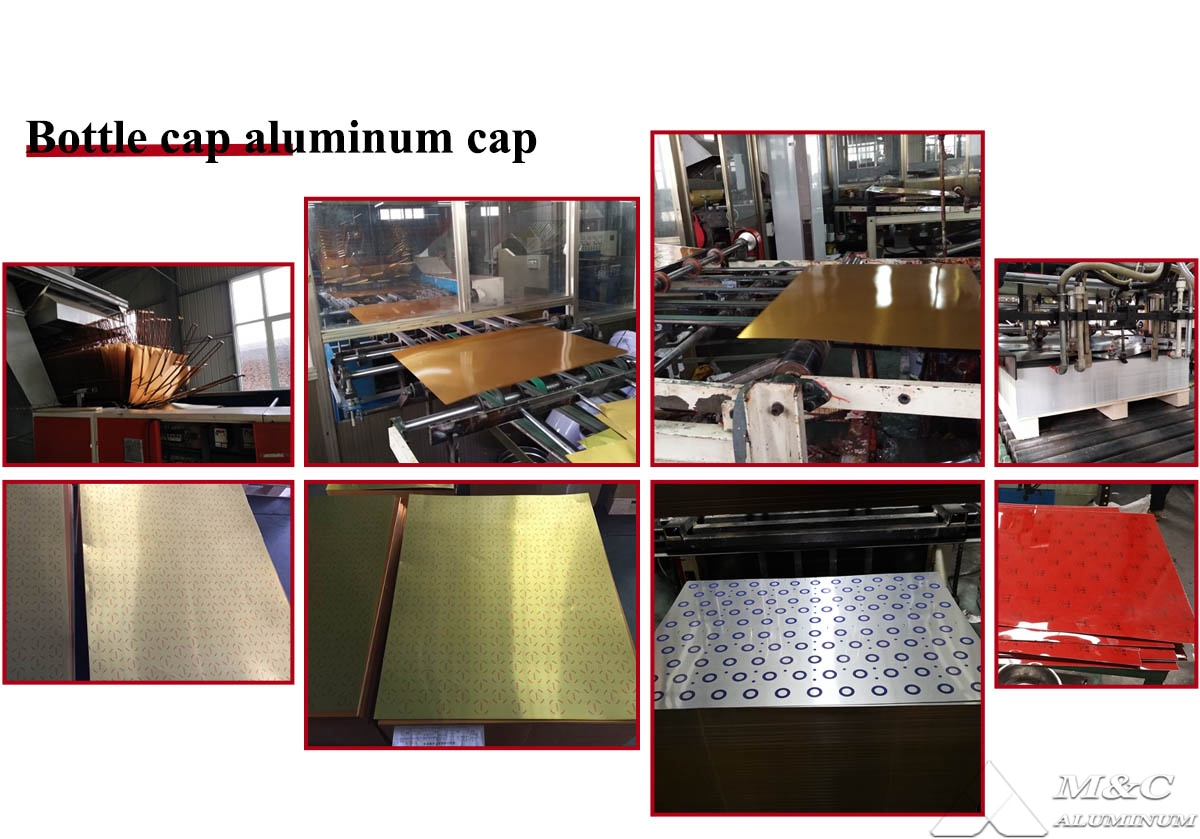
Technical Parameters of Deep Drawing 3105 Aluminum Closure Sheet
The following table shows the typical supply range and control items for our factory-produced 3105 aluminum closure sheet for deep drawing applications.
| Item | Typical Range / Value |
|---|---|
| Alloy | AA3105 |
| Temper | H14, H16, H24, customized temper for closure drawing |
| Thickness | 0.15 mm - 0.30 mm |
| Width | 200 mm - 1500 mm |
| Coil inner diameter | 405 mm, 505 mm, customized |
| Coil outer diameter | According to weight and line requirement |
| Tensile strength | Typically 140 - 210 MPa, depending on temper |
| Yield strength | Typically 115 - 185 MPa, depending on temper |
| Elongation | Typically 2% - 8%, depending on temper and gauge |
| Surface finish | Mill finish, one side or two side suitable for coating and printing |
| Flatness | Controlled for high-speed blanking and forming |
| Thickness tolerance | According to agreed standard and end-use requirement |
| Earing performance | Controlled for deep drawing process |
| Lubrication condition | Dry or lightly oiled according to customer processing route |
| Application | ROPP caps, pilfer-proof caps, aluminum screw closures |
| MOQ | 1-3 tons |
Actual values can be adjusted according to the closure type, cap height, shell geometry, and subsequent printing or embossing process.
Manufacturing Considerations Behind Deep Drawing Performance
1. Alloy and Melt Quality Control
The deep drawing behavior of 3105 begins with primary metallurgy. In our plant, chemical composition is controlled within a narrow internal range to support stable grain structure and forming response. Melt purification, filtration, and inclusion control are essential because non-metallic inclusions can lead to surface defects, pinholes, or crack initiation during cap drawing.
2. Homogenization and Hot Rolling
Uniform homogenization helps reduce segregation and supports a more consistent rolling structure. During hot rolling, temperature control affects final grain distribution and downstream cold rolling performance. For closure sheet, the objective is not maximum hardness, but process stability and surface cleanliness.
3. Cold Rolling Reduction Schedule
The reduction route has a direct influence on strength, elongation, anisotropy, and earing tendency. In deep drawing 3105 aluminum closure sheet, the reduction path must be coordinated with the target temper. Excessive variation in rolling reduction can result in uneven drawing behavior from one coil section to another.
4. Annealing and Temper Control
Temper consistency is critical for cap makers. If the material is too hard, there is a greater risk of cracking during shell drawing or thread rolling. If it is too soft, dimensional stability after forming may become insufficient. We therefore control the annealing process and final temper window according to closure type and forming depth.
5. Surface Quality Management
For aluminum closure sheet, surface quality is not only a cosmetic issue. It influences coating adhesion, printing quality, and defect rates during high-speed production. We control roll cleanliness, strip surface condition, edge quality, and coil handling to reduce scratches, oil marks, chatter marks, and embedded particles.
Key Performance Requirements in Closure Manufacturing
From our experience working with cap producers, the most important quality indicators for bottle cap aluminum sheet are as follows.
Stable Blanking Performance
The strip must feed smoothly and maintain dimensional consistency during blank punching. Poor flatness or unstable thickness can reduce tooling life and cause blank variation.
Good Deep Drawing Formability
During cap shell formation, the sheet must deform uniformly without edge cracking or excessive wall thinning. Controlled earing is especially important because high earing increases material waste and complicates downstream trimming.
Consistent Thread Forming and Shell Strength
For threaded closures such as ROPP caps, the formed shell must hold profile accuracy after rolling and sealing. This requires a proper balance of strength and ductility in the original sheet.
Reliable Coating and Printing Surface
Many closures require internal protective coating and external printing or color finishing. A clean, uniform surface helps maintain stable decorative quality and reduces rejection in lacquered and printed products.
How 3105 Compares with Other Closure Alloys
In closure stock production, 8011 and 3105 are among the common alloys. The choice depends on closure design and processing route.
8011 is often selected for applications requiring very good processing performance and established compatibility with many cap lines. 3105 aluminum closure sheet is often preferred where a somewhat higher strength level and good drawn closure performance are needed. In practical manufacturing, alloy selection must be based on the cap structure, temper design, tooling condition, and customer process window.
This is why we usually evaluate the full application scenario rather than recommending alloy by designation alone.

Common Quality Issues and Factory Control Measures
In the production of deep drawing aluminum closure sheet, several issues require careful prevention.
Earing Too High
Cause: Inadequate rolling texture control or unstable annealing.
Control measure: Optimize rolling reduction path and recrystallization process to improve anisotropy balance.
Cracking During Drawing
Cause: Material too hard, poor edge condition, inclusions, or inadequate elongation.
Control measure: Tight temper control, melt cleanliness management, and edge inspection.
Surface Defects After Printing
Cause: Strip contamination, roll marks, scratches, or residual surface instability.
Control measure: Clean rolling environment, surface inspection, and standardized coil packaging.
Thickness Variation Affecting Cap Consistency
Cause: Rolling gauge instability.
Control measure: Automatic gauge control, profile correction, and in-line monitoring.
Supply Forms and Customization
As a factory, we supply 3105 aluminum closure sheet mainly in coil form, with slit width and mechanical properties adjusted to the customer's closure line requirements. Depending on the destination process, we can coordinate:
Coil width according to blank diameter and material utilization
Temper matching for different drawing depths
Surface condition for coating or direct decoration
Dry or controlled oiling condition
Coil weight for high-speed automated feeding systems
Packaging suitable for export and long-distance transport
For closure manufacturers, stable batch-to-batch consistency is often more important than broad nominal property ranges. Therefore, our internal process control emphasizes repeatability across production lots.
Development Trend of Deep Drawing Closure Stock
The market for aluminum closures continues to develop toward lighter gauge, higher line speed, lower defect rate, and better decoration performance. This trend places higher demands on deep drawing 3105 aluminum closure sheet in three areas.
First, tighter dimensional consistency is required for high-speed cap conversion lines. Second, lower surface defect tolerance is demanded by premium printed closures. Third, material performance must remain stable while helping customers reduce scrap and improve yield.
From the manufacturing side, this means better online inspection, more refined temper control, and closer coordination between rolling parameters and end-use forming requirements.
Conclusion
Deep drawing 3105 aluminum closure sheet is a mature and practical material for drawn aluminum closures, especially where manufacturers need a balanced combination of formability, strength, surface quality, and process consistency. For cap applications such as ROPP closures, pilfer-proof caps, and threaded aluminum caps, material performance depends on more than alloy name. It depends on disciplined production control from melting to final coil packaging.
As a producer of aluminum closure sheet and bottle cap aluminum sheet, we focus on stable metallurgy, rolling precision, temper consistency, and surface management so that the material can perform reliably on the customer's conversion line. In closure stock manufacturing, reproducibility is the foundation of quality, and deep drawing performance must be built into the coil before the cap is ever formed.


Applications

Related Articles
-
Advisory Message
Alloy Grade Thickness, Application, etc.
-
Quick Reply
Quick reply within 30 minutes
-
Getting Information
One-to-one design and customized production plan