- Address:Zhengzhou, Henan, China
- Mon-Fri (8am - 6pm)
- sales@alummc.com

5182 Coated Aluminum Sheet for Pull-Tab Materials
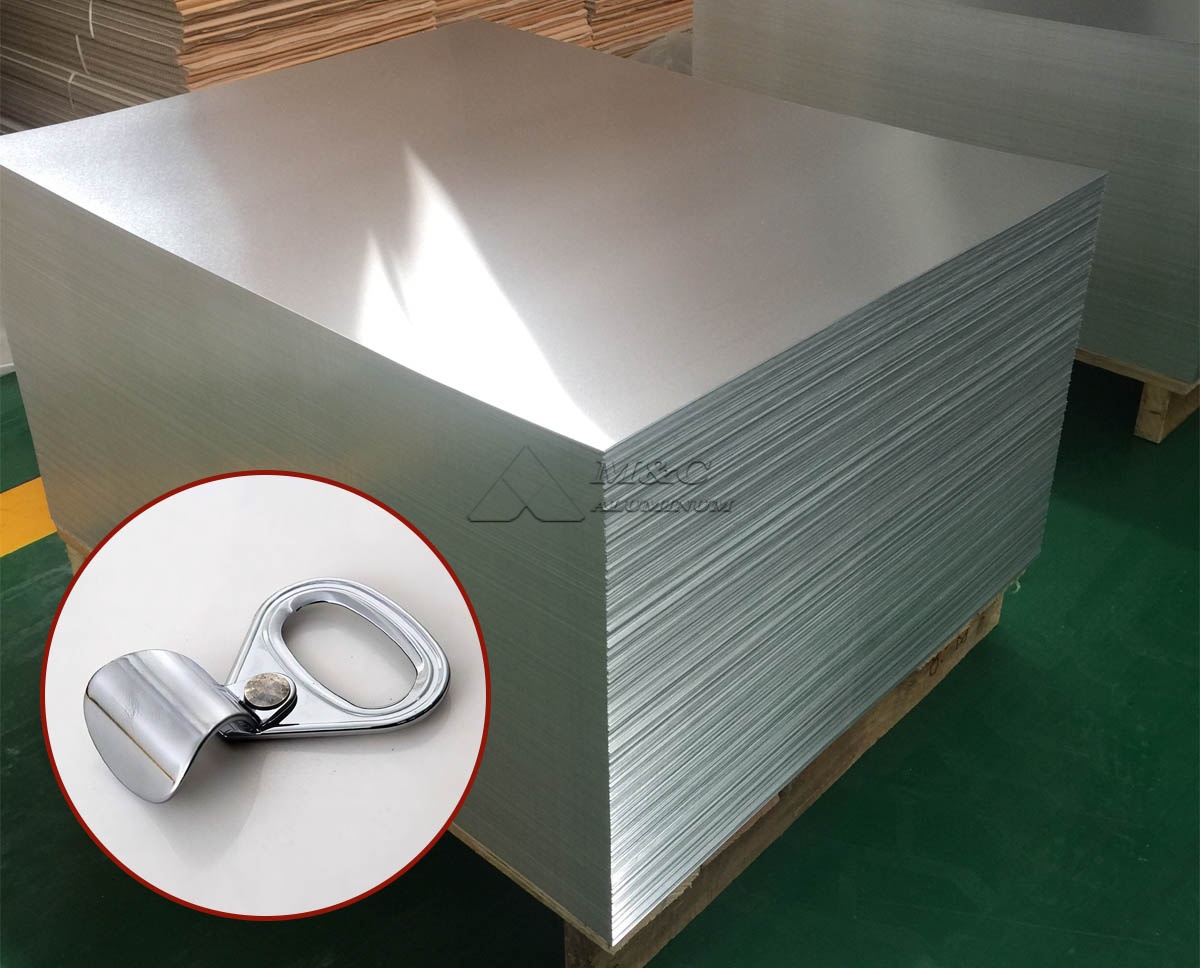
5182 coated aluminum sheet is an important material for manufacturing pull tabs, easy-open ends, and selected beverage can end components. As an aluminum sheet manufacturer with extensive experience in closure and packaging aluminum, we produce 5182 aluminum alloy sheet and coil with controlled chemistry, stable mechanical properties, uniform surface quality, and coating compatibility for high-speed conversion lines.
Pull-tab materials are required to perform reliably through blanking, stamping, forming, riveting, scoring, coating, and final can-end assembly. The material must provide sufficient strength to support opening performance while retaining the ductility needed for complex forming. For this reason, 5182 aluminum alloy is widely used where a balance of strength, formability, corrosion resistance, and lightweight performance is required.
Why 5182 Aluminum Alloy Is Used for Pull Tabs
5182 is an Al-Mg aluminum alloy with a relatively high magnesium content compared with general-purpose aluminum sheet grades. Magnesium provides solid-solution strengthening, allowing the alloy to achieve higher strength while maintaining useful formability. These characteristics make 5182 aluminum sheet suitable for pull-tab materials that must withstand mechanical loading during forming and consumer opening.
In the manufacture of easy-open ends, the pull tab is generally stamped into a shape with a rivet connection area, a lifting ring, and a nose section that initiates opening action. During this process, inconsistent material properties may lead to edge cracking, uneven springback, unstable rivet formation, or dimensional variation. Our 5182 aluminum sheet is produced with close control of rolling reduction, annealing condition, flatness, and coil profile to support stable downstream processing.
The key advantages of 5182 aluminum pull tab sheet include:
Good strength-to-weight ratio for lightweight packaging components.
Reliable formability for stamping, drawing, and rivet-area forming.
Good corrosion resistance in humid storage and beverage packaging environments.
Suitable surface condition for organic coatings and conversion treatments.
Stable mechanical properties across coil length and coil width.
Recyclability that supports circular packaging material systems.
Typical Technical Parameters
The final specification for 5182 aluminum sheet should be selected according to pull-tab design, press capability, coating system, and end-maker requirements. The following table shows common supply ranges for pull-tab materials. Customized specifications can be evaluated based on production requirements.
| Item | Typical Specification | Notes |
|---|---|---|
| Alloy | AA 5182 | Aluminum-magnesium alloy |
| Temper | H19, H38, H39, or customized | Selected according to forming and strength requirements |
| Thickness | 0.20-0.45 mm | Common range for pull tabs and can-end components |
| Width | 300-1,700 mm | Slit coil widths available upon request |
| Coil Inner Diameter | 505 mm or 610 mm | Subject to line configuration |
| Coil Outer Diameter | Up to 2,000 mm | Depends on thickness and coil weight |
| Coil Weight | 3-10 metric tons | Can be customized for customer processing lines |
| Tensile Strength | 300-390 MPa | Typical range, subject to temper and specification |
| Yield Strength | 260-360 MPa | Typical range, subject to temper and specification |
| Elongation | 2-8% | Depends on thickness, temper, and test direction |
| Surface Finish | Mill finish, conversion treated, coated | Selected according to application process |
| Coating Type | Epoxy, polyester, acrylic, or customized | For lubrication, protection, and printing compatibility |
| Coating Weight | As specified by application | Controlled through coating process parameters |
| Flatness | Controlled for high-speed stamping | Evaluated by customer requirement and coil condition |
The values above are indicative technical ranges rather than fixed guarantees. We confirm final mechanical properties, dimensional tolerances, and coating requirements in the agreed production specification.
Manufacturing Process for 5182 Coated Aluminum Sheet
The quality of pull-tab materials begins with alloy composition control. For 5182 aluminum alloy, magnesium content and trace element control directly influence strength, work hardening behavior, corrosion resistance, and rolling stability. We use qualified raw materials and controlled melting practices to ensure chemical composition consistency before casting.
Melting, Casting, and Homogenization
Molten aluminum is refined and filtered before casting to reduce inclusions and maintain clean metal quality. The cast slab then undergoes homogenization. This stage helps improve microstructural uniformity and supports stable deformation during hot rolling. A homogeneous slab structure is important for achieving consistent mechanical performance across the finished 5182 aluminum sheet.
Hot Rolling and Cold Rolling
After preheating, slabs are hot rolled to intermediate gauges. Hot rolling establishes the initial sheet structure and reduces slab thickness efficiently. The material is then cold rolled through controlled reductions to reach the required gauge for aluminum pull tab sheet applications.
Cold rolling is especially important because it affects thickness precision, surface quality, grain structure, and final work-hardening condition. Our rolling process monitors gauge variation, strip shape, edge condition, and surface cleanliness throughout the production cycle.
Cleaning and Surface Preparation
Before coating, the aluminum sheet surface must be free from rolling oil residues, particles, and other contaminants that could affect adhesion. We apply controlled cleaning and pretreatment processes to establish a clean, uniform surface suitable for coating application.
For pull-tab materials, surface consistency is essential. Uneven surface energy or residual contamination can create coating defects, reduce lubricity during stamping, or affect the appearance and performance of the finished tab.
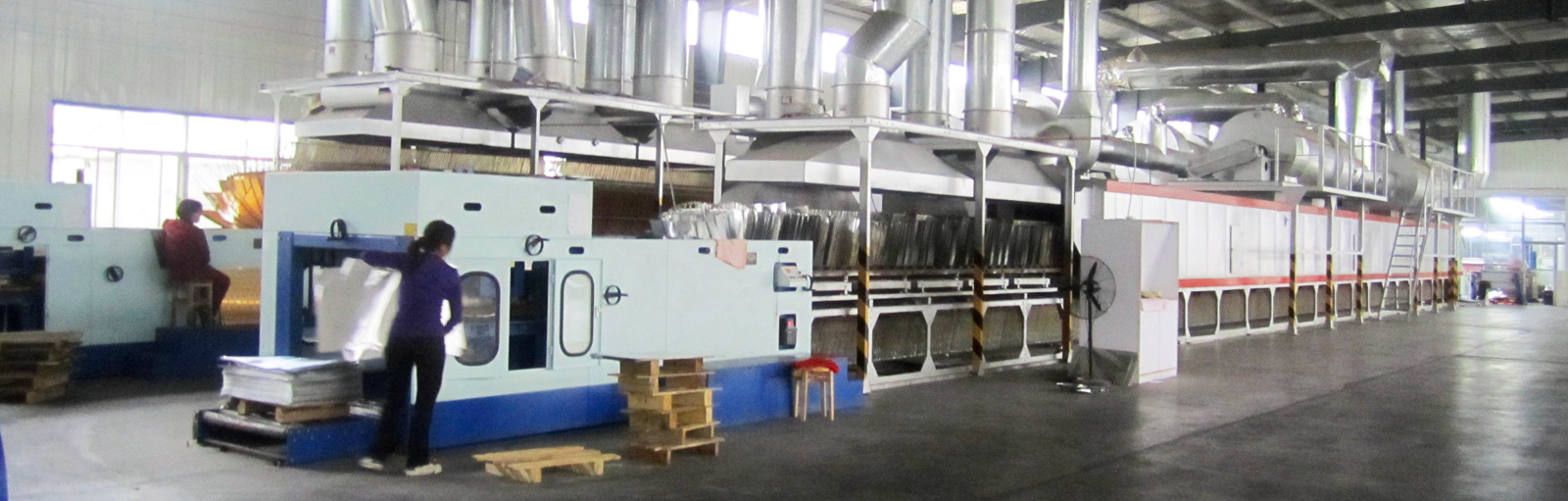
Coil Coating and Curing
The coating process applies functional organic layers to the aluminum sheet or coil. Depending on the customer's manufacturing route, the coating may provide lubrication, corrosion protection, printability, color identification, or compatibility with subsequent processing.
Coating weight, cure condition, adhesion, flexibility, and surface friction are controlled according to the required pull-tab manufacturing process. A properly selected coating can reduce die wear, improve material movement during stamping, and help maintain a stable surface appearance after forming.
Coating Requirements for Pull-Tab Materials
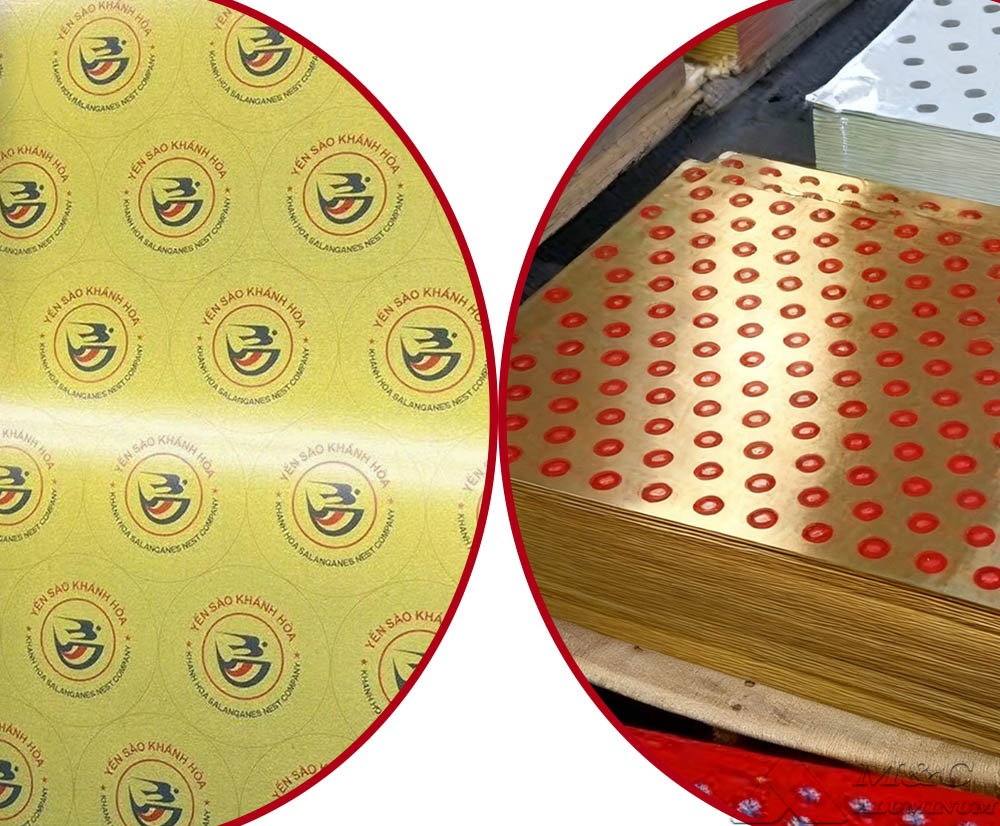
The coating on 5182 coated aluminum sheet is not only an aesthetic layer. It can directly influence production efficiency and final component performance. In high-speed stamping operations, the coating must remain adherent under localized deformation and friction. It must also avoid excessive transfer to tooling or cracking around highly formed areas.
When developing coated aluminum coil for pull tabs, we consider the following factors:
Coating adhesion after bending and forming.
Lubricity during blanking and stamping.
Resistance to scuffing and abrasion during coil handling.
Compatibility with conversion coatings and printing systems.
Resistance to beverage, moisture, and storage environments.
Cure uniformity across the full coil width.
Color and gloss consistency where visible surfaces are required.
Our technical team can coordinate coating selection with the customer's tooling, forming sequence, and end-use requirements. This approach helps avoid the common mismatch between alloy temper, coating friction characteristics, and press conditions.
Quality Control for Aluminum Pull Tab Sheet
Pull-tab production requires tight material consistency because minor variation can become significant when processing millions of pieces on high-speed lines. Our quality control procedures cover incoming materials, in-process manufacturing, finishing, and shipment inspection.
Key inspection items include chemical composition, thickness tolerance, width tolerance, coil shape, edge condition, tensile properties, surface cleanliness, coating adhesion, coating appearance, and packaging integrity. We also monitor coil-to-coil consistency to support stable press settings at the customer's facility.
For coated aluminum sheet, additional tests may include cross-hatch adhesion testing, solvent resistance evaluation, coating weight verification, gloss inspection, color assessment, and bending tests. Where required, we can provide mill test certificates and inspection documentation based on agreed supply conditions.
Processing Recommendations for Customers
To obtain consistent results from 5182 coated aluminum sheet for pull-tab materials, the material specification should match the actual conversion process. Pull-tab geometry, rivet design, scoring method, tooling condition, lubrication system, and press speed all influence the preferred temper and coating system.
During processing, coil handling should prevent edge damage, pressure marks, and contamination. Storage areas should remain dry and clean to reduce the risk of moisture-related staining. Before full-scale production, we recommend confirming blanking quality, forming performance, rivet integrity, coating behavior, and tab opening characteristics through production trials.
For high-speed applications, material consistency is often more valuable than simply targeting a high strength level. A pull tab sheet with stable thickness, predictable work hardening, and uniform coating performance can help reduce adjustment frequency and improve manufacturing efficiency.
Sustainable Value of 5182 Aluminum Pull-Tab Materials
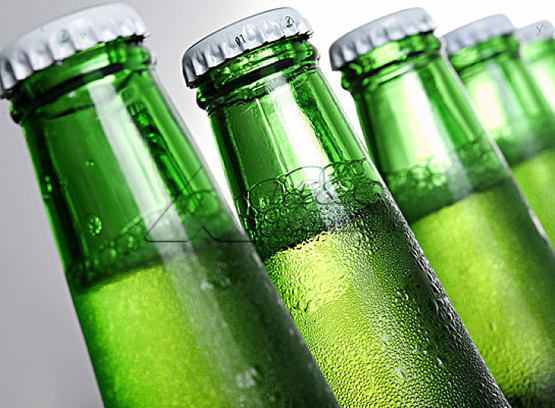
Aluminum packaging materials are widely recognized for their recyclability. Used beverage can components can be collected, remelted, and returned to the aluminum value chain with significantly lower energy demand than primary aluminum production. This makes 5182 aluminum alloy a practical material for packaging systems seeking lower material intensity and improved circularity.
As a manufacturer, we continuously improve process efficiency through yield management, scrap recycling, rolling optimization, and coating process control. We also work toward reducing unnecessary material loss while maintaining the quality standards required for can-end and pull-tab applications.
Conclusion
5182 coated aluminum sheet for pull-tab materials combines the strength, formability, corrosion resistance, and coating compatibility needed for modern beverage end production. Its performance depends not only on alloy selection but also on controlled casting, rolling, surface treatment, coating, and inspection.
Our manufacturing process is designed to deliver stable 5182 aluminum sheet and coated aluminum coil for pull tabs, easy-open ends, and related beverage packaging components. By aligning alloy temper, gauge tolerance, surface condition, and coating performance with the customer's forming process, we support reliable and efficient pull-tab manufacturing.


Applications
-
Advisory Message
Alloy Grade Thickness, Application, etc.
-
Quick Reply
Quick reply within 30 minutes
-
Getting Information
One-to-one design and customized production plan