- Address:Zhengzhou, Henan, China
- Mon-Fri (8am - 6pm)
- sales@alummc.com

Color-Coated Aluminum Sheet for Wine Bottle Caps
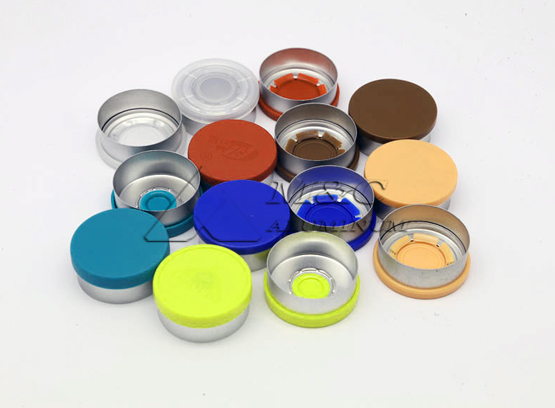
As a manufacturer of bottle cap aluminum sheets, we produce color-coated aluminum sheet for wine bottle caps with controlled alloy composition, rolling properties, surface treatment, and coating performance. This material is designed for the production of ROPP caps, pilfer-proof closures, screw caps, and decorative wine bottle closures.
Wine packaging places specific demands on closure materials. In addition to protecting the bottle opening, a wine cap must support premium visual presentation, stable forming performance, clean printing, and reliable resistance to moisture, alcohol vapor, and handling during filling and distribution. For these requirements, pre-painted aluminum coil provides an efficient and consistent solution.
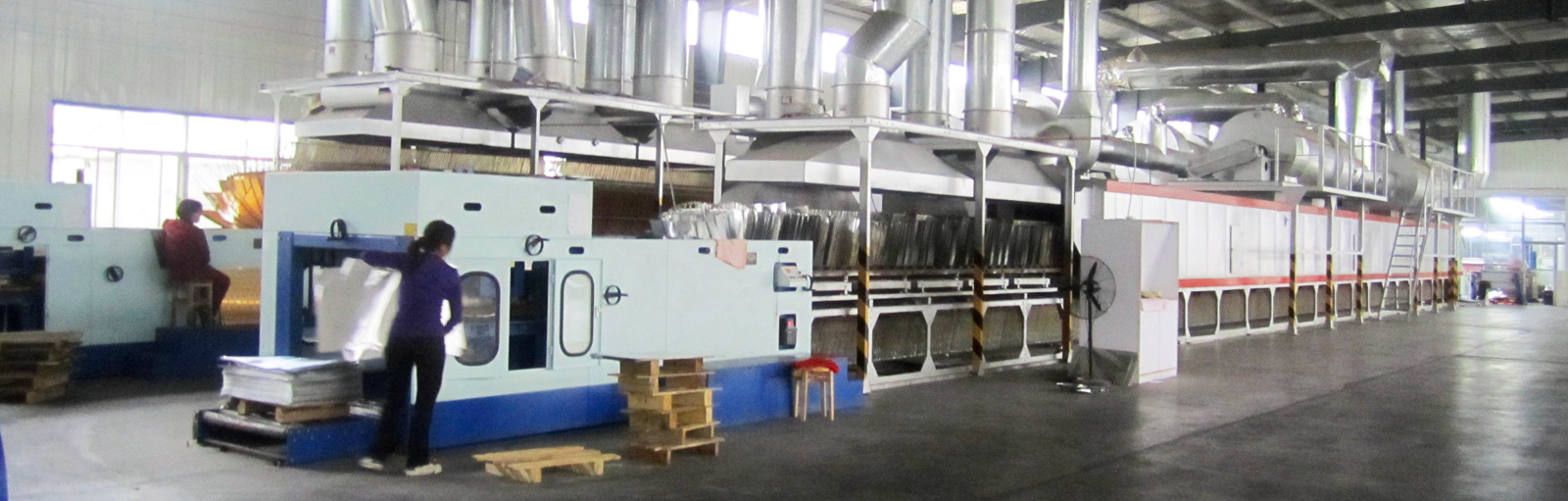
Our color-coated aluminum sheet is supplied in coil or sheet form for cap stamping and forming operations. We manufacture the substrate and manage coating quality as part of the same production process, allowing us to control flatness, coating adhesion, color consistency, and mechanical properties before delivery.
Why Color-Coated Aluminum Is Used for Wine Bottle Caps
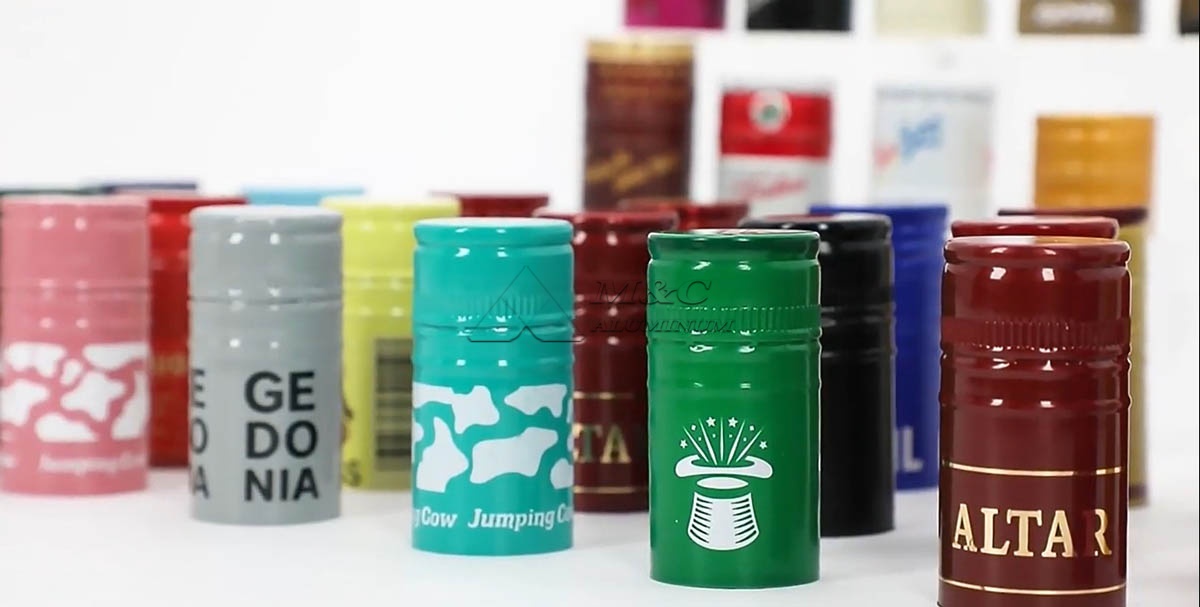
Color-coated aluminum sheet for wine bottle caps combines the lightweight and formability of aluminum with a durable decorative surface. Unlike post-printing or post-painting operations, coil coating applies the finish before cap production. This process enables stable color coverage across large production batches and reduces processing steps for closure manufacturers.
The material is commonly used for wine closures because aluminum offers several practical advantages:
Low density, helping reduce closure weight and transport load.
Good deep drawing and knurling performance for ROPP cap production.
Smooth surface quality suitable for printing, embossing, varnishing, and decorative finishing.
High resistance to corrosion when used with suitable pretreatment and coating systems.
Reliable compatibility with common wine bottle closure formats.
Good recyclability, supporting circular packaging objectives.
For wineries and closure converters, the visual quality of the cap is part of the product identity. Matte, gloss, metallic, brushed, solid-color, and custom-printed finishes can all be developed on an aluminum closure sheet, subject to the intended forming process and coating specification.
Suitable Aluminum Alloys for Wine Closure Production
The selection of aluminum alloy affects cap formability, surface appearance, strength after forming, and production consistency. For wine bottle cap aluminum, the most frequently used alloys are 3105 and 8011. Each alloy provides different advantages depending on cap geometry, thickness, decoration method, and forming equipment.
3105 Aluminum Sheet
3105 aluminum sheet is widely used for screw caps and wine bottle closures. It has moderate strength, good workability, and stable performance during drawing, threading, and knurling. The alloy is particularly suitable where a balance between cap rigidity and forming ability is required.
8011 Aluminum Closure Sheet
8011 aluminum closure sheet is another common choice for bottle caps. It offers good ductility and is frequently selected for applications requiring smooth forming behavior. With appropriate rolling and annealing control, 8011 can achieve a clean surface and consistent mechanical properties for closure manufacturing.
The appropriate alloy should be selected according to cap height, diameter, skirt design, embossing depth, liner system, and production speed. As a manufacturer, we confirm these requirements with customers before establishing the final material specification.
Technical Parameters of Color-Coated Aluminum Sheet
The following table shows typical parameters for our color-coated aluminum sheet for wine bottle caps. Final values can be adjusted according to the closure design, forming process, coating type, and customer quality standard.
| Item | Typical Specification | Notes |
|---|---|---|
| Alloy | 3105, 8011 | Other suitable alloys available by application review |
| Temper | H14, H16, H18, H19, H22, H24 | Selected according to drawing and knurling requirements |
| Thickness | 0.18-0.30 mm | Common wine closure range: 0.20-0.24 mm |
| Coil width | 200-1,300 mm | Slit width available for cap stock processing |
| Coil inner diameter | 150 mm, 300 mm, 505 mm | Subject to equipment and order requirements |
| Coil outer diameter | Up to 1,800 mm | Controlled by coil weight and transport conditions |
| Surface finish | Color coated, lacquered, printed, brushed | Gloss, matte, metallic, and custom finishes available |
| Coating system | Polyester, epoxy polyester, acrylic, PVDF on request | Chosen according to decoration and resistance requirements |
| Dry film thickness | 3-8 microns per side, typical | May vary according to coating system |
| Color | RAL, Pantone reference, customer sample | Color matching subject to approved standard |
| Coating adhesion | No peeling after specified bend test | Verified during production inspection |
| Pencil hardness | Typically HB-2H | Depends on coating formulation and curing conditions |
| Surface quality | Clean, uniform, free from rolling defects | Controlled for printing and cap forming |
Manufacturing Process for Pre-Painted Aluminum Coil
The quality of a wine bottle cap begins with the aluminum substrate. Our production process integrates alloy control, rolling, surface cleaning, chemical pretreatment, coil coating, curing, slitting, and inspection. Each stage affects the final forming behavior and appearance of the cap.
1. Aluminum Melting and Alloy Control
We begin by controlling chemical composition according to the selected alloy grade. Stable alloy chemistry is important because variations can influence mechanical properties, grain structure, and forming consistency. We use controlled raw material input and process monitoring to maintain stable quality from batch to batch.
2. Hot Rolling and Cold Rolling
The cast slab is processed through hot rolling and cold rolling to reach the required thickness. Rolling conditions are managed to support uniform gauge, smooth surface quality, and suitable metallurgical structure. Thickness consistency is especially important for high-speed cap presses, where variation can affect draw depth and dimensional stability.
3. Annealing and Temper Control
Annealing establishes the required temper and balances strength with elongation. If the material is too hard, cracking or excessive springback may occur during cap forming. If it is too soft, the finished closure may not maintain its intended shape. Our temper control is matched to the application requirements of ROPP caps and wine bottle closures.
4. Surface Cleaning and Pretreatment
Before coating, the aluminum strip is cleaned to remove rolling oil and surface contaminants. A chemical pretreatment is then applied to improve coating adhesion and corrosion resistance. This stage is essential for maintaining coating integrity during drawing, threading, knurling, and storage.
5. Coil Coating and Thermal Curing
The pre-painted aluminum coil is coated using controlled roller coating equipment. The coating is applied in a uniform film and cured in a continuous oven. We monitor coating weight, color difference, gloss, curing condition, and adhesion throughout production.
For wine bottle caps, the coating system must be flexible enough to withstand forming without cracking while maintaining the required visual effect. Depending on the design, the material may be supplied with a base color, protective lacquer, printable surface, or custom decorative coating.
6. Slitting, Packaging, and Final Inspection
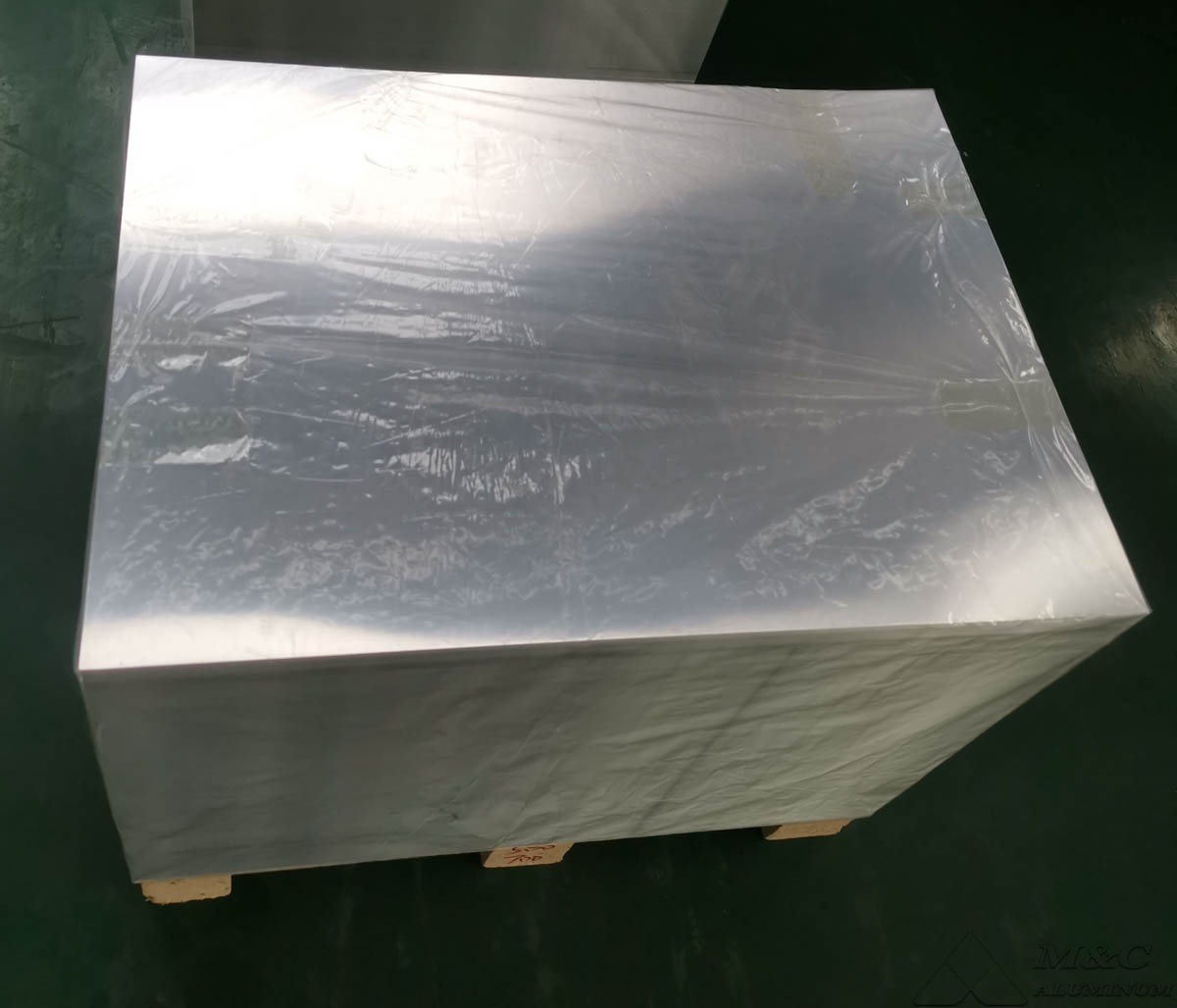
After coating, the coil can be slit to the required width for cap production. Finished coils are inspected for surface defects, edge quality, thickness, color consistency, and coating performance. Packaging is designed to protect the pre-painted aluminum coil from moisture, dust, edge damage, and handling damage during shipment.
Coating Performance Requirements for Wine Caps
The coating on an aluminum wine bottle cap is not only decorative. It must also remain stable during conversion and service. We evaluate coating systems according to the end-use environment and the cap maker's processing conditions.
Important performance requirements include:
Adhesion after bending and drawing.
Resistance to scratching during stamping and conveying.
Color stability between production batches.
Resistance to moisture and condensation.
Compatibility with printing inks, varnishes, and embossing processes.
Appropriate gloss level for the desired brand appearance.
Resistance to cleaning agents or incidental contact during bottling.
For premium wine closures, customers may require special finishes such as matte black, champagne gold, deep burgundy, metallic silver, wood-grain effect, or brushed aluminum appearance. These decorative effects must be considered together with cap forming conditions, because excessive coating thickness or insufficient flexibility can affect the appearance of drawn areas.
Processing Performance in ROPP Cap Manufacturing
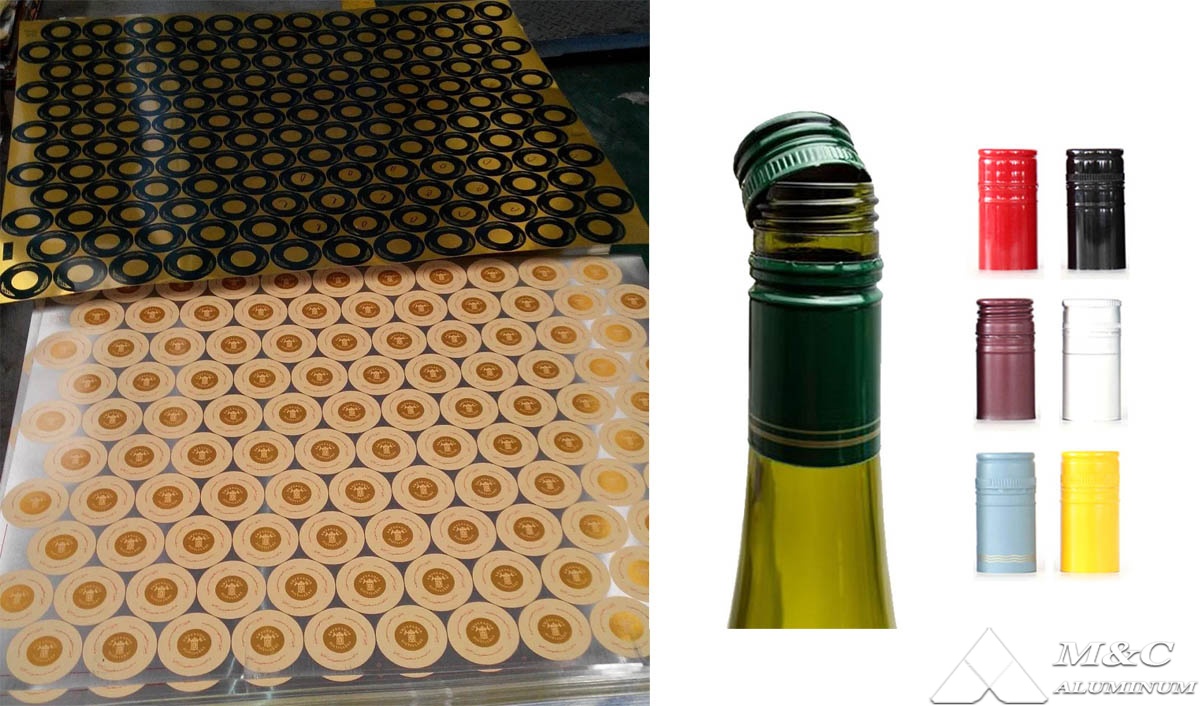
Color-coated aluminum sheet is normally converted through blanking, drawing, curling, threading, knurling, printing, and liner insertion. The aluminum sheet must maintain stable performance throughout these stages.
For ROPP cap material, we focus on several critical characteristics. First, the surface must remain uniform after deformation. Second, the coating must resist micro-cracking at the skirt and thread areas. Third, the metal must have sufficient elongation to support drawing without splitting. Finally, the strip must have clean edges and controlled flatness to ensure reliable feeding in high-speed presses.
We recommend confirming cap dimensions, drawing ratio, thread profile, required decoration, and production line speed before material selection. For example, a tall wine closure with deep embossing may need a different temper or coating flexibility than a standard short screw cap.
Quality Control at Our Factory
Our quality control for aluminum closure sheet covers both the metal substrate and the painted surface. We inspect incoming materials, in-process production parameters, and finished coils. Typical checks include thickness measurement, width measurement, tensile property evaluation, surface inspection, color comparison, gloss measurement, coating adhesion, bend testing, solvent resistance, and coil edge inspection.
For color consistency, we use approved samples or defined color standards as the reference. This is particularly important for wine packaging programs where caps are produced over multiple batches and must maintain a consistent shelf appearance.
We also support agreed inspection requirements for export orders, including coil labeling, protective packaging, test documentation, and batch traceability. The final inspection plan is determined according to the customer's technical specification and application standard.
Selecting the Right Color-Coated Aluminum Sheet
When selecting color-coated aluminum sheet for wine bottle caps, closure manufacturers should consider the following factors:
Cap design: Diameter, height, skirt geometry, and thread structure influence the required alloy and temper.
Forming method: Deep drawing, knurling, embossing, and curling place different demands on elongation and coating flexibility.
Decorative requirement: Gloss, matte effect, metallic finish, printing, and color matching determine the coating system.
Production equipment: Press speed, tooling condition, and lubrication process can affect the preferred surface and mechanical properties.
Storage and transport conditions: Packaging and coating resistance should be selected for the expected logistics environment.
Regulatory requirements: Materials used in closure applications should be evaluated against the applicable packaging and food-contact requirements for the target market.
Conclusion
Color-coated aluminum sheet for wine bottle caps is a specialized packaging material that requires coordinated control of alloy, temper, surface treatment, coating, and conversion performance. 3105 aluminum sheet and 8011 aluminum closure sheet remain reliable options for many ROPP cap and wine closure applications, provided that the material is matched correctly to the cap design and production process.
As a bottle cap aluminum sheet manufacturer, we produce pre-painted aluminum coil with attention to stable thickness, clean surface quality, coating adhesion, color consistency, and forming performance. By defining the closure dimensions, alloy preference, temper, coating finish, and inspection requirements at the beginning of the project, cap producers can obtain material that performs consistently from coil processing through finished wine bottle closure production.


Applications

Related Articles
-
Advisory Message
Alloy Grade Thickness, Application, etc.
-
Quick Reply
Quick reply within 30 minutes
-
Getting Information
One-to-one design and customized production plan