- Address:Zhengzhou, Henan, China
- Mon-Fri (8am - 6pm)
- sales@alummc.com

Yogurt Cup Sealing Aluminum Foil Thickness
Yogurt cup sealing aluminum foil is not a single material, but a multi-layer laminated structure. The most common construction is PET / AL / PE:
Polyester layer (PET): provides mechanical strength and a printable surface
Aluminum foil layer (AL): the core barrier layer
Heat sealing layer (PE or PE·EVA): ensures tight bonding with plastic cups
For the critical aluminum foil layer, the industry widely adopts 8011 alloy aluminum foil in O temper. This material offers excellent ductility and softness, making it easy to process into various shapes while minimizing rebound or cracking after forming.
Core Advantages of 8011 O Aluminum Foil for Yogurt Cup Sealing
Excellent barrier performance
Aluminum foil provides outstanding resistance to light, moisture, and oxygen, effectively preventing yogurt deterioration caused by oxidation or photochemical reactions.
High sealing and heat sealing strength
When combined with suitable coatings, aluminum foil bonds tightly with plastic cups such as PP and PS, ensuring strong seals and preventing leakage during transportation.
Easy-peel opening performance
Properly designed aluminum foil lids offer moderate opening force, allowing consumers to peel cleanly without residue, delivering a superior user experience.
Hygienic and food-safe
The foil surface is clean, corrosion-free, and free from stains, complying with food-grade packaging standards and releasing no harmful substances.
Thermal resistance and cold-chain stability
Suitable for yogurt filling, sealing, pasteurization (high-temperature resistance), as well as cold-chain transportation and refrigerated storage.
Attractive appearance and excellent printability
Uniform surface finish supports high-quality printing, enhancing brand presentation and shelf appeal.
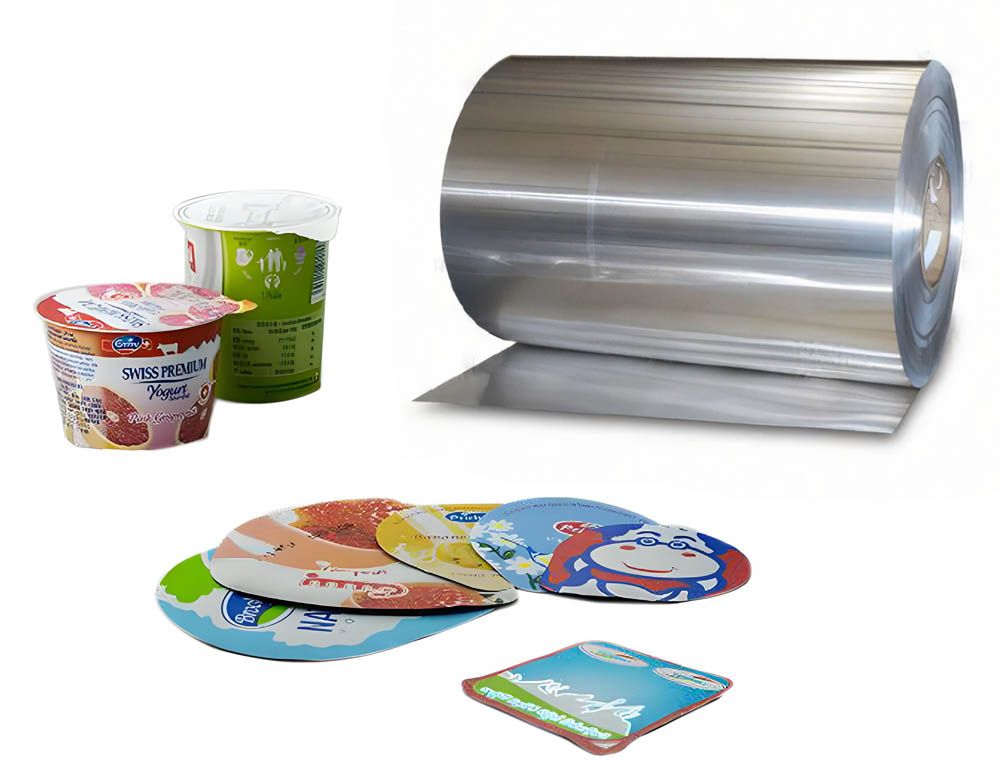
Common Thickness Ranges for Yogurt Cup Sealing Aluminum Foil
| Thickness | Application |
| 0.020-0.025 mm (20-25 μm) | Suitable for standard cup yogurt and short-shelf-life products, with cost efficiency as a priority. |
| 0.025-0.030 mm (25-30 μm) | The most widely used range, balancing heat sealing strength, barrier performance, and easy-peel properties-considered the mainstream choice. |
| ≥0.030 mm (30 μm and above) | Used for premium yogurt, long shelf-life products, or large-diameter cups with higher requirements for sealing integrity and stiffness. |
Impact of Thickness on Sealing Performance
1. Heat Sealing Strength
Greater aluminum foil thickness increases overall rigidity and promotes more uniform heat distribution during sealing, reducing risks of weak seals and leakage.
2. Barrier Properties
As one of the most effective barrier materials, thicker aluminum foil significantly improves resistance to oxygen, moisture, and odors, helping extend yogurt shelf life.
3. Easy-Peel Performance
Foil that is too thin may tear during opening, while overly thick foil can require excessive peeling force. An optimized thickness range ensures clean peeling without residue.
Thickness Selection Recommendations for Different Cup Materials
Common yogurt cup materials include PS, PP, and PET, each with different sealing requirements:
PS Cups
Wide heat sealing temperature window; typically paired with 25–30 μm aluminum foil for stable sealing.
PP Cups
Higher requirements for heat sealing layer compatibility; ≥25 μm aluminum foil is recommended to ensure sufficient seal strength.
PET Cups
Higher rigidity and often larger diameters; around 30 μm aluminum foil is recommended to prevent deformation-related leakage during transportation.
About MC Aluminum
MC Aluminum is a professional aluminum foil raw material manufacturer. The 8011 O-temper aluminum foil produced by MC Aluminum is widely used for yogurt lid films, offering strong sealing performance, excellent barrier and heat sealing properties, thorough degreasing, and clean surfaces. The product meets food-grade standards, supports high-temperature sterilization, and ensures safety and hygiene for dairy packaging applications.


Applications

Related Articles
-
Advisory Message
Alloy Grade Thickness, Application, etc.
-
Quick Reply
Quick reply within 30 minutes
-
Getting Information
One-to-one design and customized production plan