- Address:Zhengzhou, Henan, China
- Mon-Fri (8am - 6pm)
- sales@alummc.com

3105 Aluminum Closure Sheet For Oil Bottle Caps
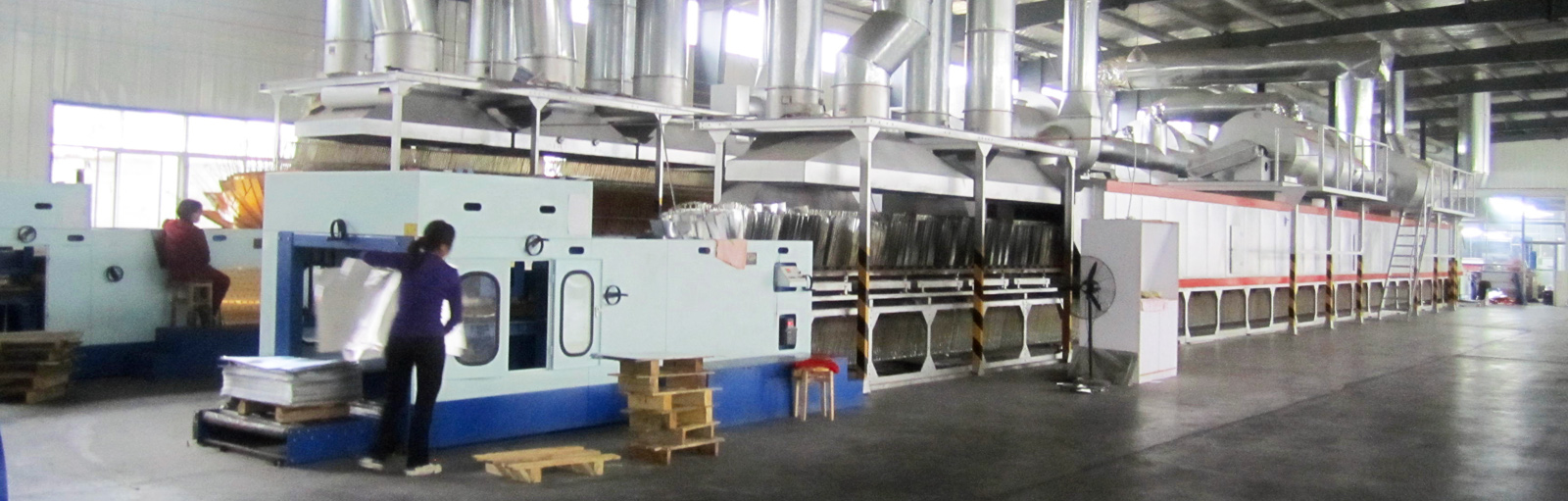
As a manufacturer focused on bottle cap aluminum sheets, we supply 3105 aluminum closure sheet engineered for oil bottle caps where consistent forming, stable coating performance, and reliable sealing are required across high speed cap-making lines. In edible oil, cooking oil, and industrial lubricant packaging, closures are expected to resist corrosion from product vapors, maintain thread integrity, and deliver predictable opening torque over the shelf life.
This article explains how we manufacture 3105 cap stock, why this alloy is widely selected for aluminum closure sheet for oil bottle caps, and how we control the key technical parameters that matter to engineers and cap makers.

Why 3105 aluminum sheet for oil bottle caps
3105 aluminum alloy is an Al-Mn alloy with a small Mg addition. In closure applications it offers a practical balance between strength, formability, corrosion resistance, and cost stability.
Key reasons we recommend 3105 aluminum closure sheet for oil bottle caps:
Stable formability for shell drawing and knurling: 3105 in H14 or H16 tempers provides enough strength to hold cap geometry while still allowing controlled deformation.
Good corrosion resistance: Al-Mn alloys perform well in humid storage and in contact with volatile components. With appropriate surface treatment and coating, the closure interior remains robust.
Coating and printing compatibility: 3105 accepts roller coating systems (primer, basecoat, lacquer) and printing inks with predictable adhesion when surface cleanliness and roughness are controlled.
Consistent mechanical response: The alloy is tolerant to typical process windows for rolling, annealing, slitting, and stamping, supporting low scrap rates in mass production.
For oil packaging, closures are frequently ROPP (roll on pilfer proof) types or threaded closures with tamper evidence. Both require controlled yield strength and elongation to prevent cracking at bridges, knurls, or threads.
Typical closure types and performance targets
In oil bottle packaging, the cap system usually includes:
ROPP aluminum caps: formed from aluminum shell, then rolled onto glass or PET threads.
Pilfer proof designs: require ductility for tamper band formation and controlled tearing for opening.
Lined or linerless sealing: depends on application. When liners are used (EPE, foam, or wad), the cap must maintain compression and torque stability.
From a material standpoint, the critical performance targets are:
Uniform thickness and flatness to ensure stable press feeding and consistent shell dimensions.
Surface quality suitable for coating and printing, without roll marks or embedded particles.
Controlled strength level matched to cap design and forming method.
Burr free edges after slitting to reduce coating defects and press jams.
Manufacturing route for 3105 aluminum closure sheet
We produce aluminum cap stock through a controlled sequence designed to deliver consistent microstructure and surface condition.
1) Melting, alloying, and filtration
We control melt chemistry to the 3105 alloy range and use filtration and degassing to reduce inclusions and hydrogen. Clean melt quality is essential for closure sheet because inclusions can become initiation points for surface defects after rolling and for micro-cracking during cap forming.
2) Casting and homogenization
Slabs are cast and homogenized to reduce segregation and optimize dispersoid distribution. This supports stable rolling behavior and uniform mechanical properties across coils.
3) Hot rolling and cold rolling
Hot rolling establishes the initial gauge and breaks down cast structure. Cold rolling brings the sheet to final thickness and creates the work hardening required for H tempers. For closure sheet, we pay attention to:
Gauge control along length and width
Edge condition for efficient slitting
Surface finish consistency for coating
4) Annealing and temper control
For oil bottle caps, common tempers include H14 and H16, selected based on cap geometry, tamper band design, and forming severity. Temper control is achieved through rolling reduction and, when applicable, intermediate annealing.
5) Surface treatment and coating options
Depending on the customer line configuration, we supply:
Mill finish 3105 aluminum closure sheet for customers who coat in-house
Pre-coated (roll coated) closure sheet with exterior color coat and interior food-safe lacquer for edible oil applications
Surface preparation typically includes cleaning and chemical conversion to improve coating adhesion and corrosion performance.
6) Slitting, packaging, and traceability
Closure stock is delivered as coils or cut sheets. Slitting parameters are optimized to minimize burrs and edge wave. Each coil is labeled for full traceability (heat, coil number, inspection data) to support downstream quality management.

Technical parameters for 3105 closure sheet (typical)
The exact specification depends on cap design and customer equipment. The table below summarizes typical ranges we manufacture for 3105 aluminum closure sheet for oil bottle caps.
| Item | Typical range / option | Notes for oil cap applications |
|---|---|---|
| Alloy | 3105 | Al-Mn-Mg series |
| Temper | H14, H16 (others on request) | H14 for higher formability, H16 for higher strength retention |
| Thickness | 0.18 to 0.30 mm | Commonly 0.20 to 0.25 mm for ROPP |
| Width (coil) | 200 to 1250 mm | Depends on press feeding and slitting plan |
| Inner diameter (coil) | 152 mm, 300 mm, 505 mm | Standard IDs subject to line requirements |
| Surface finish | Mill finish, one side coated, two side coated | Coated options for branding and corrosion protection |
| Coating system (optional) | Primer + basecoat + varnish; interior lacquer | Systems selected for adhesion and oil resistance |
| Tensile strength (Rm) | 145 to 185 MPa (typical) | Controlled by temper and gauge |
| Yield strength (Rp0.2) | 120 to 165 MPa (typical) | Critical for thread forming and torque |
| Elongation (A50) | 3% to 8% (typical) | Higher elongation supports tamper features |
| Flatness | Controlled to closure stock standards | Supports stable feeding and consistent cup drawing |
| Edge condition | Low burr, slit edge | Reduces coating defects and press downtime |
Note: Mechanical property targets are agreed per project because cap geometry, forming sequence, and coating bake cycles can shift the effective strength level.
Surface and coating considerations for oil bottle caps
Oil packaging places specific demands on both exterior decoration and interior protection.
Interior lacquer selection
For edible oils, an interior lacquer should be compatible with food contact requirements applicable to the destination market. From a manufacturing perspective, the key functional requirements include:
Resistance to oil migration and vapor exposure
Adhesion after forming and after thermal exposure during curing
Minimal odor transfer
Low risk of pinholes after deformation
Exterior coating and printing
Exterior coating systems are selected for scratch resistance, print definition, and color stability. Because caps are handled at high speeds, we manage surface roughness and cleanliness to support consistent ink wetting and reduce fisheyes.
Bake cycle impact
Coating cure can modify temper slightly. When we supply pre-coated aluminum closure sheet, we account for bake temperatures and dwell time so that the delivered sheet meets forming targets after coating.
Key quality controls we apply
As a factory producing ROPP cap aluminum sheet and other closure stock, our quality control focuses on parameters that directly influence cap maker yield and sealing consistency.
Dimensional and shape control
Thickness mapping across width and along coil length
Flatness and residual stress monitoring to reduce coil set and edge wave n
Surface inspection
Visual and instrument-based inspection for scratches, roll marks, pits, and inclusions
Cleanliness checks prior to coating to prevent adhesion failures
Mechanical property verification
Tensile testing by coil and by production lot
Hardness checks to confirm temper consistency
Coating performance tests (for pre-coated sheet)
Adhesion testing before and after forming simulation
Solvent rub resistance and cure confirmation
Corrosion resistance screening as defined by customer requirements
Selecting the right temper and gauge
For engineers specifying 3105 H14 aluminum sheet or H16 for oil caps, selection should consider the forming severity and the closure type.
H14 is commonly used when tamper bands have thin bridges or when aggressive knurling is needed. It provides more forming margin and lower cracking risk.
H16 is often chosen when higher stiffness is needed to maintain thread profile and top panel stability, especially for larger diameters.
Gauge selection impacts buckle resistance, torque retention, and overall material consumption. In practice, cap geometry and liner system often determine the lower limit.
If you share cap diameter, thread type, tamper design, and forming sequence (drawing depth, knurling style, rolling parameters), we can recommend a target property window and coil format.
Packaging, handling, and storage recommendations
Closure sheet performance depends not only on the alloy but also on how coils are protected and handled.
Coils should be protected against moisture to prevent staining.
Edge protection is recommended to reduce transit damage, especially for narrow slit coils.
For coated products, avoid high temperature storage and keep away from solvents to maintain coating integrity.
We ship coils with consistent labeling and traceability to support customer quality systems and to enable rapid root-cause analysis if a downstream issue occurs.
Conclusion
3105 aluminum closure sheet remains a practical and widely adopted material choice because it combines formability, corrosion resistance, and coating compatibility in a production-friendly window. As a manufacturer, we focus on melt cleanliness, rolling and temper control, surface preparation, and edge quality so that cap makers can run at high speed with stable torque and low defect rates.
For project-based specification, the most effective starting point is the closure drawing and forming route, followed by a targeted temper and coating system selection. We support this with coil-level mechanical testing, surface inspection, and, when required, coating performance verification.


Applications
Related Articles
-
Advisory Message
Alloy Grade Thickness, Application, etc.
-
Quick Reply
Quick reply within 30 minutes
-
Getting Information
One-to-one design and customized production plan