- Address:Zhengzhou, Henan, China
- Mon-Fri (8am - 6pm)
- sales@alummc.com

8011 Aluminum Alloy Coil / Sheet for Long-Neck Wine Bottle Caps
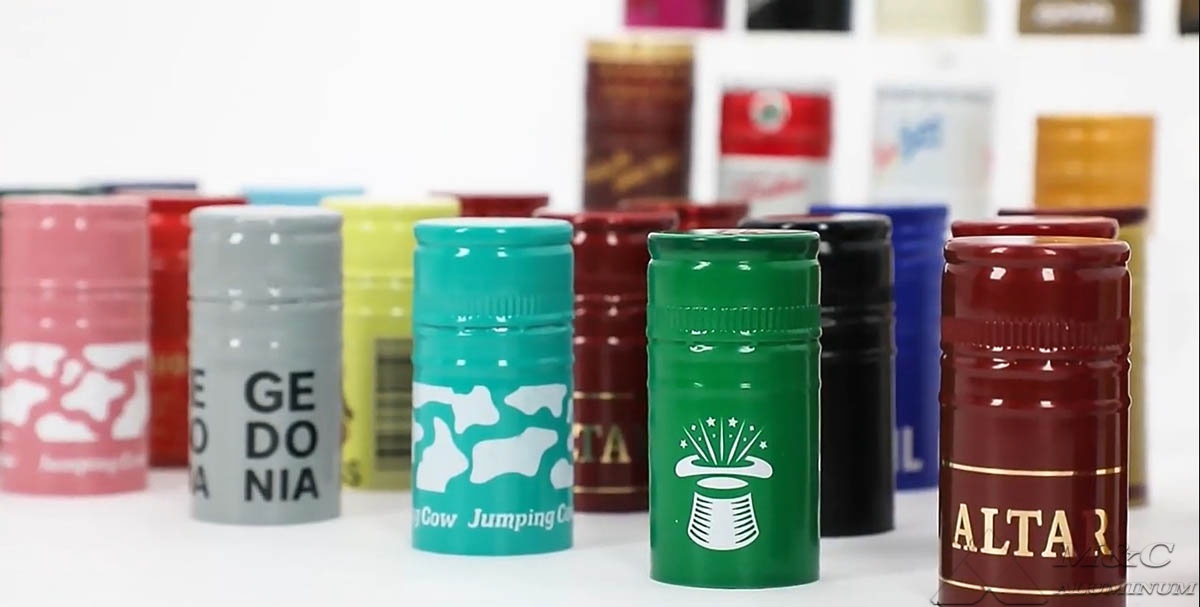
Long-neck wine bottle caps require aluminum material with a controlled balance of formability, surface quality, strength, and coating performance. As a manufacturer of bottle cap aluminum sheets, we produce 8011 aluminum alloy coil and sheet for the conversion of premium wine closures, including roll-on pilfer-proof caps, long skirt caps, deep-drawn caps, and decorative wine bottle closures.
The long neck and extended skirt of a wine bottle cap place higher demands on the aluminum closure sheet than standard beverage closures. During stamping, drawing, knurling, threading, printing, and lacquering, the material must maintain stable mechanical properties and uniform surface appearance. Our 8011 aluminum alloy coil is processed specifically for these requirements, with close control of chemistry, rolling reduction, annealing condition, flatness, and coil cleanliness.
Why 8011 Aluminum Alloy Is Used for Wine Bottle Caps
8011 is an aluminum-iron-silicon alloy widely used in packaging and closure applications. Its alloy design supports good workability while providing sufficient strength for cap shaping, thread formation, and handling during automated bottling. Compared with general-purpose aluminum sheet, 8011 aluminum closure sheet is manufactured with more stringent requirements for gauge tolerance, surface defects, edge condition, and mechanical-property consistency.
For long-neck wine bottle caps, the material must be able to withstand relatively deep drawing without excessive thinning, cracking, orange peel, or wrinkling. The cap skirt must also retain enough rigidity after forming to achieve a clean appearance and stable sealing performance. These requirements make 8011 aluminum sheet a practical option for wine closures produced by high-speed cap-making lines.
Our production process is designed around the actual conversion sequence used by cap manufacturers. We consider not only the incoming coil specifications, but also the downstream performance of the material in blanking, cup drawing, embossing, sidewall decoration, threading, lining, and application to the bottle finish.
Performance Advantages of 8011 Aluminum Sheet for Wine Bottle Caps
1. Excellent deep-draw formability: Good elongation properties make it suitable for stamping, drawing, and curling processes, with a low risk of cracking during forming.
2. Good strength and rigidity: Meets requirements for compression resistance and deformation resistance in bottle caps.
3. Superior surface quality: A flat, smooth finish suitable for printing, coating, and embossing, enhancing the cap's visual appeal.
4. Good corrosion resistance: Withstands contact with wine bottle openings and storage environments, offering excellent durability.
5. Lightweight and easy to process: Low aluminum density reduces cap weight while facilitating high-speed, continuous production.
6. Suitable for food-contact applications: 8011 aluminum alloy is widely used in food and beverage packaging and meets material stability requirements for cap manufacturing.
7. Good recyclability: Aluminum is recyclable, supporting green packaging and sustainable production.
Technical Parameters of 8011 Aluminum Closure Sheet
The following ranges represent common production specifications for 8011 aluminum alloy coil and sheet used in long-neck wine bottle caps. Final parameters can be adjusted according to cap diameter, skirt length, forming method, coating system, and customer processing equipment.
| Item | Typical Specification | Remarks |
|---|---|---|
| Alloy | AA 8011 | Aluminum-iron-silicon alloy |
| Temper | H14, H16, H18, H19, H22, H24 | Selected according to cap design and drawing depth |
| Thickness | 0.20-0.30 mm | Common range for wine bottle cap production |
| Width | 300-1,300 mm | Slit width available according to blanking layout |
| Coil inner diameter | 150 mm, 300 mm, 505 mm | Subject to processing line requirements |
| Coil outer diameter | Up to 2,000 mm | Controlled by safe coil weight and transport conditions |
| Coil weight | 1-8 metric tons | Available in customized unit weights |
| Tensile strength | Approx. 110-180 MPa | Dependent on temper and thickness |
| Elongation | Approx. 2-10% | Matched to forming and drawing requirements |
| Surface | Mill finish, degreased, coated, printed | Supplied for different conversion routes |
| Flatness | Controlled for cap-making operations | Important for feeding and printing stability |
| Edge condition | Trimmed slit edge | Burr level controlled for safe handling and blanking |
Material Properties Required for Long-Neck Closures
Consistent Formability
The extended sidewall of a long-neck wine cap requires the aluminum to flow evenly during drawing. If the material has uneven strength across the coil width or between coil lots, cap makers may encounter variable skirt height, cracking near the shoulder, inconsistent threading, or excess scrap. We use controlled rolling schedules and annealing practices to maintain stable properties throughout each coil.
8011 aluminum alloy coil can be supplied in tempers appropriate for different cap-making routes. Softer tempers are often selected when the closure design requires deeper drawing or more aggressive embossing. Harder tempers may be appropriate where greater cap stiffness, dent resistance, or line handling performance is required. Temper selection should always be evaluated together with cap geometry, forming tools, and coating thickness.
Uniform Surface for Printing and Decoration
Wine packaging often emphasizes visual presentation. Long-neck wine bottle caps may use solid colors, metallic effects, matte finishes, gloss coatings, embossed logos, top printing, or multi-color sidewall graphics. The aluminum closure sheet must therefore have a uniform surface that supports reliable pretreatment, coating adhesion, and printing definition.
We control surface cleanliness during rolling and finishing to reduce the risk of oil streaks, roll marks, embedded particles, scratches, and other defects that may become visible after coating. For coated 8011 aluminum sheet, the surface condition is managed to support even paint coverage and stable ink adhesion. This is especially important for dark, high-gloss, and metallic decorative systems, where minor substrate variations can be more apparent.
Strength After Cap Formation
A wine cap must be easy to apply while retaining its shape during filling, transport, storage, and consumer handling. The formed closure needs adequate wall stability around the bottle neck, particularly in the thread area and lower skirt. The 8011 aluminum sheet temper is selected to provide a practical balance between deformation during manufacture and strength in the finished cap.
Mechanical consistency also helps maintain reliable torque characteristics. While final sealing performance depends on the complete closure system, including liner, cap geometry, bottle finish, and capping conditions, a stable aluminum substrate is an essential starting point for repeatable production.
Our Manufacturing Process for 8011 Aluminum Coil
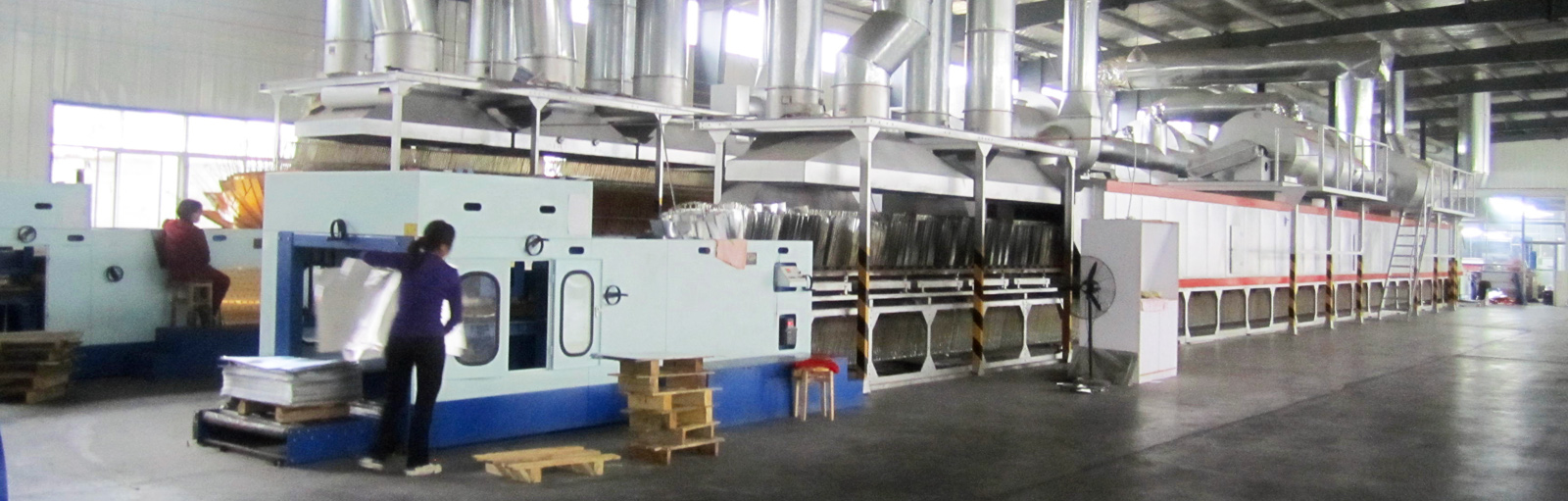
As a bottle cap aluminum sheet manufacturer, we manage the key process stages from alloy preparation through final inspection. The production route is designed to produce a closure-grade substrate rather than a general industrial sheet.
Melting and Alloy Composition Control
The process begins with controlled melting and alloying. Iron and silicon levels are managed within the 8011 alloy specification to support the targeted rolling and forming characteristics. Chemical analysis is performed to verify alloy composition before casting. Stable chemistry helps reduce variations in mechanical response during subsequent rolling and annealing.
Casting and Hot Rolling
Cast slabs are homogenized and hot rolled to establish the required structure for cold rolling. Temperature control during hot rolling is important for reducing structural inconsistency and supporting downstream gauge stability. Our process parameters are managed to produce material suitable for thin-gauge closure applications.
Cold Rolling and Gauge Control
Cold rolling reduces the material to the required bottle cap aluminum sheet thickness. Thickness tolerance is closely monitored because even small gauge variations can affect blank weight, drawing behavior, cap rigidity, and coating consumption. We use measurement and process controls throughout rolling to maintain uniform thickness across the coil width and length.
Annealing and Temper Stabilization
Annealing determines the final temper and significantly affects formability. The annealing cycle is selected according to the intended cap design and processing requirements. Proper temper stabilization supports consistent drawing, reduced fracture risk, and predictable deformation during threading and knurling.
Slitting, Inspection, and Packaging
After finishing, coils can be slit to customer-specified widths. Edges are inspected to control burrs and deformation that could interfere with automatic feeding or blanking. Final inspection includes checks for thickness, width, surface quality, flatness, coil winding, and mechanical properties. Coils are packed with protective materials to minimize moisture exposure, surface damage, and transport-related deformation.
Coated and Printed Aluminum for Wine Cap Production
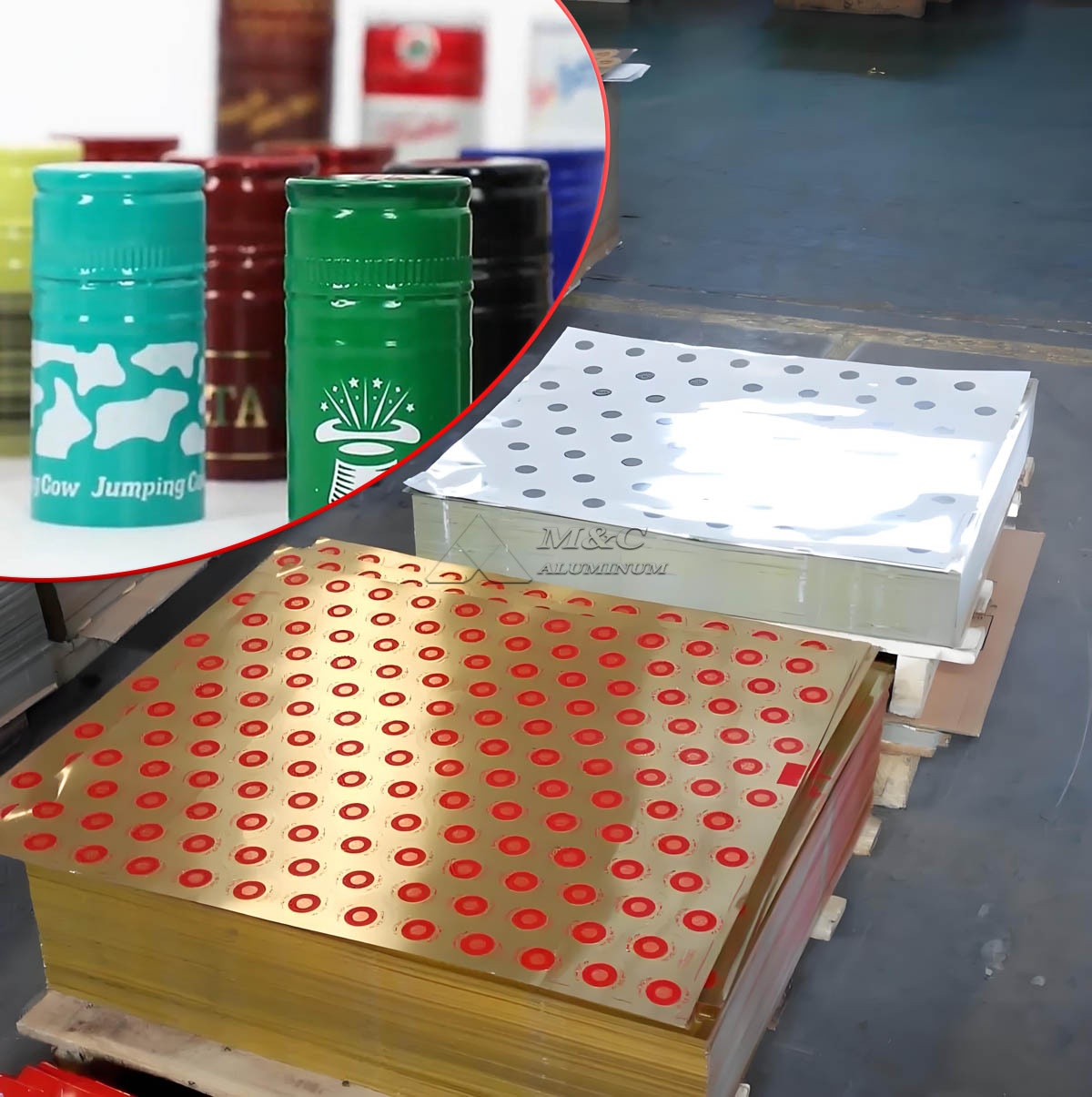
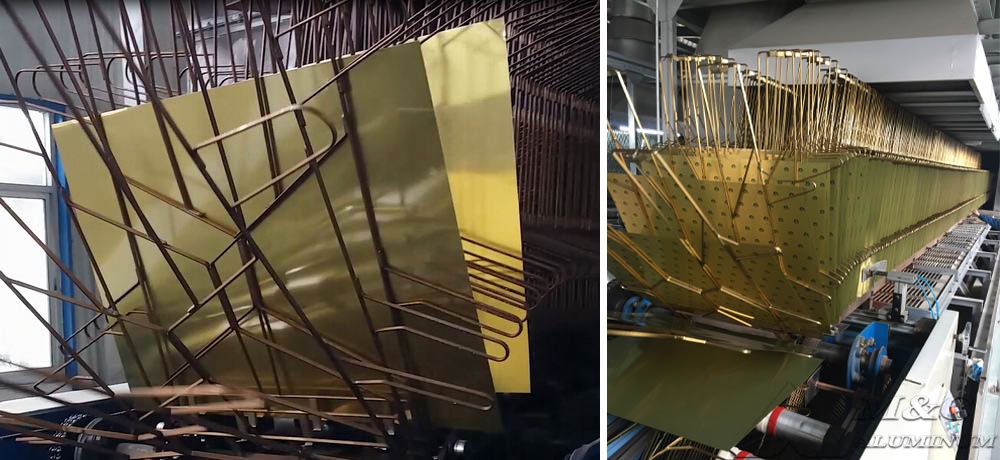
8011 aluminum alloy coil may be supplied as mill-finish material for customer coating or as pretreated and coated aluminum closure sheet for direct conversion. The appropriate supply condition depends on the cap maker's production route and decorative requirements.
For coated products, coating selection should consider forming depth, curing conditions, scratch resistance, color consistency, and compatibility with printing inks and varnishes. Coatings for wine bottle caps must remain well bonded after drawing and subsequent cap-forming operations. A coating that performs well on a flat sheet but cracks or loses adhesion during drawing is not suitable for long-skirt closure production.
Our bottle cap aluminum sheet can be prepared for a range of exterior decorative systems. These include clear lacquer, white base coating, colored coating, metallic coating, and printing-ready surfaces. The selected system should be validated through forming trials using the final cap geometry and production tooling.
Quality Controls for Aluminum Wine Cap Material
Long-neck wine bottle caps are a highly appearance-sensitive packaging application. For this reason, our quality control focuses on both measurable dimensions and practical conversion performance. Key controls include the following:
Alloy composition verification for each production batch.
Thickness and width measurement across the coil.
Mechanical-property testing, including tensile strength and elongation.
Surface inspection for scratches, oil marks, roll marks, stains, and inclusions.
Flatness and coil-shape evaluation to support efficient feeding.
Edge inspection after slitting to control burrs and edge damage.
Coating adhesion, color consistency, and film appearance checks where coated material is supplied.
Packaging inspection to ensure coil protection during storage and shipment.
For applications with demanding forming conditions, we recommend production trials before full-scale supply. This allows the coil temper, thickness, coating system, and slitting width to be matched to the customer's cap tooling and process settings.
Selecting the Right 8011 Coil Specification
The correct 8011 aluminum coil specification is not defined by thickness alone. Cap diameter, skirt length, thread profile, embossing depth, liner type, decoration design, and bottling conditions all influence material selection. A longer skirt generally requires closer attention to formability and coating flexibility, while caps intended for premium visual presentation may require tighter surface and color-control standards.
Our technical team works from the cap drawing and processing information to recommend suitable parameters. The objective is to provide 8011 aluminum sheet that runs consistently through cap-making equipment and supports the required final appearance. This approach helps reduce forming defects, improve material yield, and maintain stable closure quality.
Conclusion
8011 aluminum alloy coil and sheet provide a reliable material foundation for long-neck wine bottle caps when produced under closure-grade process controls. Its balance of formability, strength, surface quality, and coating compatibility makes it suitable for a broad range of ROPP and decorative wine closures.
By controlling alloy chemistry, rolling accuracy, annealing condition, surface finish, and final inspection, we manufacture 8011 aluminum closure sheet for stable cap conversion and consistent wine packaging performance. Material specifications can be tailored to the actual requirements of long-neck wine cap production, from uncoated coil through coated and printing-ready aluminum sheet.


Applications

Related Articles
- Color Coated Aluminum Sheet for Bottle Caps
- Bottle Cap Aluminum Closure Sheet Sealing Precautions
- 8011 vs 3105: Which Alloy Is More Suitable for Aluminum Closures?
- Aluminum caps for oral liquid bottles
- Aluminum Alloy Bottle Cap Material: 3105 Aluminum Coil
- Aluminum Alloy Bottle Cap Material Thickness
-
Advisory Message
Alloy Grade Thickness, Application, etc.
-
Quick Reply
Quick reply within 30 minutes
-
Getting Information
One-to-one design and customized production plan