- Address:Zhengzhou, Henan, China
- Mon-Fri (8am - 6pm)
- sales@alummc.com

Food-Grade Clear-Coated Aluminum Sheet for Cap Manufacturing
Food-grade clear-coated aluminum sheet is an important packaging material for producing beverage closures, wine caps, spirits caps, pharmaceutical caps, and other aluminum bottle closures. As a manufacturer of bottle cap aluminum sheet, we produce coated aluminum coil and sheet with controlled alloy composition, rolling properties, surface cleanliness, and lacquer performance to support stable high-speed cap manufacturing.
A clear coating protects the aluminum surface while preserving its metallic appearance. It can also provide a suitable base for subsequent printing, varnishing, embossing, and forming. For cap manufacturers, the quality of the aluminum closure sheet directly affects drawing performance, skirt formation, thread definition, coating integrity, and the visual consistency of the finished closure.
What Is Food-Grade Clear-Coated Aluminum Sheet?
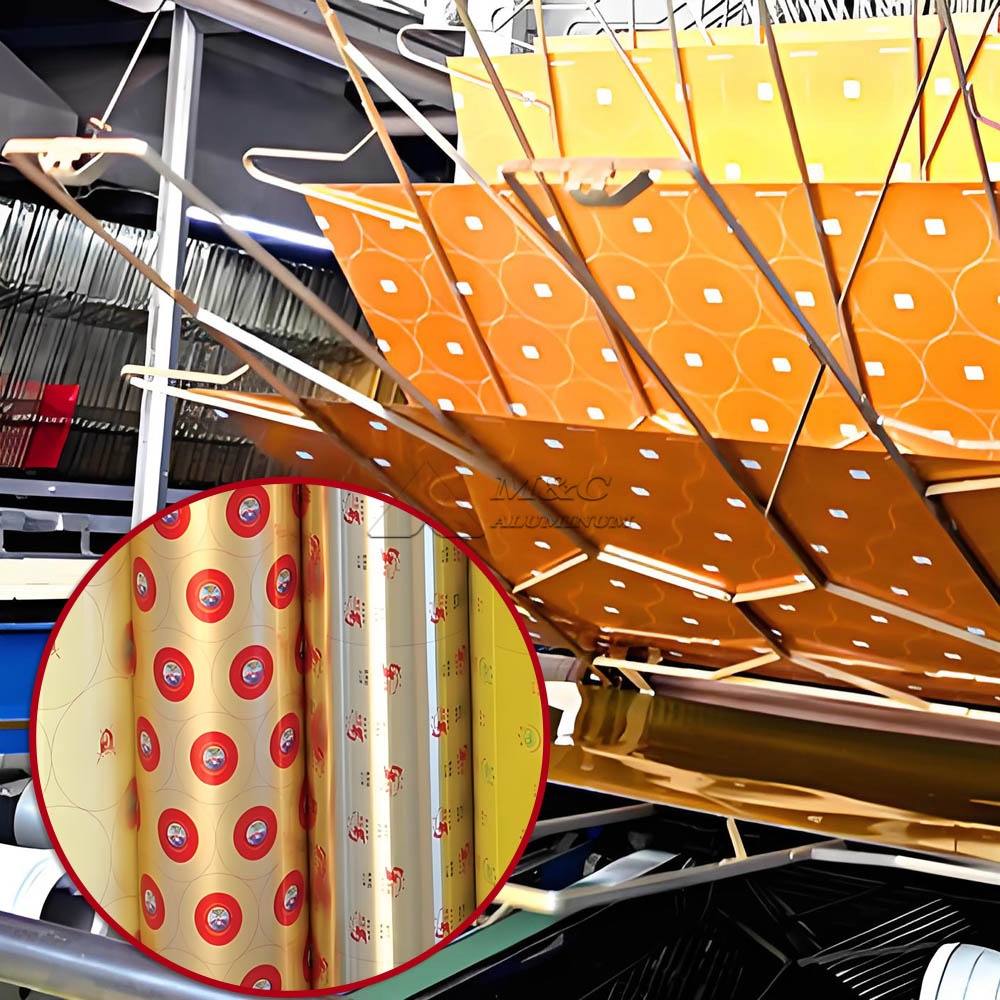
Food-grade clear-coated aluminum sheet is aluminum cap stock treated with a transparent protective lacquer on one or both sides. The coating is designed for intended food and beverage packaging applications and is selected according to the closure design, filling product, processing route, and applicable market requirements.
Unlike bare aluminum sheet, clear-lacquered aluminum coil has an added protective layer that helps reduce surface scratching, improves resistance to handling marks, and supports a uniform appearance after stamping and deep drawing. Depending on the cap type, the clear coating may be applied to the outer surface, the inner surface, or both sides of the aluminum sheet.
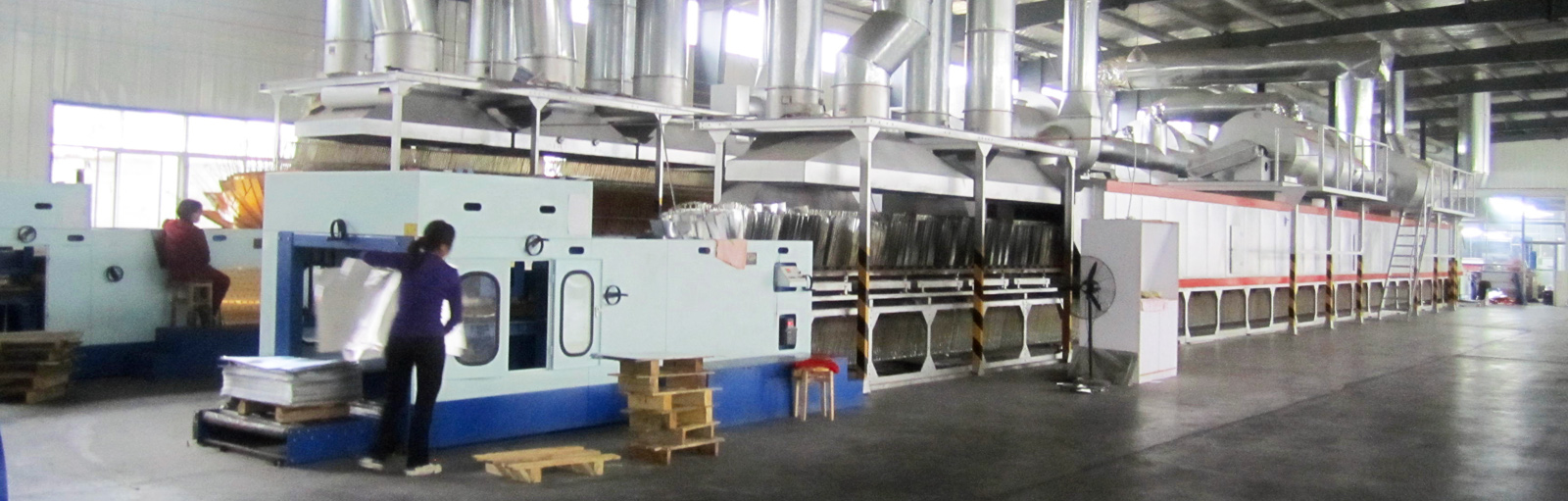
In our production process, the aluminum substrate is first rolled to the required gauge and flatness. The coil is then cleaned, chemically pretreated where required, coated in a controlled line, baked at defined metal temperatures, cooled, inspected, and slit or cut to customer specifications. This integrated manufacturing control is essential for consistent aluminum closure sheet quality.
Common Alloys for Aluminum Cap Stock
The most widely used alloys for bottle cap aluminum sheet are 8011 and 3105. Each alloy offers a practical balance of formability, strength, surface quality, and processing stability.
8011 Aluminum Sheet
8011 aluminum sheet is widely used for ROPP caps, pharmaceutical closures, beverage caps, and general-purpose aluminum closures. It provides good deep-drawing performance, stable mechanical properties, and a clean surface suitable for coating and printing. For closures requiring reliable forming at high production speeds, 8011 aluminum closure sheet remains a standard material choice.
3105 Aluminum Sheet
3105 aluminum sheet contains manganese and provides higher strength than many 1xxx series aluminum grades. It is commonly selected for screw caps, wine closures, spirits closures, and applications where improved body rigidity is required. Properly controlled 3105 aluminum closure sheet maintains good processability while supporting cap designs with pronounced knurling, threads, or longer skirts.
The final alloy selection depends on cap diameter, shell height, drawing depth, thread geometry, line speed, decoration process, and required opening performance.
Typical Technical Parameters
The following table shows typical production ranges for clear-coated aluminum sheet used in cap manufacturing. Final specifications should be confirmed according to the cap design and conversion process.
| Parameter | Typical Range or Option | Notes |
|---|---|---|
| Alloy | 8011, 3105 | Common alloys for aluminum closure sheet |
| Temper | H14, H16, H18, H19 | Selected according to drawing and strength requirements |
| Thickness | 0.18 mm to 0.30 mm | Common cap-stock range; other gauges available by agreement |
| Width | 500 mm to 1,650 mm | Supplied as coil, slit coil, or sheet |
| Coil inner diameter | 505 mm or 610 mm | Based on customer equipment requirements |
| Coil outer diameter | Up to 2,000 mm | Controlled according to transport and line capability |
| Clear coating thickness | 2 microns to 8 microns | Depends on coating system and end use |
| Surface finish | Mill finish, bright finish, coated finish | Clear lacquer retains metallic aluminum appearance |
| Coating side | One side or two sides | Configured for printing, forming, and internal protection |
| Flatness and edge condition | Controlled by specification | Important for feeding, stamping, and slitting stability |
| Application | ROPP caps, wine caps, spirits caps, pharmaceutical caps | Also suitable for selected food container closures |
Why Clear Coating Matters in Cap Manufacturing
Clear coating performs more than an aesthetic function. During closure production, aluminum coil passes through decoiling, printing, curing, blanking, stamping, drawing, curling, knurling, thread forming, lining, and inspection. Every step can place stress on the surface.
A properly cured clear lacquer helps protect the aluminum closure sheet from abrasion during transportation and processing. It can improve the surface condition after stamping and reduce the risk of visible scuffing on finished caps. For decorated closures, clear coating may also be used as a protective topcoat over printed graphics, depending on the customer's decoration system.
For food-contact applications, coating selection must be matched to the intended use conditions. These may include contact with acidic drinks, alcoholic beverages, edible oils, dairy products, dry foods, or pharmaceutical products. The closure manufacturer and brand owner should define the relevant food-contact requirements, migration limits, sterilization conditions, and regional compliance needs before final coating approval.
Manufacturing Control for Coated Aluminum Coil
As a bottle cap aluminum sheet manufacturer, we focus on process consistency from melting and rolling through final coating inspection. Cap stock is not simply standard aluminum sheet. It must perform predictably under repeated forming operations.
Substrate Quality and Rolling Control
The aluminum substrate must have uniform thickness, stable hardness, controlled grain structure, and low surface defect levels. Variations in gauge or mechanical properties can lead to inconsistent drawing depth, wrinkling, tearing, uneven threads, or cap skirt defects.
Our rolling process controls thickness tolerance, shape, edge quality, and surface condition. We also monitor coil-to-coil consistency so that cap converters can maintain stable stamping settings and minimize production adjustments.
Cleaning and Pretreatment
Before coating, the aluminum surface is cleaned to remove rolling residues and fine contaminants. A clean surface is necessary for reliable coating adhesion. Depending on the coating system and application, pretreatment may be used to support adhesion and corrosion resistance.
Surface preparation is especially important for clear-coated aluminum sheet because the transparent film does not conceal surface defects. Cleanliness, uniform reflectivity, and coating continuity all contribute to the final appearance of the closure.
Coating and Thermal Curing
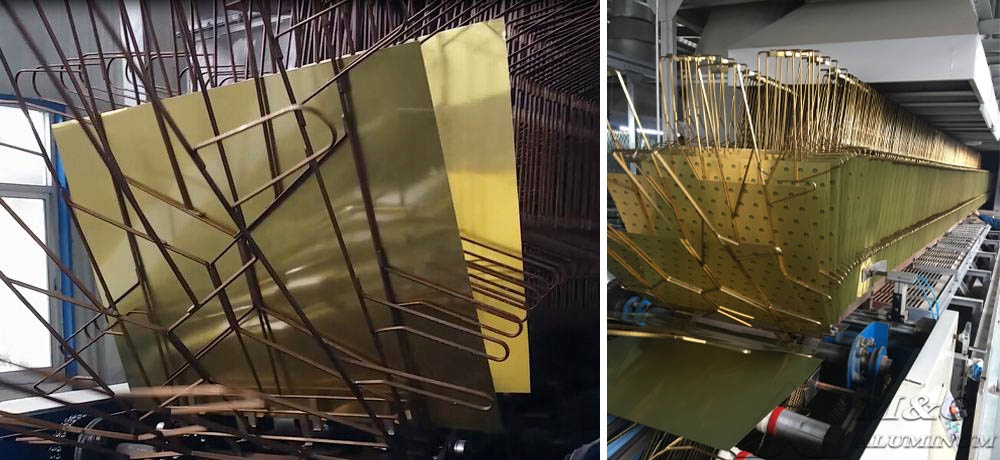
The clear lacquer is applied in a controlled coating line with attention to wet film uniformity, line speed, oven profile, and final cure condition. Insufficient curing may affect adhesion, hardness, odor, or chemical resistance. Excessive thermal exposure can affect coating appearance or substrate properties.
We inspect coating weight, visual uniformity, adhesion, and surface condition during production. For specified projects, additional tests may include solvent resistance, forming evaluation, scratch resistance, and coating continuity checks.
Forming Performance for ROPP and Screw Caps
ROPP cap material must withstand blanking and multi-stage drawing without cracking or excessive wrinkling. The aluminum sheet needs sufficient ductility to form the cap shell while maintaining enough strength for reliable threads, bridges, and tamper-evident features.
For wine and spirits closures, long skirts and detailed thread profiles place additional demands on the aluminum closure sheet. The combination of alloy, temper, thickness, lubrication condition, and coating flexibility must be balanced carefully. A coating that performs well on flat sheet but cracks during deep drawing is not suitable for demanding cap applications.
Our technical evaluation considers the customer's cap dimensions and forming sequence. This helps determine whether 8011 or 3105 aluminum sheet, as well as the appropriate temper and coating system, is better suited to the application.
Quality Inspection and Traceability
Quality assurance for food-grade clear-coated aluminum sheet includes both substrate and coating inspection. Typical checks include thickness measurement, width verification, coil weight, surface inspection, edge condition, color and gloss comparison where applicable, coating adhesion, and cure evaluation.
For food-contact packaging projects, documentation requirements may also include material certificates, coating technical data, batch traceability, and compliance declarations from the relevant coating system. We maintain production identification through key manufacturing stages to support orderly material management and customer quality review.
Storage and Handling Recommendations
Clear-coated aluminum coil should be stored in a dry, clean, temperature-stable warehouse. Condensation must be avoided because moisture can affect the aluminum surface and, in some conditions, contribute to staining or corrosion. Coils should remain in protective packaging until they are ready for production.
During transport and conversion, care should be taken to avoid impact damage, edge crushing, and exposure to dust or aggressive chemicals. Cap manufacturers should also use clean handling equipment, appropriate decoiler tension, and properly maintained stamping tools to protect the coated surface.
Selecting the Right Clear-Coated Aluminum Sheet
The correct aluminum cap stock should be selected as a complete system rather than by alloy alone. Important factors include cap diameter, shell height, drawing ratio, decoration method, closure liner, filling product, sealing requirements, and export market regulations.
For standard ROPP cap applications, 8011 aluminum sheet in a suitable temper often provides an effective balance of formability and consistency. For higher-strength closures or designs requiring stronger shell rigidity, 3105 aluminum closure sheet may be preferred. Clear coating specifications should then be aligned with the intended external appearance, internal protection needs, and forming conditions.
Conclusion
Food-grade clear-coated aluminum sheet provides a reliable material foundation for modern cap manufacturing. Its performance depends on the interaction of alloy selection, rolling quality, surface preparation, coating formulation, curing control, and downstream forming conditions.
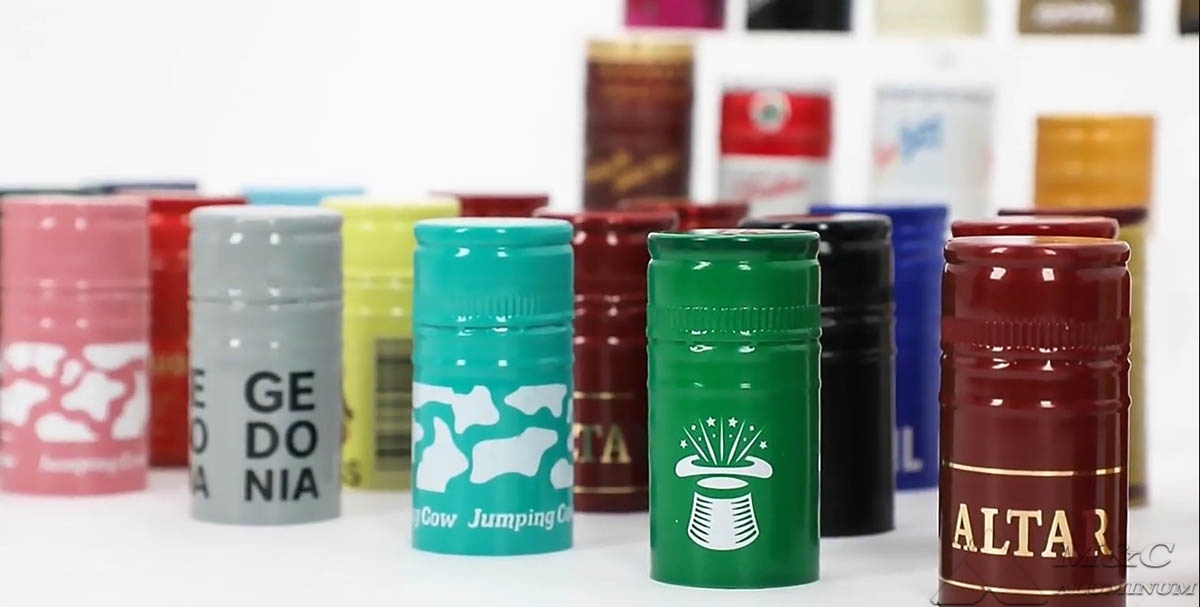
By manufacturing 8011 and 3105 aluminum closure sheet with controlled dimensions, stable mechanical properties, and carefully applied clear coatings, we support cap producers making ROPP caps, wine closures, spirits caps, and other food and beverage closures. A properly specified clear-coated aluminum coil helps maintain efficient conversion, clean cap appearance, and dependable closure performance.


Applications

Related Articles
- Why do bottle cap aluminum closure sheet need to be oiled?
- Properties of 3105 Aluminum Alloy for Closures
- Hot rolled A8011 H16 aluminum strip for high performance anti-theft caps
- 8011 Aluminum Sheets, Strips, and Foils for Bottle Caps
- Painted aluminum alloy closure sheet 8011 3105
- Color coated aluminum sheet for aluminum screw caps
-
Advisory Message
Alloy Grade Thickness, Application, etc.
-
Quick Reply
Quick reply within 30 minutes
-
Getting Information
One-to-one design and customized production plan