- Address:Zhengzhou, Henan, China
- Mon-Fri (8am - 6pm)
- sales@alummc.com

8011-H14 and 3003-H16 Aluminum Sheets for Tamper-Proof Caps
As an aluminum rolling and finishing manufacturer serving the closure industry, we produce aluminum closure sheet for beverage, wine, spirits, pharmaceutical, edible oil, and chemical packaging applications. Among the materials used for tamper-proof caps, 8011-H14 aluminum sheet and 3003-H16 aluminum sheet are two practical and widely specified options. Both alloys support stable forming, reliable thread rolling, good coating adhesion, and consistent sealing performance when the rolling, annealing, cleaning, and coating processes are controlled correctly.
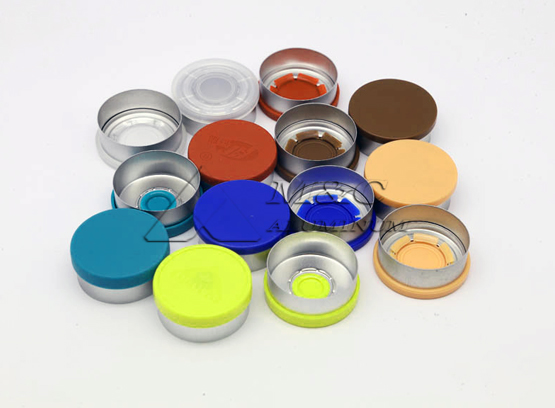
Tamper-proof caps, including ROPP caps and pilfer-proof closures, require more than basic sheet strength. The aluminum cap stock must withstand deep drawing, side wall ironing, knurling, bridge cutting, embossing, and capping torque without cracking or excessive springback. At the same time, the surface must be suitable for food-grade or pharmaceutical-grade coating systems. This article explains how we manufacture and control 8011-H14 and 3003-H16 aluminum sheets for tamper-proof caps, and how these two materials differ in practical cap production.
Why Aluminum Sheet Is Used for Tamper-Proof Caps
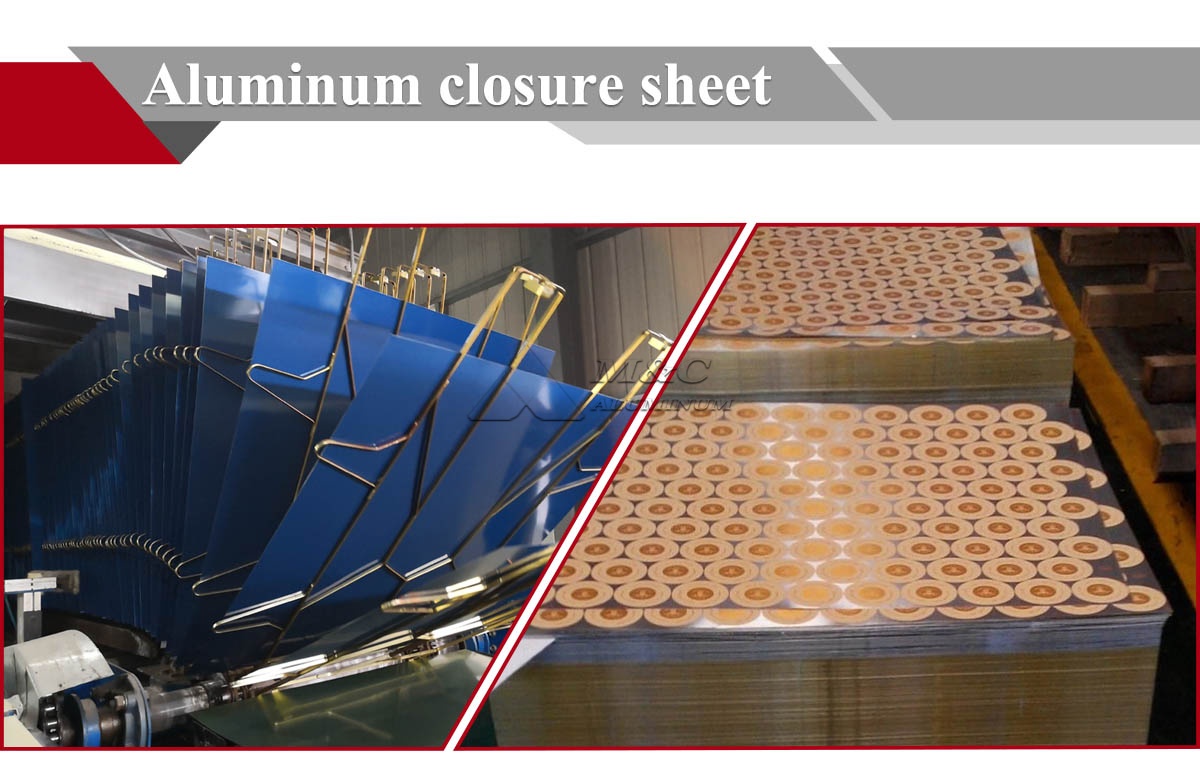
Aluminum is preferred for tamper-proof closures because it combines low weight, corrosion resistance, formability, and printability. In cap manufacturing, coils are typically degreased, pretreated, coated, printed, slit, and then fed into high-speed stamping and forming lines. The metal must deform uniformly across the coil width and length, because small variations in temper or thickness may lead to cap height deviation, broken bridges, wrinkle marks, or unstable removal torque.
For tamper-evident caps, the lower band and bridge area are particularly demanding. During application to the bottle, the closure is rolled onto the thread profile, while the tamper band must remain intact until first opening. If the aluminum closure sheet is too soft, the thread may deform excessively or torque retention may be insufficient. If it is too hard, cracking can occur during forming or bridge cutting. Therefore, alloy and temper selection must be linked to cap diameter, cap height, coating system, liner type, bottle finish, and capping equipment.
8011-H14 Aluminum Sheet for Tamper-Proof Caps
8011 aluminum alloy belongs to the 8xxx series and is commonly used for aluminum closure sheet, pharmaceutical foil, and packaging materials. In the H14 temper, it offers a balanced combination of moderate strength and good formability. For tamper-proof caps, 8011-H14 aluminum sheet is often selected where the closure requires clean drawing, good earing control, and reliable performance in medium-depth forming.
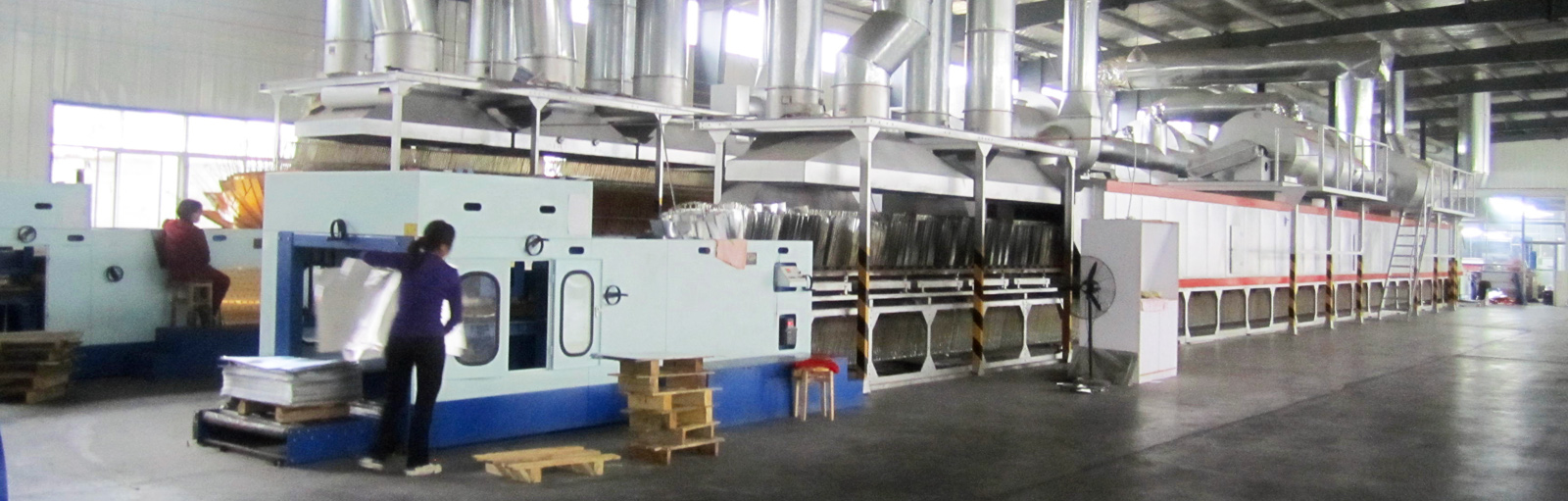
In our production, 8011-H14 cap stock is manufactured through controlled casting, hot rolling or continuous casting and rolling, cold rolling, intermediate annealing when required, final rolling, tension leveling, surface cleaning, and inspection. The H14 temper is obtained by strain hardening to a half-hard condition, enabling the sheet to maintain shape after forming while still allowing the cap skirt and tamper band to be processed without fracture.
8011-H14 aluminum sheet is suitable for many beverage, water, liquor, and pharmaceutical cap applications. It performs well with epoxy, polyester, vinyl, and organosol coating systems when surface cleanliness and conversion treatment are properly controlled. For caps requiring internal protective coating, the sheet surface must have low residual rolling oil and uniform wettability to prevent coating pinholes or adhesion failure.
3003-H16 Aluminum Sheet for Tamper-Proof Caps
3003 aluminum alloy is an Al-Mn alloy with higher strength than many 1xxx and 8xxx packaging alloys. In H16 temper, it has a harder condition than H14 and is used where higher cap rigidity, better torque resistance, and improved dent resistance are required. 3003-H16 aluminum sheet is often specified for closures that need stronger side walls, more stable thread formation, or improved performance under transportation and storage stress.
Compared with 8011-H14, 3003-H16 usually provides higher tensile strength and yield strength. This can be beneficial for closures applied to carbonated beverages, spirits, edible oil bottles, and some industrial packaging caps. However, because H16 is harder, the forming process must be designed carefully. Tool geometry, lubrication, drawing ratio, and bridge cutting parameters should match the material condition to avoid stress concentration.
As a manufacturer, we pay particular attention to grain structure and mechanical property uniformity when producing 3003-H16 aluminum cap stock. A stable cold rolling schedule and accurate final thickness control are essential. If the material is over-hardened or if elongation is too low, cap makers may experience cracking near the knurled area or tamper band. Our process control focuses on achieving the specified hardness while preserving sufficient formability for high-speed cap lines.
Typical Technical Parameters
The exact specification should be confirmed according to the cap drawing, capping method, coating requirement, and applicable packaging standard. The following table lists typical reference values for 8011-H14 and 3003-H16 aluminum sheets for tamper-proof caps produced in our mill.
| Item | 8011-H14 Aluminum Sheet | 3003-H16 Aluminum Sheet |
|---|---|---|
| Main alloy series | Al-Fe-Si | Al-Mn |
| Typical temper | H14 | H16 |
| Common thickness range | 0.18-0.30 mm | 0.20-0.35 mm |
| Common width range | 200-1600 mm | 200-1600 mm |
| Tensile strength | 125-165 MPa | 160-210 MPa |
| Elongation | 2-6 percent | 1.5-5 percent |
| Thickness tolerance | As agreed, commonly +/-0.005 mm or tighter | As agreed, commonly +/-0.005 mm or tighter |
| Surface condition | Degreased, mill finish, or coated | Degreased, mill finish, or coated |
| Typical coating | Epoxy, polyester, vinyl, organosol | Epoxy, polyester, vinyl, organosol |
| Typical applications | ROPP caps, beverage caps, pharmaceutical caps | Higher-rigidity ROPP caps, spirits caps, edible oil caps |
These values are typical production references rather than fixed limits for all orders. For engineering projects, we recommend confirming the final specification based on cap diameter, forming depth, bridge design, and sealing test results.
Manufacturing Control in Our Factory
The performance of bottle cap aluminum sheet depends on the entire manufacturing route, not only the alloy name. In our factory, the production process is designed to control four main factors: thickness accuracy, mechanical property stability, surface cleanliness, and flatness.
Thickness control is critical because cap weight, drawing behavior, and thread rolling stability are directly affected by gauge variation. We use rolling force control, automatic gauge control, and coil-by-coil measurement to maintain consistent thickness across the coil. For closure sheet, even small deviations may influence cap height and sealing compression.
Mechanical properties are managed through rolling reduction, annealing temperature, annealing time, and final temper pass. For 8011-H14 aluminum sheet, the target is a half-hard condition with stable elongation. For 3003-H16 aluminum sheet, the process must deliver higher strength while avoiding excessive brittleness. Samples are tested for tensile strength, elongation, cupping performance where required, and hardness consistency.
Surface cleanliness is also essential. Residual rolling oil, aluminum powder, water stain, or oxidation can reduce coating adhesion and printing quality. Before coating or delivery, the sheet may be cleaned, chemically treated, and inspected for surface defects. For food and pharmaceutical closures, we can align surface and coating controls with the customer-specified regulatory and migration requirements.
Flatness and coil shape affect slitting and stamping efficiency. Poor flatness can cause feeding instability in cap production, especially on high-speed multi-station presses. We use tension leveling and coil shape inspection to reduce edge waves, center buckle, and crossbow.
Coating and Printing Requirements
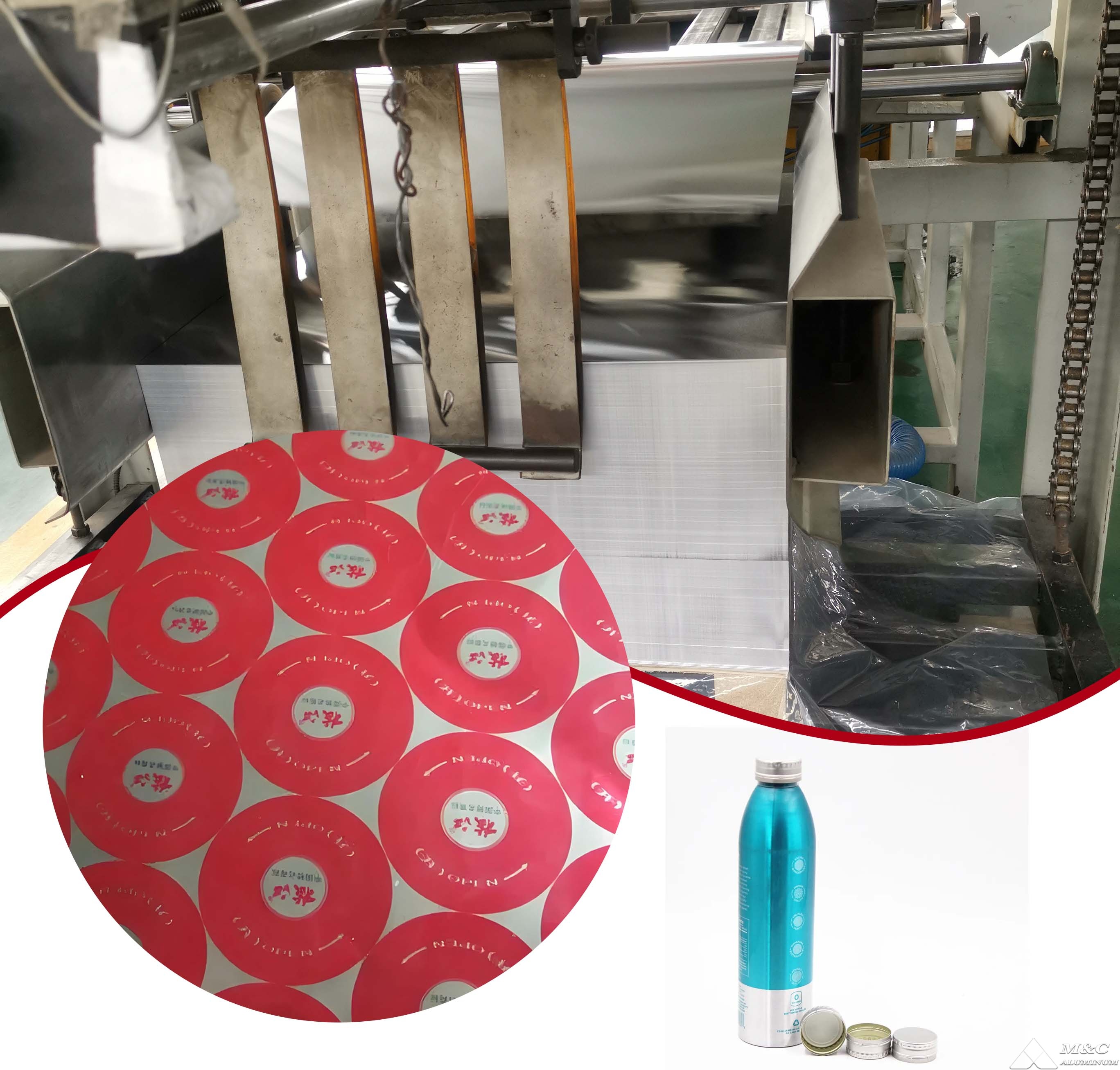
Tamper-proof caps often need external decorative coating and internal protective coating. The external surface may be printed with logos, batch information, or brand colors. The internal surface must protect the packaged product and prevent metal contact where required. The coating system must be compatible with the liquid, sterilization conditions, and storage environment.
For 8011-H14 and 3003-H16 aluminum closure sheet, coating adhesion depends on pretreatment, surface roughness, cleanliness, curing temperature, and film thickness. We provide coated aluminum cap stock according to customer requirements, including primer, color coating, clear lacquer, and internal protective coating. During production, coating weight, curing degree, adhesion, flexibility, and solvent resistance are tested according to agreed standards.
When a cap maker performs its own coating and printing, we supply mill finish or degreased aluminum sheet with controlled surface quality. In either case, communication between the aluminum sheet manufacturer and cap producer is important. The selected lubricant, forming speed, coating hardness, and curing process should not conflict with the mechanical properties of the alloy.
Selection Between 8011-H14 and 3003-H16
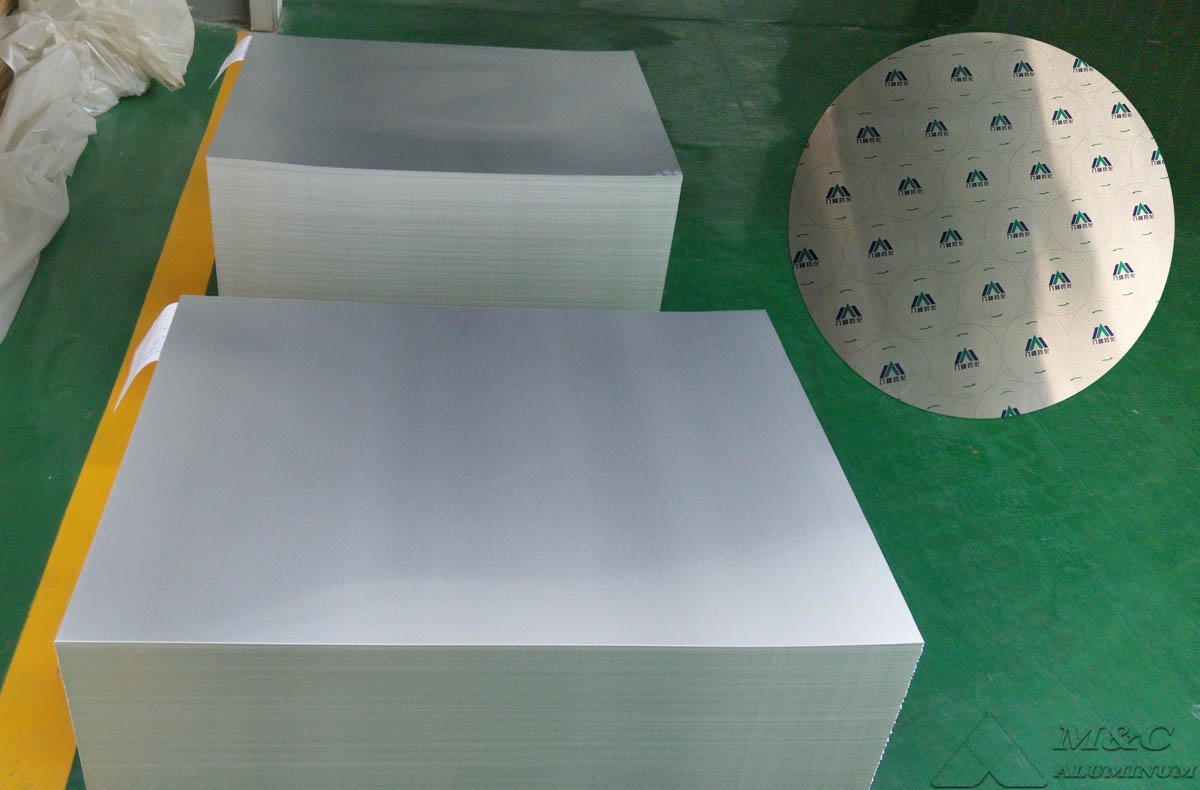
The choice between 8011-H14 aluminum sheet and 3003-H16 aluminum sheet should be based on closure design rather than price alone. For caps requiring good formability, smooth drawing, and general tamper-proof performance, 8011-H14 is often a reliable and economical choice. It is suitable for many standard ROPP cap structures and can provide stable performance in large-volume production.
For caps that require higher rigidity, stronger thread holding, or better resistance to deformation during transportation, 3003-H16 may be more appropriate. Its higher strength supports stable cap geometry and can improve torque performance in demanding applications. However, the cap tooling and processing parameters should be verified because the harder temper has lower forming tolerance.
In some projects, both alloys may pass basic forming tests, but long-term capping performance can differ. We therefore recommend evaluating removal torque, bridge breaking force, leakage resistance, liner compression, coating flexibility, and corrosion resistance before final mass production. Our technical team can support trial coils and property adjustment within the agreed specification range.
Quality Inspection for Cap Stock
For aluminum sheets for tamper-proof caps, our inspection process covers raw material chemistry, rolling quality, mechanical properties, surface condition, dimensional tolerance, and packaging. Chemical composition is checked to ensure alloy compliance. Mechanical testing is performed on representative coil samples. Surface inspection focuses on scratches, oil stains, roll marks, black lines, pinholes, and oxidation marks.
Dimensional inspection includes thickness, width, burr condition after slitting, coil inner diameter, coil outer diameter, and coil weight. For coated products, we also inspect color difference, gloss, coating thickness, adhesion, flexibility, and curing performance. Coils are packed with moisture protection, edge protection, and stable pallet systems to reduce damage during international transportation.
Consistent quality is especially important for cap manufacturers running automated lines. A stable aluminum closure sheet helps reduce tool adjustment frequency, scrap rate, coating defects, and customer complaints. As a producer, we keep production records and inspection data for traceability from casting to final shipment.
Development Trends in Aluminum Closure Sheet
The closure industry is moving toward lighter caps, higher line speeds, improved recyclability, and stricter food-contact requirements. These trends place higher demands on aluminum cap stock. Thinner gauges are being evaluated to reduce material consumption, but thinner sheet requires tighter thickness tolerance and better mechanical property control. At the same time, coating systems are developing toward lower solvent emission, improved migration safety, and stronger compatibility with different beverages and chemicals.
8011-H14 and 3003-H16 will continue to be important materials for tamper-proof caps because they provide different balances of formability and strength. The key is not only choosing the alloy, but also matching the alloy, temper, coating, and forming process as an integrated system. Our manufacturing work focuses on stable rolling technology, clean surface treatment, accurate slitting, and application-based technical support.
Conclusion
8011-H14 aluminum sheet and 3003-H16 aluminum sheet are both suitable for tamper-proof caps when produced with controlled thickness, temper, surface quality, and coating performance. 8011-H14 offers balanced formability for standard ROPP and bottle cap applications, while 3003-H16 provides higher strength and rigidity for closures requiring stronger torque and deformation resistance.
As a factory specializing in bottle cap aluminum sheet, we manufacture aluminum closure sheet according to the cap maker's technical requirements and end-use conditions. By controlling rolling, annealing, cleaning, coating, slitting, and inspection processes, we support stable cap forming, reliable tamper evidence, and consistent sealing performance for international packaging applications.


Applications
Related Articles
- 1060 8011 Aluminum strip for injection bottle closure
- High quality requirements for aluminum plates for bottle caps
- Printed 8011 3105 aluminum sheet for PP bottle caps
- Hot rolled A8011 H16 aluminum strip for high performance anti-theft caps
- 8011 3003 Rolled aluminum sheet for closures
- Food can sealing aluminum foil lid
-
Advisory Message
Alloy Grade Thickness, Application, etc.
-
Quick Reply
Quick reply within 30 minutes
-
Getting Information
One-to-one design and customized production plan