- Address:Zhengzhou, Henan, China
- Mon-Fri (8am - 6pm)
- sales@alummc.com

How Much Does 8011 Aluminum Sheet for Bottle Caps Cost per Ton?
For beverage, wine, pharmaceutical, and food packaging plants, 8011 aluminum sheet for bottle caps is a key raw material that directly affects forming efficiency, sealing performance, printing quality, and total packaging cost. As an aluminum rolling and finishing manufacturer, we are often asked a practical question before formal procurement: how much does 8011 aluminum sheet for bottle caps cost per ton?
The accurate answer depends on the aluminum ingot price, alloy and temper, thickness tolerance, coating requirements, order quantity, width, surface quality, packaging, and delivery terms. In factory quotation practice, the price of 8011 aluminum closure sheet is usually calculated as aluminum base price plus processing fee plus optional coating, printing, slitting, inspection, packing, and logistics costs.
At the time of quotation, a typical factory price for bare 8011 aluminum bottle cap material may often be estimated in the range of USD 2,650 to USD 3,100 per metric ton when the international aluminum ingot price is around USD 2,200 to USD 2,400 per metric ton. Coated or printed cap stock may be higher, commonly from USD 3,000 to USD 3,800 per metric ton or more, depending on coating structure and technical requirements. These figures are for reference only. The final 8011 aluminum closure sheet price should be confirmed according to the real-time metal price and the confirmed production specification.
What Is 8011 Aluminum Sheet for Bottle Caps?
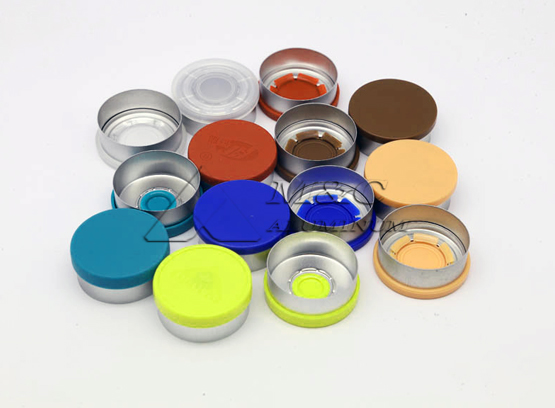
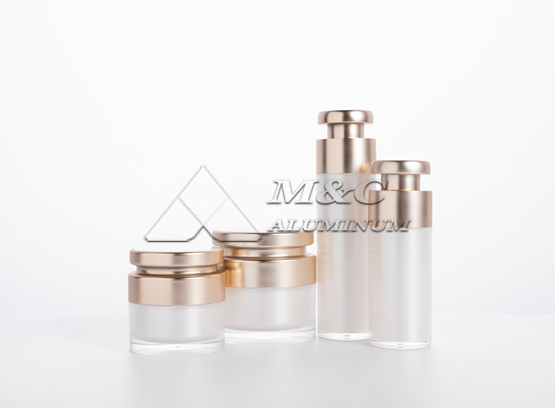
8011 aluminum sheet is an Al-Fe-Si series aluminum alloy widely used for pilfer proof caps, ROPP caps, PP caps, wine caps, cosmetic caps, medicine bottle caps, and food container closures. Compared with general-purpose aluminum sheet, bottle cap aluminum sheet requires more stable mechanical properties, clean surface, uniform thickness, good deep drawing performance, and reliable coating adhesion.
In cap production, the aluminum sheet is generally processed through uncoiling, lubrication, punching, drawing, embossing, knurling, printing, coating, and sealing liner application. If the sheet has poor flatness, uneven temper, pinholes, oil stains, color difference, or unstable elongation, downstream cap manufacturing may suffer from cracking, wrinkling, incomplete forming, printing defects, or reduced sealing consistency.
As a manufacturer, we control 8011 aluminum cap stock from melting, casting, hot rolling or continuous casting, cold rolling, intermediate annealing, final rolling, tension leveling, degreasing, coating, slitting, and final inspection. The goal is not only to provide a competitive bottle cap aluminum sheet cost per ton, but also to reduce waste rate and improve production stability for cap manufacturers.
Main Price Formula for 8011 Aluminum Closure Sheet
For most export and domestic orders, the factory quotation can be expressed as:
8011 aluminum sheet price per ton = aluminum ingot benchmark price + rolling processing fee + surface treatment fee + slitting and packing fee + other order-specific costs
The aluminum ingot benchmark may refer to LME, SHFE, or another agreed market index. The processing fee reflects the manufacturing difficulty, thickness range, width, temper, tolerance, surface cleanliness, inspection standard, and order quantity. For coated 8011 aluminum sheet for bottle caps, coating weight, coating type, curing process, color, food-contact compliance, and printing requirements also influence the total cost.
This quotation model is transparent and more suitable for engineering procurement than a fixed price list, because aluminum prices change frequently. A price that is valid today may not remain valid after a major movement in the aluminum market.
Key Technical Parameters of 8011 Bottle Cap Aluminum Sheet
The following table shows common factory specifications for 8011 aluminum closure sheet. Actual production can be adjusted according to cap design, forming depth, coating method, and customer equipment.
| Item | Typical Specification | Notes |
|---|---|---|
| Alloy | 8011 | Al-Fe-Si alloy for closure and packaging applications |
| Temper | H14, H16, H18, H22, H24, O | Selected according to drawing depth and cap forming process |
| Thickness | 0.18 mm to 0.50 mm | Common cap stock range, customized by cap type |
| Width | 200 mm to 1600 mm | Coil or sheet width according to slitting plan |
| Length | Coil or cut-to-length sheet | Depends on downstream cap production line |
| Tensile strength | Approx. 115 MPa to 185 MPa | Varies by temper and thickness |
| Elongation | Approx. 1% to 12% | Higher elongation is required for deeper drawing |
| Surface | Mill finish, degreased, coated, printed | Food-grade coating available upon request |
| Thickness tolerance | As agreed, often +/-0.005 mm or stricter | Depends on gauge and order standard |
| Inner diameter | 150 mm, 300 mm, 405 mm, 505 mm | Customized for uncoiling equipment |
| Applications | PP caps, ROPP caps, wine caps, medicine caps | Suitable for many closure systems |
Why Prices Differ Between Suppliers and Orders
Even when the alloy is the same, the cost per ton of 8011 aluminum sheet for bottle caps can differ significantly. From our factory perspective, the main reasons are as follows.
1. Aluminum Ingot Price
Aluminum is a metal commodity. The base price is affected by energy cost, alumina supply, inventory levels, exchange rates, regional demand, and international trade conditions. Since aluminum ingot accounts for the largest proportion of the final sheet cost, any change in the ingot price will directly affect the 8011 aluminum closure sheet price.
For long-term customers, price formulas based on a public benchmark are often preferred. This reduces uncertainty and makes monthly procurement planning more transparent.
2. Thickness and Width
Thin gauge bottle cap aluminum sheet requires more rolling passes, tighter tension control, better flatness, and stricter surface inspection. Very narrow widths may increase slitting loss, while extra-wide coils may require specific rolling and annealing arrangements. As a result, 0.20 mm cap stock and 0.35 mm cap stock may not have the same processing fee, even if the alloy and temper are identical.
3. Temper and Mechanical Properties
8011-H14 and 8011-H16 are common for cap applications, but some caps require softer or harder tempers. A stable temper is essential for continuous punching and forming. If the mechanical property window is narrow, the factory needs stricter annealing control and additional testing, which may increase processing cost but improves downstream yield.
4. Coating, Lacquering, and Printing
Bare mill finish aluminum is less expensive than coated cap stock. However, many bottle caps require epoxy, polyester, organosol, or other food-contact coatings to improve corrosion resistance, color appearance, and compatibility with sealing liners. Coating cost depends on resin type, coating weight, one-side or two-side treatment, curing requirements, color control, and inspection level.
For printed cap stock, the price also includes ink, printing setup, pattern registration, color matching, and additional quality checks. Small batch printing usually has a higher unit cost than large-volume repeated orders.
5. Surface Quality and Cleanliness
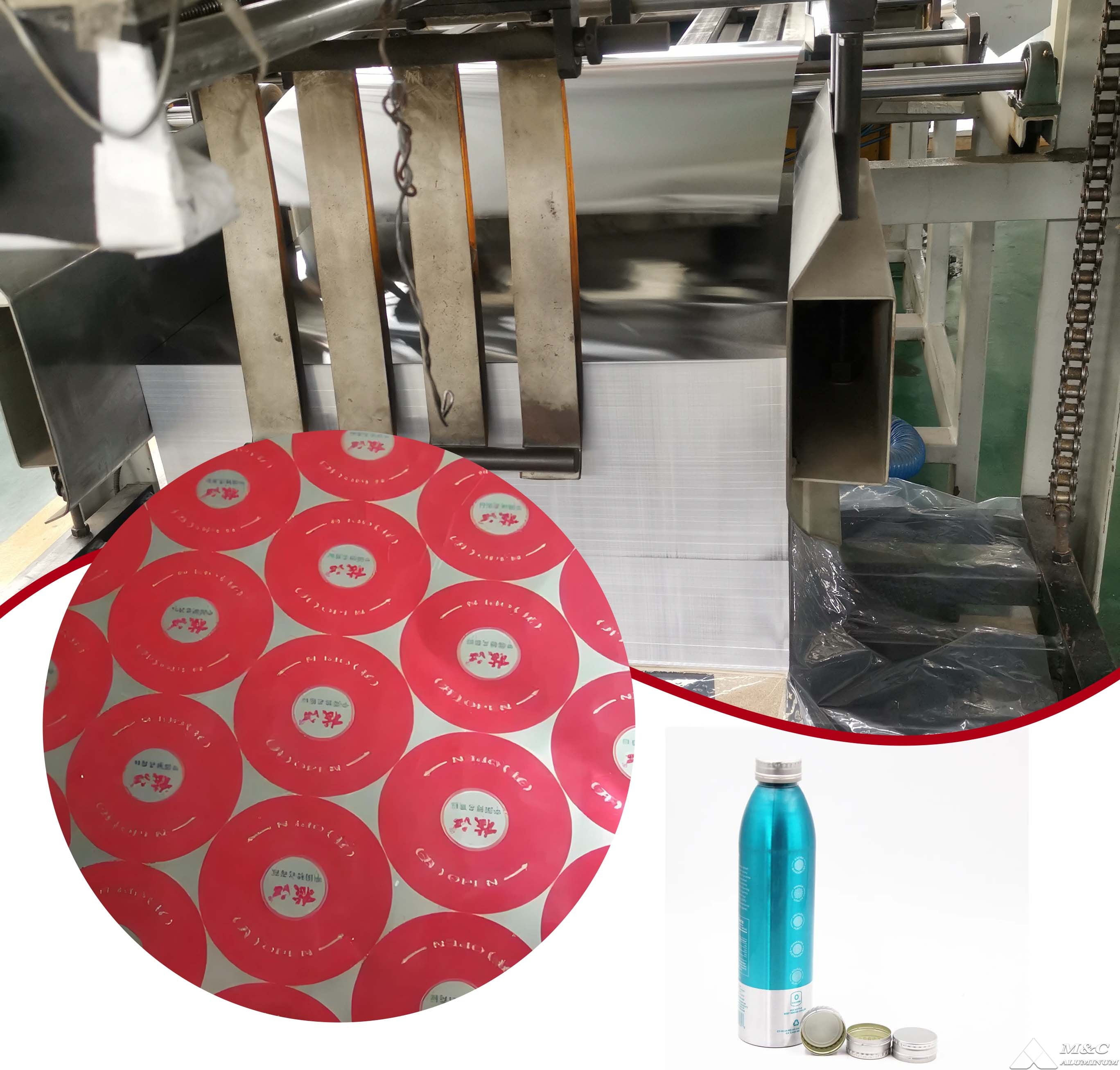
Bottle cap aluminum material must be free from obvious scratches, oil stains, black spots, serious roll marks, pinholes, and oxidation defects. Higher surface requirements mean more careful rolling, degreasing, tension leveling, coating environment control, and final inspection. For caps with high-end printing or decorative surfaces, surface quality is often one of the most important cost factors.
6. Order Quantity and Production Scheduling
Large orders usually allow better production continuity, higher coil utilization, and lower unit setup cost. Small trial orders are useful for qualification, but they may carry a higher processing fee due to frequent specification change, additional slitting, separate packing, and independent inspection records.
For stable cap manufacturers, annual or quarterly demand planning can help reduce price fluctuation and improve delivery reliability.
Typical Cost Reference by Product Type
The following reference table is based on common factory quotation logic. It is not a fixed price list and should be used only for preliminary budget evaluation.
| Product Type | Common Application | Reference Cost Structure | Price Level |
|---|---|---|---|
| Bare 8011-H14 sheet or coil | General PP caps, simple closures | Ingot price + rolling fee | Lower |
| Degreased 8011 cap stock | Caps requiring clean surface before coating | Ingot price + rolling + degreasing | Medium |
| One-side coated 8011 sheet | Caps with internal protection requirement | Ingot price + rolling + coating | Medium to high |
| Two-side coated 8011 sheet | Beverage, wine, pharmaceutical caps | Ingot price + rolling + double-side coating | High |
| Printed and coated 8011 cap stock | Decorative closures and brand caps | Ingot price + rolling + coating + printing | Highest |
In many cases, the cheapest per-ton price is not the lowest total cost. If a low-cost sheet causes cracking, poor coating adhesion, unstable punching, or higher scrap rate, the effective cost per finished cap may increase. For engineering procurement, we recommend evaluating both material price and production yield.
How Our Factory Controls Cost and Quality
As an aluminum sheet manufacturer, we focus on process stability rather than simple price competition. For 8011 aluminum sheet for bottle caps, cost control begins with raw material selection and continues through each manufacturing step.
During rolling, we control reduction rate, rolling oil cleanliness, surface roughness, strip temperature, and coil tension. During annealing, we control furnace temperature uniformity and holding time to obtain stable tensile strength and elongation. For coating products, we monitor coating viscosity, coating weight, curing temperature, solvent residue, surface gloss, and adhesion performance.
Inspection generally includes chemical composition, thickness, width, tensile strength, elongation, surface quality, flatness, coating adhesion, color difference, and coil packaging condition. These controls help ensure that the bottle cap aluminum sheet can run smoothly on high-speed cap production lines.
8011 vs. 3105 Aluminum Closure Sheet
Although this article focuses on 8011 aluminum sheet, 3105 aluminum closure sheet is also used in some cap and closure applications. 8011 is commonly selected for good formability and closure performance, while 3105 may be chosen where higher strength or specific decorative performance is required. The choice depends on cap design, sealing method, drawing depth, coating system, and customer standard.
From a cost perspective, alloy selection can influence both raw material and processing cost. However, the final decision should be based on forming tests, mechanical property requirements, coating compatibility, and long-term production performance, not only on the quoted price per ton.
Information Needed for an Accurate Factory Quotation
To calculate the exact 8011 aluminum closure sheet price per ton, we normally need the following details:
Alloy and temper, such as 8011-H14 or 8011-H16.
Thickness, width, and tolerance requirement.
Coil weight, inner diameter, and maximum outer diameter.
Bare, degreased, coated, or printed surface.
Coating type, coating weight, color, and food-contact standard if applicable.
Application, such as PP cap, ROPP cap, wine cap, medicine cap, or beverage cap.
Order quantity, annual demand, and delivery schedule.
Packing requirement and trade term, such as EXW, FOB, CFR, or CIF.
Required standards, test reports, or third-party inspection.
With these details, our technical and production teams can calculate material utilization, rolling schedule, coating cost, inspection workload, and packing cost more accurately.
Practical Procurement Advice
When purchasing 8011 aluminum sheet for bottle caps, it is advisable to compare suppliers based on complete technical capability, not only the lowest unit price. Important evaluation points include alloy control, rolling precision, temper stability, surface cleanliness, coating technology, traceability, delivery reliability, and after-sales technical support.
For new cap projects, trial coils should be tested on actual production equipment. The test should evaluate punching quality, drawing performance, edge cracking, coating adhesion after forming, printing appearance, liner compatibility, and sealing performance. Once the specification is confirmed, batch procurement can be arranged under a stable technical standard.
Conclusion
The cost per ton of 8011 aluminum sheet for bottle caps is not a single fixed number. It is determined by aluminum ingot price, processing fee, temper, thickness, width, coating, printing, order quantity, and packing requirements. As a general reference, bare 8011 cap stock is usually priced above the aluminum ingot benchmark by a rolling processing fee, while coated and printed aluminum bottle cap material has additional finishing costs.
As a factory, we recommend confirming the technical specification first, then calculating the price according to the actual production route. This approach helps cap manufacturers obtain a more reliable quotation, stable material performance, and better cost control in continuous production.


Applications

-
Advisory Message
Alloy Grade Thickness, Application, etc.
-
Quick Reply
Quick reply within 30 minutes
-
Getting Information
One-to-one design and customized production plan