- Address:Zhengzhou, Henan, China
- Mon-Fri (8am - 6pm)
- sales@alummc.com

8011 Printed Aluminum Plate for Wine Bottle Caps
As an aluminum rolling and surface processing manufacturer, we produce 8011 printed aluminum plate for wine bottle caps for closure plants, wineries, and packaging converters that require stable forming performance, clean surface quality, and consistent printed appearance. In wine packaging, the aluminum cap is not only a sealing component, but also a visible part of the brand identity. The material must therefore combine mechanical reliability, food packaging safety, corrosion resistance, and high-quality printing adaptability.
8011 aluminum alloy is widely used for wine bottle caps, pilfer-proof caps, screw caps, and other aluminum closure applications. Through controlled casting, hot rolling, cold rolling, annealing, degreasing, coating, printing, and slitting, our factory supplies printed aluminum cap material suitable for automatic cap-making lines. The following article introduces the material characteristics, manufacturing control points, technical parameters, and application considerations of 8011 printed aluminum plate for wine bottle caps from the perspective of production practice.
Why 8011 Alloy Is Used for Wine Bottle Caps
8011 is an Al-Fe-Si series aluminum alloy with good strength, formability, and corrosion resistance. Compared with some high-strength alloys, 8011 provides a balanced combination of ductility and rigidity, which is important for roll-on pilfer-proof caps, wine screw caps, and closure shells that need drawing, knurling, threading, and sealing operations.
For wine bottle caps, the aluminum sheet must withstand multiple forming steps without edge cracking, orange peel, excessive springback, or coating damage. 8011 aluminum closure sheet can be supplied in tempers such as H14, H16, and H18 according to the cap design and forming depth. For many wine screw cap applications, 8011 H14 aluminum sheet offers favorable forming performance, while H16 or H18 may be selected where higher stiffness is required.
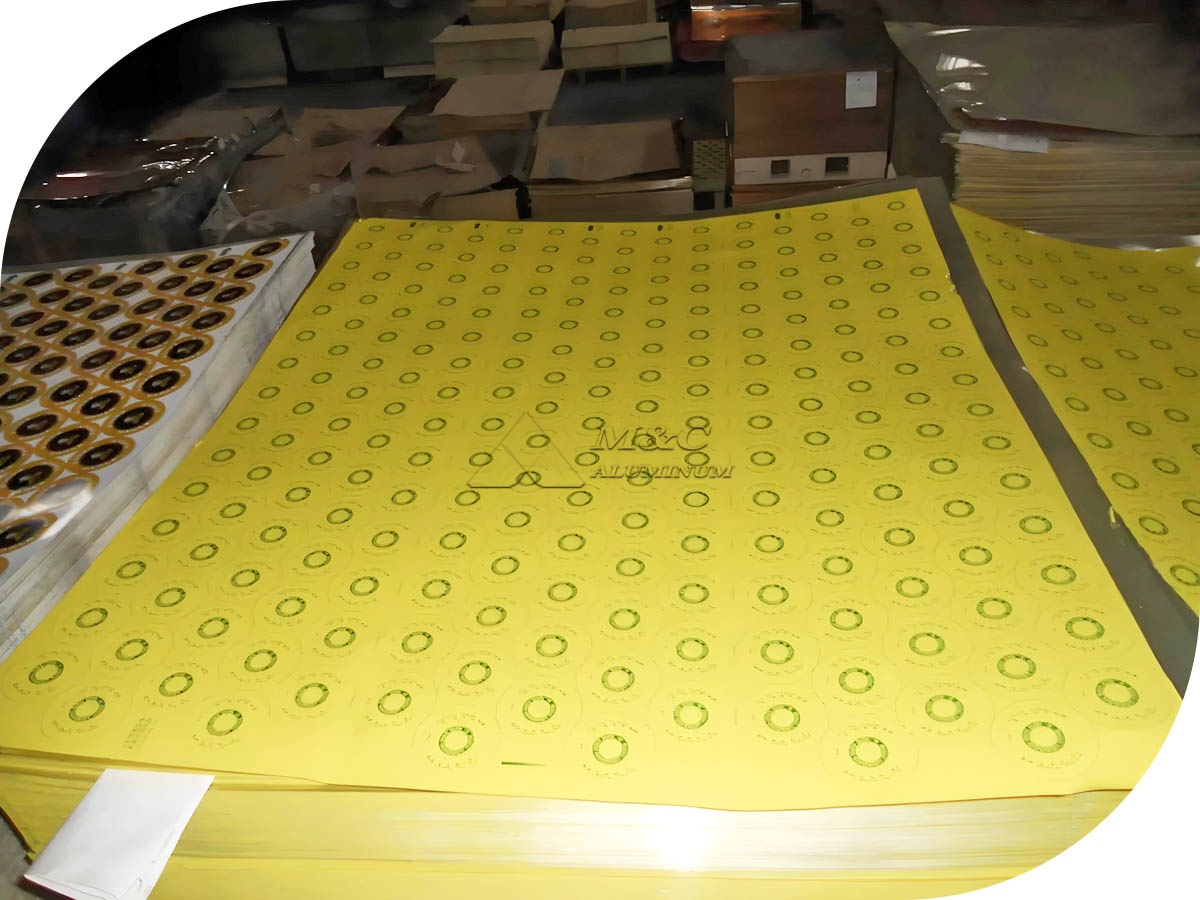
Another important reason for using 8011 printed aluminum plate is its stable response to coating and printing. Wine caps often require solid color printing, multi-color graphics, embossing, varnishing, or internal protective lacquer. A clean, flat, and oil-controlled substrate helps ensure ink adhesion, color consistency, and smooth cap production.
Manufacturing Route in Our Factory
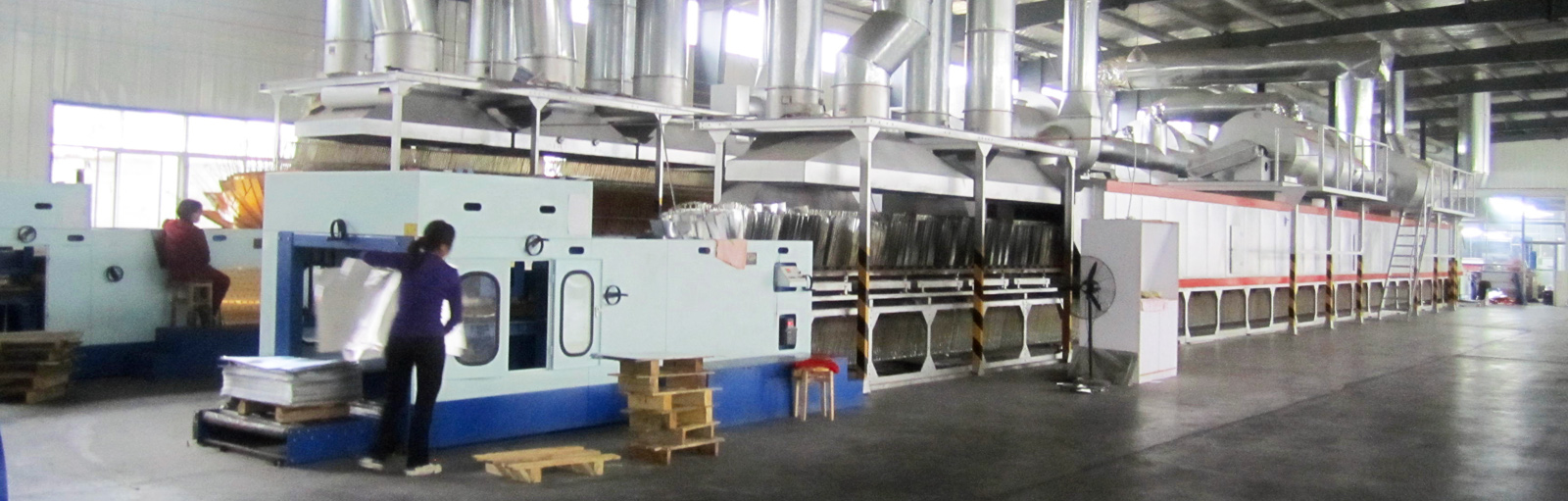
The quality of bottle cap aluminum sheet is determined by the entire production chain, not only by the final thickness inspection. In our factory, 8011 printed aluminum plate for wine bottle caps is manufactured through a controlled process covering raw material selection, rolling, surface treatment, coating, printing, and final packaging.
The typical production route includes melting and casting, homogenization, hot rolling, cold rolling, intermediate annealing when required, tension leveling, surface cleaning, coating or primer application, color printing, varnishing, slitting, and packing. Each step is arranged according to the final cap structure and customer processing requirements.
During rolling, we focus on thickness tolerance, crown control, surface roughness, and flatness. For printed aluminum cap material, poor flatness can cause printing deviation or uneven coating thickness. Excessive residual rolling oil may affect lacquer adhesion, while insufficient surface cleanliness can create pinholes, stains, or printing defects. Therefore, degreasing and surface inspection are essential before coating and printing.
After printing, the material is inspected for color difference, pattern registration, coating continuity, scratch defects, and adhesion. The printed surface must remain stable during slitting, packing, transportation, and subsequent cap forming.
Technical Parameters of 8011 Printed Aluminum Plate
The following table lists common parameters for 8011 printed aluminum plate for wine bottle caps. Actual specifications can be adjusted according to cap diameter, cap height, forming process, and customer drawing requirements.
| Item | Typical Specification | Notes |
|---|---|---|
| Alloy | 8011 | Al-Fe-Si alloy for aluminum closure sheet |
| Temper | H14, H16, H18 | Selected according to forming and stiffness requirements |
| Thickness | 0.18 mm to 0.25 mm | Common for wine bottle caps and ROPP caps |
| Width | 200 mm to 1600 mm | Coil or sheet width based on printing and slitting plan |
| Length | Coil or cut-to-length sheet | Supplied according to cap-making line requirements |
| Surface | Printed, coated, lacquered, plain back | External printing and internal protective coating available |
| Thickness tolerance | As agreed standard or customer specification | Controlled by precision cold rolling |
| Flatness | Suitable for printing and stamping | Tension leveling can be applied |
| Coating type | Polyester, epoxy, or approved lacquer system | Selected according to food contact and process needs |
| Printing | Single-color or multi-color | Pattern registration controlled during printing |
| Inner surface | Protective lacquer available | Improves resistance to wine, alcohol vapor, and corrosion |
| Outer surface | Color printing and varnish | Provides decoration and abrasion resistance |
| Packing | Export wooden pallet or protective packaging | Moisture-proof and deformation-resistant packaging |
| Application | Wine screw caps, ROPP caps, pilfer-proof caps | Suitable for automatic closure production |
Surface Quality and Printing Performance
For wine packaging, appearance defects on the cap are often unacceptable because the closure is directly exposed to the consumer. As a manufacturer, we control the surface quality of 8011 printed aluminum plate from the rolling stage. Common defects such as black lines, oil spots, scratches, roller marks, color streaks, and coating pinholes must be prevented through equipment maintenance and process monitoring.
Printing performance depends on several factors. First, the aluminum substrate should have stable surface roughness and cleanliness. Second, the coating system must match the printing ink and curing conditions. Third, the printed layer must maintain adhesion after cap forming, threading, and storage. In our production, cross-cut adhesion, solvent resistance, bending performance, and visual inspection are used to evaluate printed aluminum cap material.
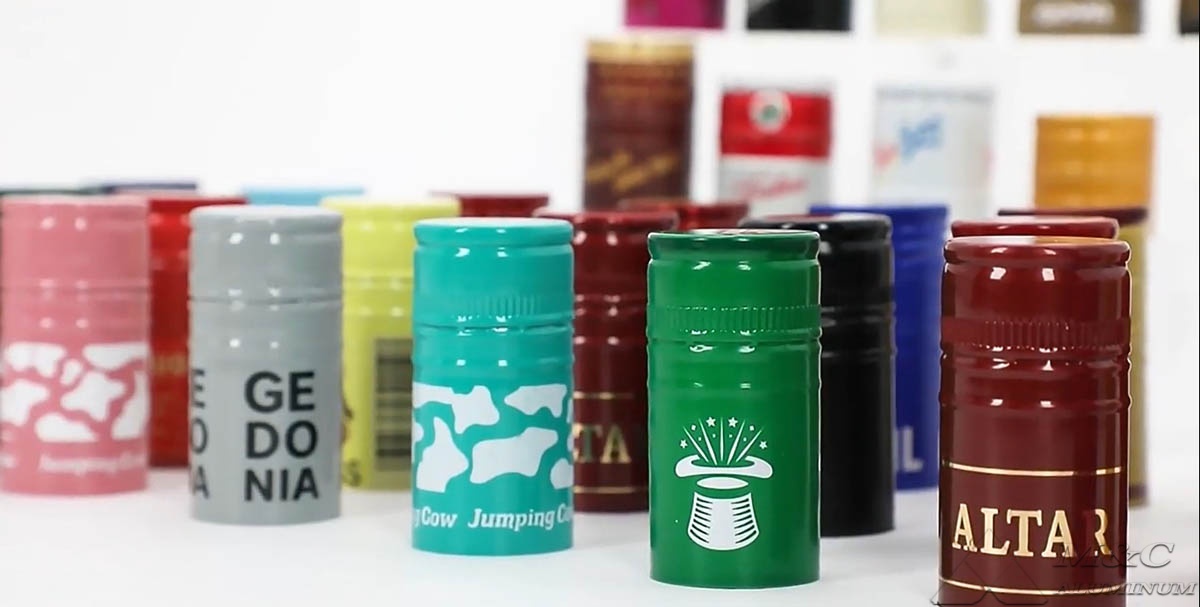
For wine bottle caps, the external printed surface may include brand colors, logos, vintage information, or decorative patterns. The internal surface is usually coated with protective lacquer to prevent direct contact between wine components and aluminum. This structure supports both packaging aesthetics and long-term closure performance.
Mechanical Properties and Forming Behavior
8011 printed aluminum plate for wine bottle caps must perform reliably during drawing and cap forming. The aluminum sheet is typically fed into stamping or cap-making equipment, where it is blanked, drawn, curled, knurled, threaded, and sometimes perforated for pilfer-proof bands. During these operations, the material should maintain sufficient elongation and uniform deformation.
If the aluminum sheet is too soft, the finished cap may lack rigidity and show deformation during sealing. If the material is too hard, cracking may occur at the skirt, thread, or knurled area. Therefore, temper selection is one of the most important technical decisions. 8011 H14 aluminum sheet is often used where good drawability is required. H16 and H18 can be used for closure designs that need improved strength and dimensional stability.
Rolling direction also affects forming performance. Closure manufacturers should consider blank layout and forming direction when optimizing material utilization. Our technical team can provide coil width recommendations based on cap diameter, tooling layout, and scrap rate control.
Coating and Food Packaging Considerations
Wine bottle caps must meet practical requirements related to food packaging, alcohol resistance, and storage stability. Although the aluminum body is not always in direct contact with the beverage due to liners or inner coatings, the material still requires a suitable protective system.
The internal coating is selected according to the cap type, liner material, wine composition, and customer standard. The lacquer layer should have good coverage, no obvious pinholes, and sufficient resistance to wine vapor, sulfur compounds, alcohol, and humidity. The external coating and printing varnish should resist abrasion during slitting, forming, transportation, and capping.
In addition to coating quality, cleanliness is also important. Our factory controls rolling oil residues, dust, metal fines, and packaging contamination. For international customers, documentation such as material certificates, coating information, and inspection reports can be supplied according to order requirements.
Comparison with Other Aluminum Closure Materials
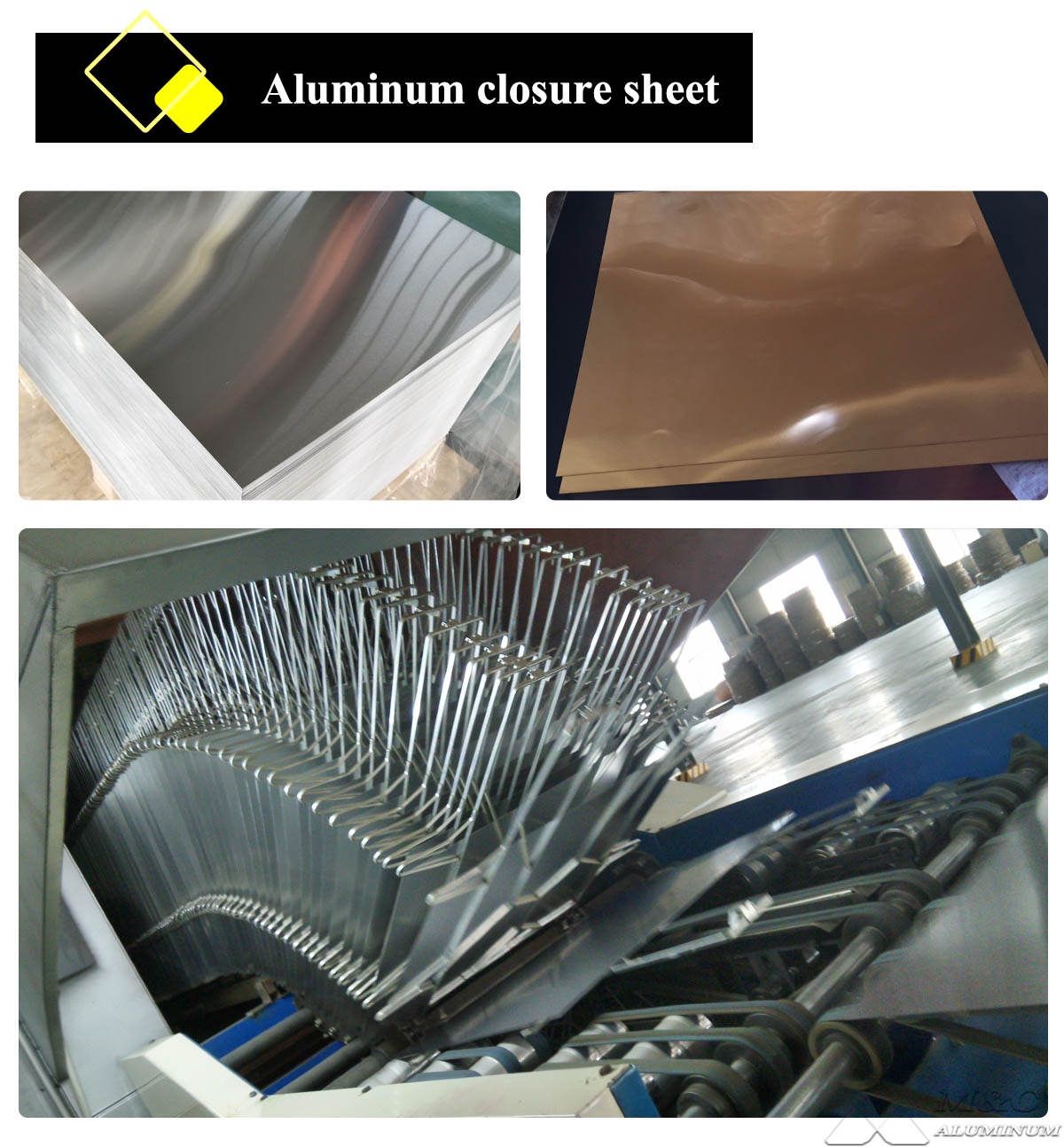
In aluminum closure production, 8011, 3105, and 3004 alloys are commonly discussed. Each alloy has its own advantages. 3105 aluminum closure sheet is known for good strength and corrosion resistance, while 8011 offers excellent processing balance and is widely used for printed caps and closures.
For wine bottle caps, material selection should be based on cap geometry, closure torque, appearance requirements, and forming equipment. 8011 printed aluminum plate is suitable for many standard wine screw caps and pilfer-proof closures because it provides stable deep drawing behavior and good compatibility with coating and printing. If a customer requires special mechanical properties or a different forming route, our engineers can compare 8011 with 3105 or other closure alloys before mass production.
Quality Control for Consistent Supply
Stable production is essential for closure manufacturers because even small variations in thickness, hardness, or coating performance can affect high-speed cap-making lines. Our quality control process includes chemical composition analysis, mechanical property testing, thickness measurement, surface inspection, coating weight control, curing verification, color inspection, and final dimensional checking.
For printed aluminum plate, color consistency is controlled by standard color samples and production records. Pattern position, gloss, and surface defects are checked before release. Coils and sheets are packed with protective film, moisture barrier materials, and reinforced pallets to reduce the risk of scratches, oxidation, or deformation during export transportation.
Traceability is maintained from raw material batch to finished printed aluminum cap material. This enables our factory to support long-term supply programs for wine cap manufacturers that require repeat orders with stable appearance and performance.
Application in Wine Bottle Cap Production
8011 printed aluminum plate for wine bottle caps is used in several closure formats, including roll-on pilfer-proof caps, long skirt wine screw caps, decorative wine caps, and caps requiring printed branding. The material can be supplied in coils for high-speed continuous production or in cut sheets for specific processing arrangements.
During cap manufacturing, the printed aluminum sheet must pass through blanking and forming tools without coating peeling or severe surface abrasion. The printed surface should maintain color stability after forming, and the inner coating should remain intact. Good flatness and consistent temper help reduce downtime, improve cap dimensional accuracy, and support stable sealing performance on bottling lines.
Wine packaging trends are also influencing aluminum cap material development. More wineries are adopting screw caps for convenience, sealing consistency, and recyclability. At the same time, packaging designs require more refined colors, matte or glossy effects, and reliable batch-to-batch appearance. These trends increase the importance of high-quality printed aluminum closure sheet.
Manufacturer Recommendations for Material Selection
When selecting 8011 printed aluminum plate, customers should provide cap diameter, cap height, forming depth, required temper, internal and external coating requirements, printing artwork, color standard, and expected production speed. If the final cap is used for wine export, packaging and compliance requirements should also be clarified before production.
For new cap projects, trial material is recommended before large-scale orders. Trial production allows verification of drawing performance, coating adhesion, color appearance, torque behavior, and compatibility with liners or sealing systems. Based on test feedback, thickness, temper, coating structure, and printing parameters can be optimized.
As a factory, our role is not only to supply aluminum coils or sheets, but also to control the material characteristics that influence cap manufacturing efficiency. Accurate communication between the aluminum mill, printing line, cap manufacturer, and winery helps reduce technical risks and improve the reliability of the final closure.
Conclusion
8011 printed aluminum plate for wine bottle caps combines the advantages of 8011 aluminum alloy with controlled rolling, surface treatment, coating, and printing technology. It provides the required formability, strength, corrosion resistance, and decorative quality for modern wine closures. For manufacturers of wine screw caps and ROPP caps, a stable aluminum closure sheet can improve forming performance, reduce surface defects, and support consistent brand presentation.
With controlled production processes and engineering experience in bottle cap aluminum sheet, our factory supplies 8011 printed aluminum cap material for international closure applications. By focusing on alloy quality, thickness accuracy, surface cleanliness, coating adhesion, and printing consistency, we help customers obtain reliable material for efficient wine bottle cap production.


Applications

-
Advisory Message
Alloy Grade Thickness, Application, etc.
-
Quick Reply
Quick reply within 30 minutes
-
Getting Information
One-to-one design and customized production plan