- Address:Zhengzhou, Henan, China
- Mon-Fri (8am - 6pm)
- sales@alummc.com

Aluminum Bottle Caps Sheet: Common Alloys and Applications
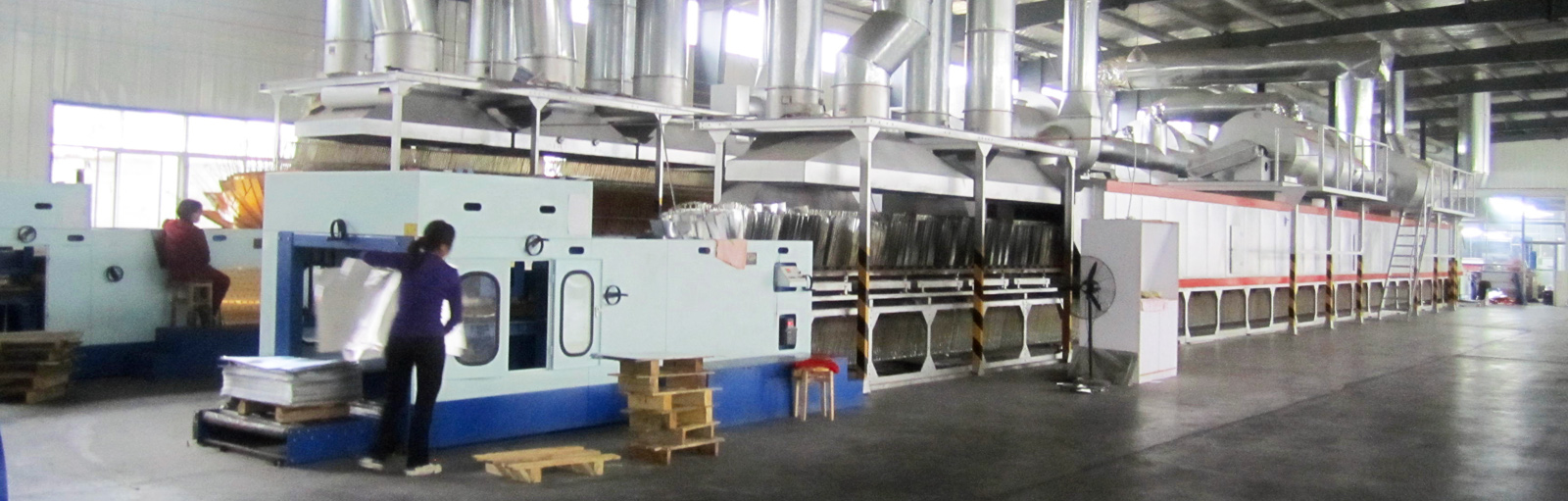
As an aluminum rolling manufacturer with long-term production experience in closure stock, we understand that aluminum bottle caps sheet is not a simple thin sheet product. It is a functional packaging material that must combine formability, strength, surface quality, coating adaptability, and stable dimensional control. In beverage, wine, spirits, pharmaceutical, cosmetic, and food packaging, the cap is a small component, but it directly affects sealing performance, opening behavior, brand appearance, and production efficiency on high-speed capping lines.
Aluminum bottle caps sheet is also known as aluminum closure sheet, bottle cap aluminum sheet, aluminum cap material, or ROPP cap sheet. The most common alloys include 8011, 3105, 3004, 5052, and 5182, depending on cap structure, forming depth, anti-theft requirements, internal pressure, and surface treatment. From our factory perspective, alloy selection must be matched with rolling process, temper, annealing route, coating system, and downstream cap making technology.
What Is Aluminum Bottle Caps Sheet?
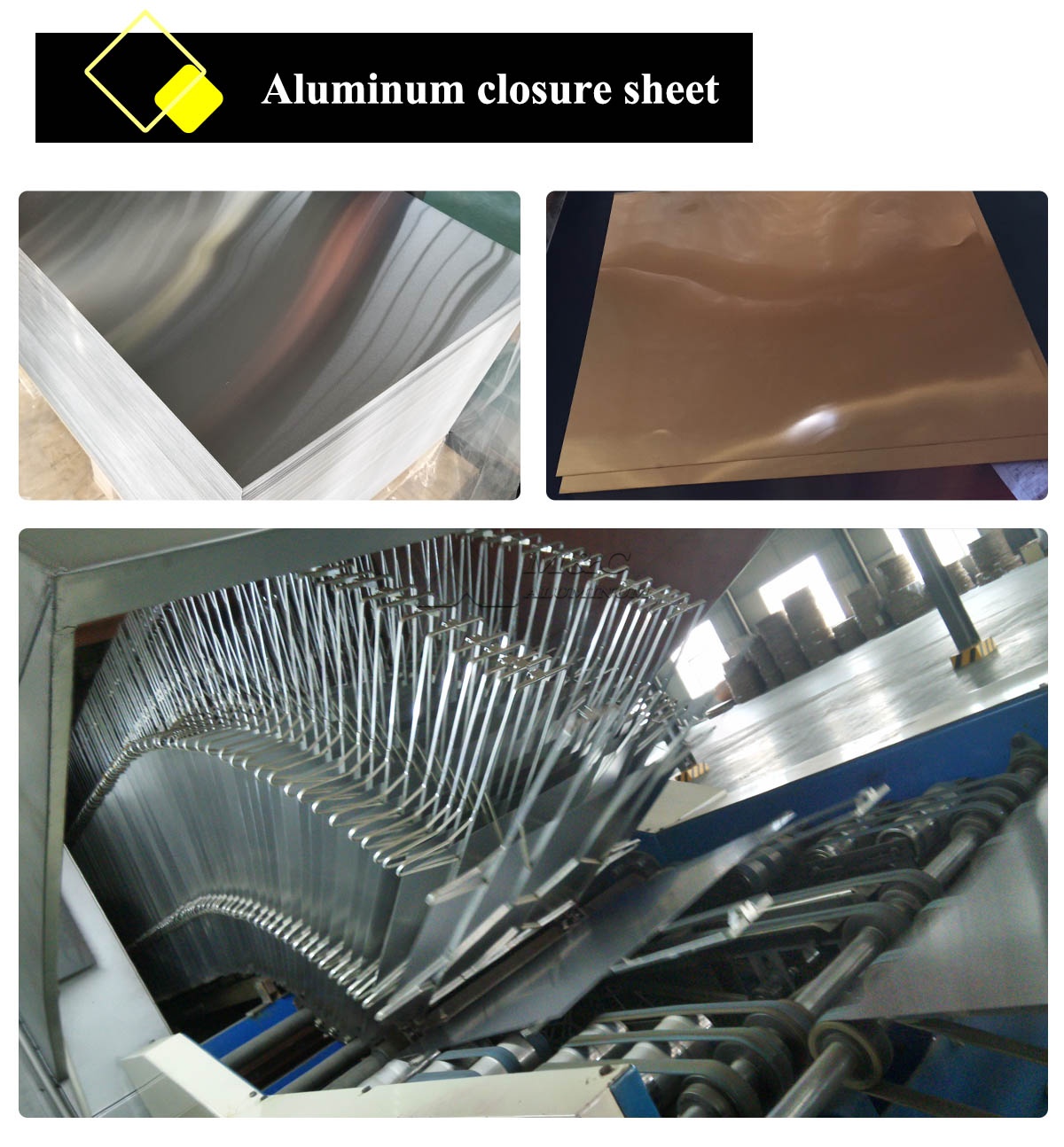
Aluminum bottle caps sheet is a rolled aluminum alloy sheet or coil used to manufacture various metal closures. It is usually supplied in thicknesses from 0.18 mm to 0.30 mm, with strict control of thickness tolerance, flatness, mechanical properties, surface cleanliness, and pinhole level. The material may be supplied as bare sheet, pre-treated sheet, coated sheet, lacquered sheet, or printed stock according to customer requirements.
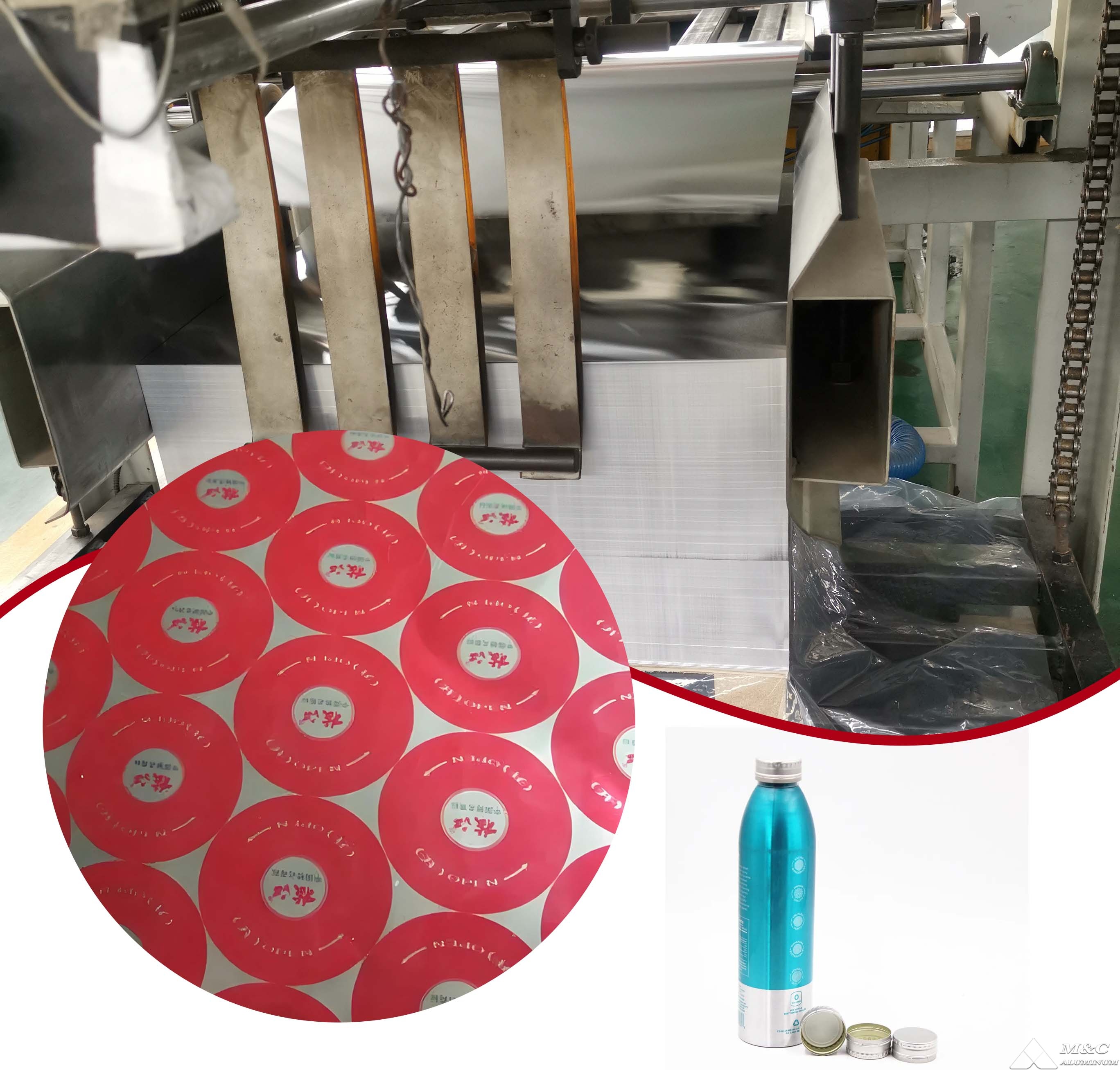
In cap manufacturing, the sheet is commonly processed through coating, printing, slitting, punching, drawing, knurling, threading, liner insertion, and sealing inspection. During these steps, the material must withstand deformation without cracking, orange peel, delamination, or uneven surface defects. For this reason, closure sheet production requires stable casting, homogenization, hot rolling, cold rolling, intermediate annealing, final rolling, cleaning, and tension leveling.
Main Requirements for Closure Sheet Production
The performance of aluminum closure sheet is determined by both chemical composition and process control. In our production practice, several requirements are especially important.
First, mechanical properties must be consistent along the coil length and across the width. Inconsistent yield strength can lead to unstable cap height, uneven scoring, or abnormal torque during opening. Second, the surface must be suitable for coating and printing. Oil residue, roll marks, scratches, black lines, and oxidation stains may reduce adhesion or affect the appearance of printed caps. Third, earing control is necessary for drawn caps. High earing can reduce metal utilization and cause irregular cap edges. Fourth, the sheet must have good stamping performance and sufficient strength after forming.
The following table summarizes common technical parameters for aluminum bottle cap material. Specific values are adjusted according to cap type, line speed, coating method, and final customer standards.
| Item | Typical Range or Requirement | Manufacturing Focus |
|---|---|---|
| Thickness | 0.18 mm to 0.30 mm | Tight tolerance and stable gauge control |
| Width | 200 mm to 1600 mm | Slitting accuracy and edge quality |
| Tempers | H14, H16, H18, H19, H24, H26 | Matched to forming and cap strength |
| Tensile strength | 110 MPa to 260 MPa | Depends on alloy and temper |
| Elongation | 1 percent to 12 percent | Higher for deeper forming requirements |
| Surface | Mill finish, DOS treated, coated, printed | Clean, uniform, coating-compatible surface |
| Flatness | Controlled for high-speed punching | Prevents feeding deviation and scrap |
| Application | ROPP caps, pilfer proof caps, screw caps, medicine caps | Selected by alloy and cap design |
Common Alloys for Aluminum Bottle Caps Sheet
8011 Aluminum Sheet
8011 aluminum sheet is one of the most widely used materials for bottle cap aluminum sheet, especially for general beverage caps, pharmaceutical caps, food closures, and shallow-drawn closures. As an Al-Fe-Si alloy, 8011 offers a practical balance of strength, ductility, corrosion resistance, and coating performance. It can be processed into H14, H16, H18, and other tempers to meet different cap forming requirements.
For many standard caps, 8011 provides reliable stamping performance and good surface finish. It is suitable for lacquered, printed, and embossed closure products. In pharmaceutical applications, 8011 aluminum cap material is often selected because it can be processed into clean, stable, and corrosion-resistant caps for vials and other sealed containers.
3105 Aluminum Closure Sheet
3105 aluminum closure sheet is commonly used for wine bottle caps, spirits caps, long caps, and closures requiring good drawing performance with moderate strength. As a 3xxx series Al-Mn alloy, 3105 has better strength than pure aluminum while maintaining good ductility and corrosion resistance. It performs well in printing, coating, and forming processes.
In our production, 3105 aluminum sheet is often supplied in H14, H16, H18, or specially adjusted tempers for ROPP caps and pilfer proof closures. It is valued for stable mechanical properties, good appearance after forming, and reliable performance in long skirt caps used for wine and spirits packaging.
3004 Aluminum Sheet
3004 aluminum sheet is also used in closure applications where higher strength and good formability are required. It contains manganese and magnesium, which increase strength compared with 3003 and 3105. This makes it suitable for caps that require higher resistance to deformation, internal pressure, or transportation stress.
Because 3004 has relatively high strength, process control is important. The rolling schedule and annealing process must be designed to avoid excessive hardness that may reduce forming performance. For selected beverage and pressure-sensitive closure applications, 3004 can provide a strong and stable solution.
5052 Aluminum Sheet
5052 aluminum sheet is an Al-Mg alloy with higher strength and excellent corrosion resistance. It is not as widely used as 8011 or 3105 for standard bottle caps, but it is selected for specific closures requiring higher mechanical strength, better corrosion resistance, or a premium structural requirement. It may be applied in some special caps, industrial closures, cosmetic packaging, and caps exposed to more demanding environments.
The higher magnesium content of 5052 requires careful rolling and annealing control. It offers good overall performance, but the alloy cost and forming characteristics should be evaluated against the cap design.
5182 Aluminum Sheet
5182 aluminum sheet is widely known in beverage can end stock, but it can also be considered for selected closure products requiring high strength. Its Al-Mg composition gives it excellent strength, but forming behavior differs from 8xxx and 3xxx series closure materials. For this reason, it is normally used where the closure structure and production process are designed for higher strength aluminum.
Comparison of Common Closure Alloys
The table below provides a general comparison of common aluminum bottle caps sheet alloys. Actual specifications should be confirmed according to cap size, forming depth, coating system, and customer production line conditions.
| Alloy | Main Features | Common Tempers | Typical Applications |
|---|---|---|---|
| 8011 | Good formability, stable surface, economical processing | H14, H16, H18 | Beverage caps, medicine caps, food closures |
| 3105 | Good drawing performance, moderate strength, good coating quality | H14, H16, H18, H24 | Wine caps, spirits caps, ROPP caps, long caps |
| 3004 | Higher strength with good formability | H16, H18, H19 | Beverage closures, pressure-resistant caps |
| 5052 | High strength and corrosion resistance | H22, H24, H26 | Special closures, cosmetic caps, industrial caps |
| 5182 | High strength Al-Mg alloy | H19, H48, customized | Selected high-strength closure applications |
Applications of Aluminum Bottle Caps Sheet
Wine and Spirits Caps
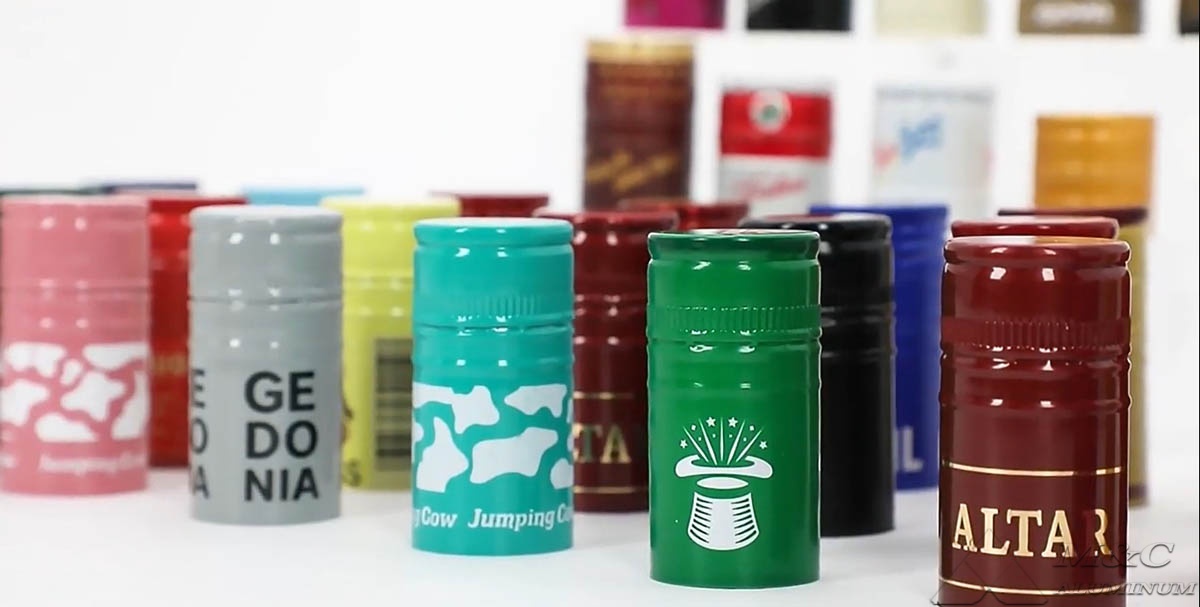
Wine bottle caps and spirits caps often require excellent appearance, consistent drawing performance, and precise threading performance. 3105 aluminum closure sheet is frequently selected for these applications because it supports long skirt forming and high-quality printing. For premium caps, surface defects are not acceptable, so our production focuses on surface cleanliness, low roughness variation, and uniform coating adhesion.
ROPP and Pilfer Proof Caps
ROPP caps, or roll-on pilfer proof caps, are widely used in beverages, wine, edible oil, pharmaceuticals, and chemical packaging. The sheet must form cleanly, accept knurling and threading, and maintain controlled opening torque. 8011 and 3105 are common choices. The selected temper must provide enough ductility for forming and enough strength to maintain the anti-theft function.
Beverage Caps
Beverage closures require stable sealing and good performance on high-speed filling lines. Depending on the product type, pressure condition, and closure structure, 8011, 3004, or 3105 aluminum sheet may be used. The aluminum cap material must be compatible with internal coating to prevent reaction with the packaged product.
Pharmaceutical Caps
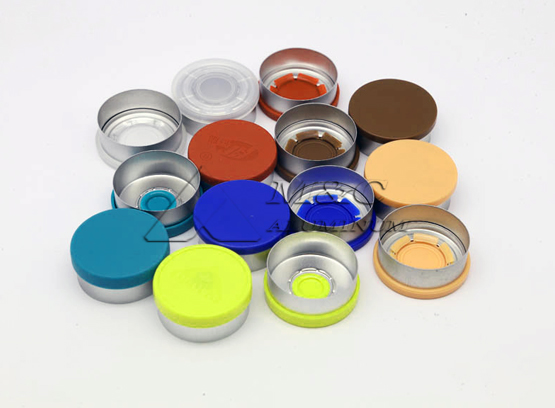
Pharmaceutical aluminum caps require strict hygiene, surface quality, and dimensional stability. 8011 aluminum sheet is widely used for vial caps and medical closures. For this application, attention is paid to cleanliness, oil control, burr control after punching, and compatibility with sterilization processes.
Cosmetic and Personal Care Caps
Cosmetic caps often emphasize appearance, anodizing or coating quality, embossing effect, and dimensional precision. 5052 and 3105 may be used depending on cap design. The sheet must show good surface uniformity after brushing, printing, coating, or other decorative treatments.
Manufacturing Process Control in Our Factory
From raw material preparation to finished coil delivery, closure sheet production is controlled as a continuous quality system. We begin with alloy composition control to ensure that Fe, Si, Mn, Mg, and other elements remain within specified ranges. Slab quality is important because casting defects may appear later as streaks, inclusions, or surface defects after rolling.
During hot rolling and cold rolling, thickness control and surface control are key. For closure sheet, gauge variation directly affects cap forming and sealing. Intermediate annealing is used to adjust work hardening and restore ductility. Final rolling determines the target temper and surface condition. Degreasing or cleaning can be applied before coating or customer processing.
For coated closure sheet, coating weight, curing temperature, adhesion, flexibility, and solvent resistance must be verified. The coating must remain intact after punching, drawing, threading, and capping. For printed cap stock, color stability and registration accuracy are also important.
Key Quality Tests for Bottle Cap Aluminum Sheet
Before shipment, aluminum bottle caps sheet is normally tested for chemical composition, tensile strength, elongation, hardness, thickness tolerance, width tolerance, surface quality, and flatness. For closure applications, additional tests may include cupping, bending, coating adhesion, boiling water resistance, solvent rubbing, and earing measurement.
| Test Item | Purpose | Typical Acceptance Focus |
|---|---|---|
| Tensile test | Confirms strength and elongation | Stable mechanical properties within specification |
| Thickness measurement | Ensures forming consistency | Narrow tolerance across coil and length |
| Surface inspection | Checks appearance and cleanliness | No harmful scratches, stains, roll marks, or inclusions |
| Coating adhesion | Verifies lacquer performance | No peeling after forming or tape test |
| Earing test | Evaluates deep drawing behavior | Low and stable earing percentage |
| Forming simulation | Checks cap making suitability | No cracking, wrinkling, or coating failure |
Selection Considerations for Engineering Buyers
When selecting aluminum closure sheet, engineers should consider the cap diameter, cap height, drawing depth, thread design, sealing liner, internal pressure, coating system, and filling environment. A material with excessive strength may crack during forming, while a material that is too soft may deform during capping or transport. The correct alloy and temper are therefore determined by both the cap design and the production line.
For standard beverage and medicine caps, 8011 aluminum sheet is often a practical choice. For wine and spirits closures, 3105 aluminum closure sheet is widely used because of its drawing performance and appearance quality. For higher strength requirements, 3004, 5052, or 5182 may be considered after forming trials.
Development Trends in Aluminum Cap Materials
The closure industry is moving toward lighter gauges, better recyclability, improved coating systems, and more stable high-speed production. Reducing thickness can lower material consumption, but it requires stronger process control and careful alloy selection. At the same time, environmental regulations are encouraging the use of safer coatings, lower VOC processes, and more recyclable packaging structures.
As a manufacturer, we see increasing demand for aluminum bottle caps sheet with tighter tolerances, cleaner surfaces, consistent mechanical properties, and customized tempers. Future development will focus on balancing lightweight design with reliable sealing and opening performance.
Conclusion
Aluminum bottle caps sheet is a specialized packaging material that requires coordinated control of alloy composition, rolling process, temper, surface quality, and coating performance. 8011, 3105, 3004, 5052, and 5182 each have suitable application areas. Among them, 8011 is widely used for general closures and pharmaceutical caps, while 3105 aluminum closure sheet is a preferred material for wine caps, spirits caps, and ROPP caps.
By selecting the correct alloy and temper, manufacturers can improve cap forming stability, sealing reliability, surface appearance, and production efficiency. From our factory experience, the best closure material is not only defined by chemical composition, but also by consistent process control from casting to final coil delivery.


Applications

-
Advisory Message
Alloy Grade Thickness, Application, etc.
-
Quick Reply
Quick reply within 30 minutes
-
Getting Information
One-to-one design and customized production plan