- Address:Zhengzhou, Henan, China
- Mon-Fri (8am - 6pm)
- sales@alummc.com

8011 Aluminum Sheet for Red Wine Bottle Cap
As an aluminum rolling manufacturer serving the closure and packaging industry, we produce 8011 aluminum sheet for red wine bottle cap applications with controlled chemistry, stable mechanical properties, clean surface quality, and consistent forming performance. Red wine bottle caps, especially aluminum screw caps and pilfer proof closures, require a material that can withstand deep drawing, knurling, threading, printing, coating, and sealing operations without cracking, excessive earing, or surface defects.
8011 aluminum sheet is widely used in bottle cap manufacturing because it combines moderate strength, good ductility, excellent corrosion resistance, and reliable surface treatment performance. For wineries, closure producers, and packaging engineers, the stability of the aluminum base material directly affects cap appearance, sealing safety, production efficiency, and final brand presentation.
Why 8011 Aluminum Sheet Is Used for Red Wine Bottle Caps
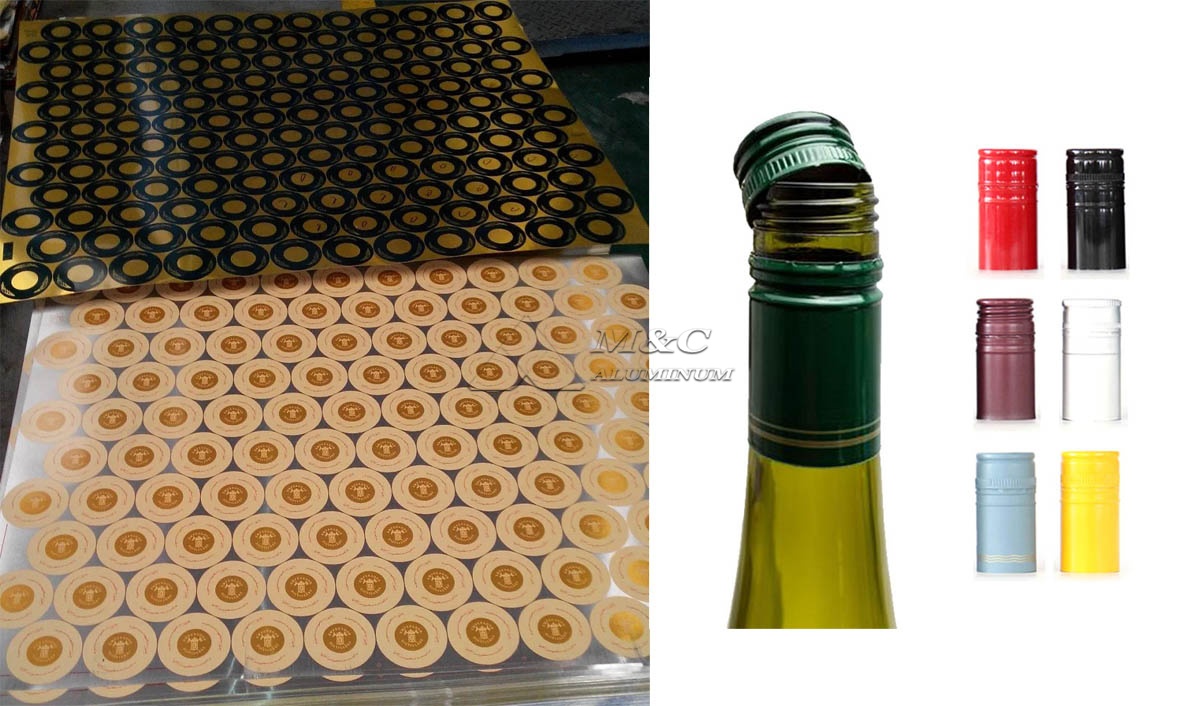
8011 aluminum alloy belongs to the 8xxx series Al-Fe-Si alloy system. Compared with some higher magnesium alloys, 8011 offers better processing stability in thin gauge rolling and is suitable for high speed cap production lines. For red wine bottle caps, the material must be soft enough for drawing and rolling, but strong enough to maintain thread shape, opening torque, and anti-theft ring integrity.
In practical production, 8011 aluminum sheet for red wine bottle caps is usually supplied in H14, H16, or customized temper according to the cap design and forming process. H14 provides good formability for taller caps or caps with more deformation. H16 offers higher strength and is often selected when the closure design requires stronger thread retention or improved dent resistance.
The alloy also has good compatibility with coating, printing, and surface lubrication systems. This is important because wine closures are not only functional components but also visible packaging elements. A clean, flat, and uniform aluminum surface helps ensure stable color printing, lacquer adhesion, and smooth cap forming.
Material Requirements for Red Wine Bottle Cap Production
Red wine bottle caps usually go through multiple processing stages after the aluminum sheet leaves our factory. These may include degreasing, chromate-free pretreatment, lacquer coating, printing, slitting, blanking, drawing, side wall forming, knurling, threading, liner insertion, and final inspection. Each process places specific requirements on the aluminum sheet.
First, the sheet must have controlled thickness tolerance. If the thickness fluctuates, cap height, thread formation, and sealing force may vary, resulting in unstable opening torque or leakage risk. Second, the surface must be free from oil stains, roll marks, black spots, scratches, dents, and oxidation defects that could affect coating and printing. Third, the mechanical properties must be uniform across the coil width and length to reduce earing during drawing and to maintain consistent cap geometry.
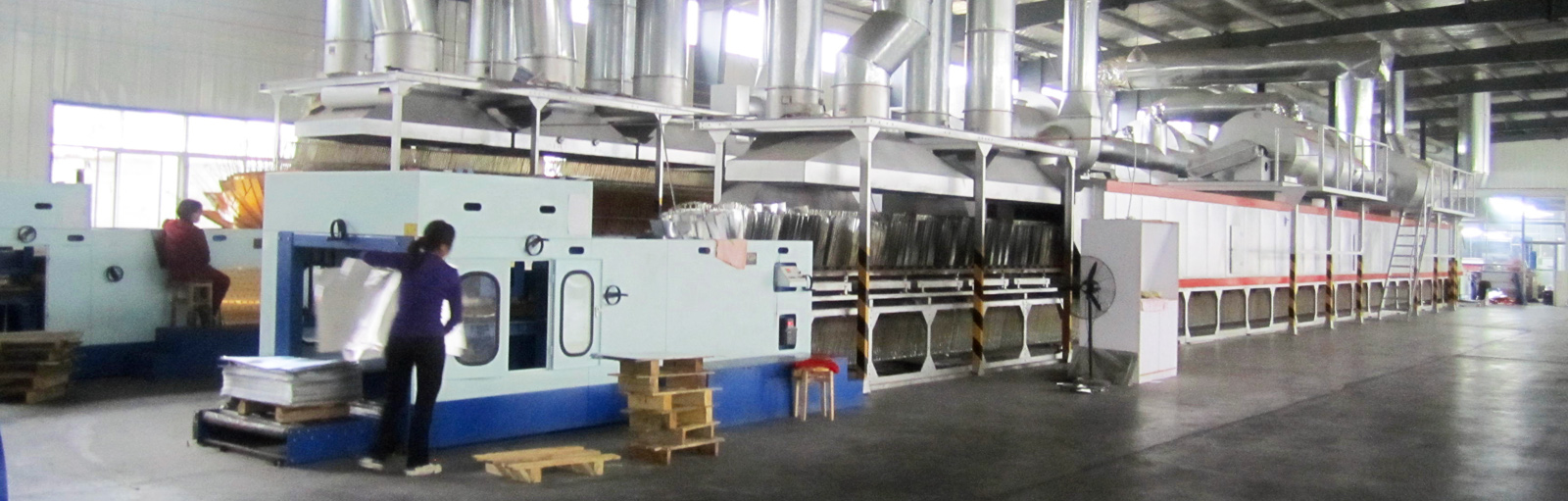
As a manufacturer, we control these properties from melting and casting to cold rolling, annealing, leveling, cleaning, and final inspection. We do not treat closure sheet as a general purpose aluminum product. It is produced with application based control standards suitable for bottle cap aluminum sheet processing.
Typical Technical Parameters
The following table lists typical specifications for 8011 aluminum sheet used in red wine bottle cap production. Final values can be adjusted according to cap diameter, cap height, coating system, and customer forming requirements.
| Item | Typical Specification |
|---|---|
| Alloy | 8011 aluminum alloy |
| Temper | H14, H16, H18, or customized temper |
| Thickness | 0.18 mm to 0.35 mm |
| Common thickness for wine caps | 0.20 mm, 0.22 mm, 0.23 mm, 0.25 mm, 0.28 mm |
| Width | 200 mm to 1600 mm, according to coil or sheet order |
| Length | Coil supply or cut to length sheet |
| Tensile strength | Approx. 125 MPa to 185 MPa, depending on temper |
| Elongation | Typically 1 percent to 6 percent, depending on thickness and temper |
| Surface | Mill finish, degreased, or surface prepared for coating |
| Flatness | Controlled for coating, printing, and slitting stability |
| Thickness tolerance | Precision controlled according to order requirement |
| Coating compatibility | Suitable for epoxy, polyester, PVC-free, and other food packaging coatings |
| Main applications | Red wine bottle caps, aluminum screw caps, ROPP caps, beverage closures |
Chemical Composition and Performance Balance
The performance of 8011 aluminum closure sheet comes from the balance of aluminum, iron, silicon, and trace elements. Iron and silicon help improve strength and rolling stability, while the aluminum matrix maintains ductility and corrosion resistance. For red wine bottle caps, excessive fluctuation in composition can lead to inconsistent rolling behavior, unstable mechanical properties, or poor forming performance.
In our production, alloy composition is controlled at the melting stage, followed by casting quality control and homogenization management where required. Stable composition supports stable grain structure, which is important for deep drawing and thread forming. We also focus on reducing inclusions and non-metallic impurities because closure sheet is processed into visible packaging parts. Even small surface defects can become obvious after coating or printing.
Rolling and Annealing Control in Our Factory
The production of 8011 closure aluminum sheet for red wine bottle cap use requires precise rolling control. After casting, the material is hot rolled or cast rolled depending on the process route, then cold rolled to the required gauge. During cold rolling, reduction ratio, rolling speed, oil control, roll surface condition, and tension control all influence final surface quality and mechanical properties.
Annealing is another key step. The annealing process determines temper stability, ductility, and forming behavior. For H14 and H16 tempers, the combination of cold work and thermal treatment must be carefully matched. If the material is too hard, the cap may crack during drawing or threading. If it is too soft, the cap may deform during capping or lose thread retention. Our process engineers adjust rolling reduction and annealing parameters according to the target temper and customer forming data.
After rolling and annealing, the coils pass through leveling, trimming, inspection, and packaging. For closure applications, we pay special attention to edge quality. Burrs, edge cracks, and uneven trimming may affect slitting, blanking, and die life in the cap factory.
Surface Quality for Coating and Printing
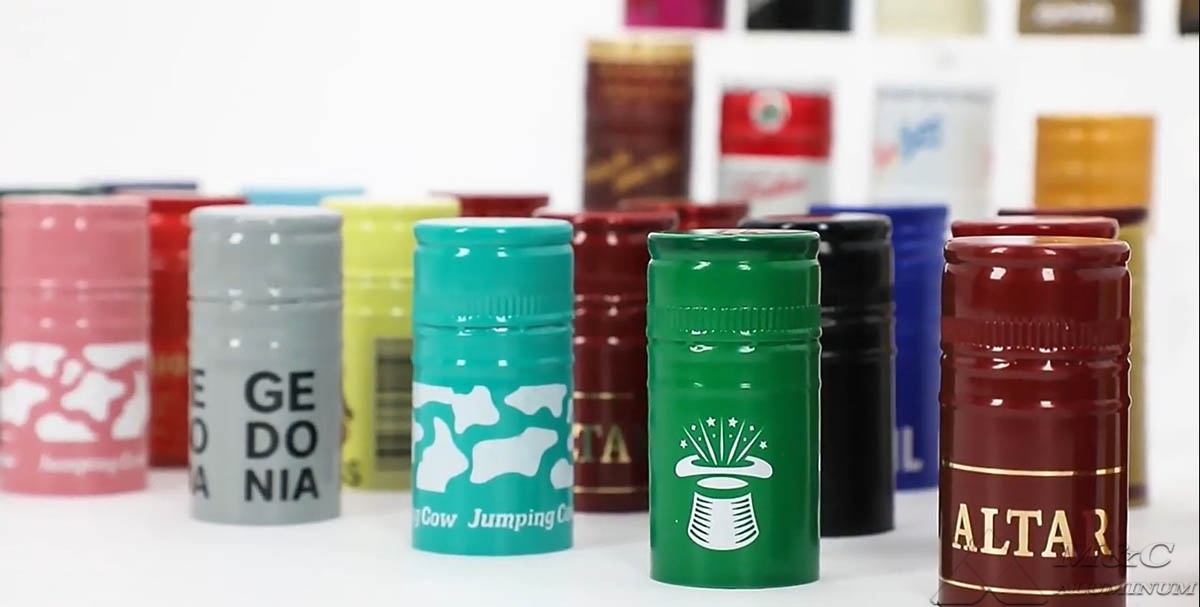
Red wine closures often carry brand colors, logos, decorative patterns, and anti-counterfeiting information. For this reason, the surface quality of the aluminum closure sheet is critical. The sheet must support uniform coating thickness and strong adhesion after pretreatment. Poor surface cleanliness can cause pinholes, fish eyes, color differences, or coating peeling.
We control rolling oil residue, surface roughness, oxidation, and handling marks during production. Coils intended for coated bottle cap aluminum sheet are inspected for visible defects and surface consistency. Depending on customer requirements, the sheet can be supplied in mill finish or with surface conditions suitable for downstream degreasing and coating.
A good 8011 aluminum sheet for red wine bottle cap production should not only pass laboratory tests but also run smoothly on continuous coating and printing lines. Stable surface condition helps reduce downtime, coating waste, and quality complaints in high volume cap production.
Formability in Cap Drawing, Threading, and Knurling
The forming process for wine bottle caps includes blanking the aluminum sheet into discs, drawing the discs into cap shells, forming threads, creating knurled or embossed features, and producing the tamper evident band. During these operations, the sheet experiences stretching, bending, compression, and local deformation.
8011 aluminum sheet must provide a balanced combination of strength and elongation. Earing control is particularly important during drawing. Excessive earing increases trimming waste and may cause uneven cap height. Stable anisotropy control during rolling helps improve drawing consistency.
For screw caps, thread forming requires material that can flow into the required profile without tearing. At the same time, the formed thread must remain strong enough to resist deformation during capping, transportation, storage, and opening by the consumer. The correct temper selection is therefore a technical decision, not only a purchasing decision.
Sealing Performance and Food Packaging Safety
Although aluminum sheet is only one part of the closure system, it contributes to the overall sealing performance of the red wine bottle cap. The cap body must keep its shape after forming and must provide stable compression for the liner or sealing gasket. Dimensional consistency of the aluminum cap shell supports stable torque and sealing pressure.
For wine packaging, corrosion resistance is also important. Wine bottles may be stored for long periods in humid cellars, warehouses, or retail environments. Aluminum naturally forms a protective oxide film, and when combined with appropriate internal lacquer and liner systems, it provides reliable protection for wine closure applications.
Our 8011 aluminum sheet is produced for packaging use with attention to cleanliness and process control. For customers requiring food contact compliance, we can coordinate material documentation and inspection records according to agreed standards and order requirements.
Comparison with Other Closure Alloys
Several aluminum alloys are used in closure applications, including 8011, 3105, 3003, and 5052 in selected cases. Each alloy has its own strength and forming characteristics. 3105 aluminum closure sheet is also common for beverage and wine caps because of its manganese content and good strength. However, 8011 remains a practical choice for many red wine bottle cap designs due to its stable thin gauge rolling performance, good coating behavior, and balanced formability.
The final alloy choice should be based on cap size, forming depth, coating process, required opening torque, production speed, and cost structure. As a factory with long term experience in aluminum closure sheet production, we support material selection through sample testing, property matching, and process feedback from cap manufacturers.
Quality Inspection Before Delivery
Before delivery, our 8011 aluminum sheet for red wine bottle caps is inspected according to internal production standards and customer specifications. Typical inspection items include chemical composition, thickness, width, surface quality, tensile strength, elongation, flatness, coil shape, edge condition, and packaging condition.
For closure sheet orders, traceability is maintained from casting batch to final coil. This allows us to analyze production history if customers provide feedback from coating, printing, or cap forming lines. Consistent quality is built through process control rather than final inspection alone, but final inspection remains essential for confirming that the material is ready for shipment and downstream processing.
Packaging and Handling for Export Supply
Aluminum closure sheet is sensitive to moisture, impact, and surface contamination during transportation. We use protective packaging suitable for domestic and international shipping, including moisture resistant wrapping, edge protection, wooden pallets or cases, and clear coil identification. Proper packaging helps prevent water stains, coil collapse, edge damage, and surface abrasion.
For export orders, coil inner diameter, outer diameter, weight per coil, pallet type, and labeling can be arranged according to customer equipment and logistics requirements. Good packaging is part of manufacturing responsibility because even high quality aluminum sheet can be damaged if handling and transport protection are not properly designed.
Development Trends in Wine Bottle Cap Aluminum Materials
The wine packaging market continues to pay attention to sustainability, stable sealing, premium appearance, and efficient production. Aluminum screw caps are increasingly used because they are recyclable, lightweight, and suitable for high speed automated bottling. This trend supports continued demand for high quality 8011 aluminum sheet and other aluminum closure materials.
At the same time, coating systems are moving toward more environmentally responsible options, including BPA-free and PVC-free solutions. This places higher requirements on aluminum surface cleanliness, pretreatment compatibility, and coating adhesion. Cap manufacturers also require tighter thickness tolerance and more stable mechanical properties to improve production efficiency and reduce material waste.
As a manufacturer, we continue to improve rolling precision, surface control, inspection capability, and technical communication with downstream closure producers. Our goal is to provide 8011 aluminum sheet for red wine bottle cap production that performs reliably from coil to finished closure.
Conclusion
8011 aluminum sheet is a proven material for red wine bottle caps, offering a practical balance of formability, strength, surface quality, corrosion resistance, and coating compatibility. For closure manufacturers, stable aluminum sheet quality supports efficient drawing, threading, printing, sealing, and final assembly.
From alloy control and rolling process design to annealing, surface inspection, and export packaging, we manufacture 8011 aluminum closure sheet with the requirements of bottle cap production in mind. By matching temper, thickness, surface condition, and mechanical properties to the actual cap design, 8011 aluminum sheet can help produce red wine bottle caps with reliable performance and consistent appearance.


Applications
Related Articles
- 1060-H24 Aluminum Coil for Screw Caps
- Aluminum coil is the first choice for bottle cap material
- Aluminum alloy perfume bottle caps are safe and non-toxic
- Heat-sealed paint milk lid foil 8011 large roll
- 8011 Printed Aluminum Plate for Wine Bottle Caps
- Aluminum Foil Manufacturer for Anti-Theft Bottle Caps
-
Advisory Message
Alloy Grade Thickness, Application, etc.
-
Quick Reply
Quick reply within 30 minutes
-
Getting Information
One-to-one design and customized production plan