- Address:Zhengzhou, Henan, China
- Mon-Fri (8am - 6pm)
- sales@alummc.com

8011 Low-Earing Deep-Drawing Aluminum Strip for ROPP Tamper-Evident Caps
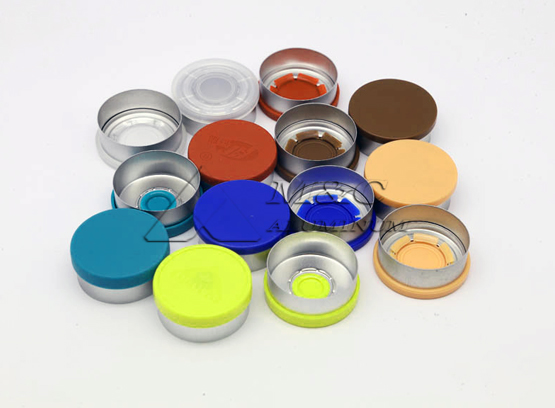
As a manufacturer of bottle cap aluminum sheet and aluminum closure strip, we produce 8011 low-earring deep-drawing aluminum strip for ROPP tamper-evident caps used on wine, spirits, olive oil, beverages, pharmaceutical products, and other packaged goods. This material is engineered for cap makers that require stable blanking, controlled drawing behavior, clean thread forming, and reliable tamper-band performance.
ROPP, or Roll-On Pilfer-Proof, closures are typically manufactured from thin aluminum strip through blanking, deep drawing, knurling, threading, and tamper-band forming. Because the material undergoes several deformation stages in rapid succession, the quality of the incoming aluminum strip directly affects cap geometry, production yield, decoration quality, and sealing consistency. For this reason, low earing performance is a central requirement for 8011 aluminum strip used in deep-drawn closures.
Why 8011 Aluminum Strip Is Used for ROPP Caps
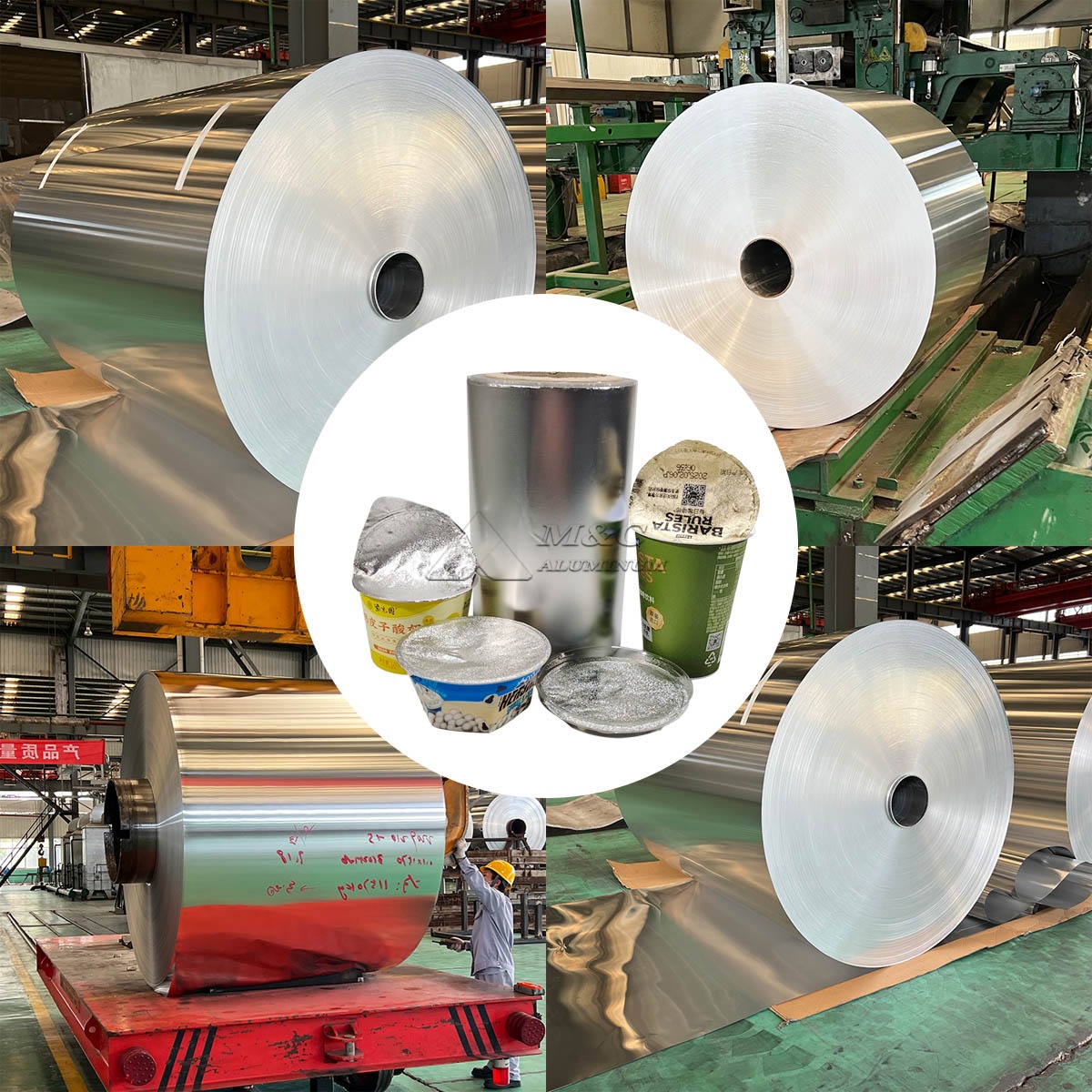
8011 is an aluminum-iron-silicon alloy widely used for aluminum closure sheet, bottle cap aluminum sheet, and deep-drawing packaging applications. Compared with general-purpose aluminum materials, properly processed 8011 alloy provides a practical balance of formability, surface quality, strength, and production stability.
For ROPP tamper-evident caps, the alloy must be soft enough to withstand drawing and thread rolling without cracking, while retaining sufficient mechanical consistency to support accurate cap dimensions and tamper-band bridges. Our 8011 aluminum strip is produced through controlled melting, casting, hot rolling, cold rolling, annealing, slitting, and surface inspection processes. Each stage is managed to support uniform grain structure and low planar anisotropy.
The principal benefits of 8011 aluminum strip for ROPP caps include:
Good deep-drawing capability for cap shell formation.
Low earing behavior to reduce trimming losses.
Stable thickness and width tolerances for high-speed press lines.
Smooth surface suitable for lithographic printing, coating, and varnishing.
Reliable performance during thread rolling and tamper-evident band forming.
Good compatibility with food-contact coating systems and closure liners.
Recyclability and low material weight for packaging applications.
The Importance of Low Earing in Deep Drawing
Earing refers to the uneven wave-like edge that can form around the rim of a drawn cup or cap shell. It is related primarily to crystallographic texture and directional mechanical behavior in rolled aluminum strip. Excessive earing increases trimming requirements, creates metal scrap, affects cap height consistency, and may reduce process stability during downstream forming operations.
In ROPP cap production, low earing is especially important because cap shells are generally produced at high speed and must maintain a controlled rim profile before threading and tamper-band processing. Uneven cap edges can affect curl formation, skirt appearance, print alignment, and machine handling.
Our manufacturing process controls rolling reduction, intermediate annealing, final annealing, and strip leveling to reduce planar anisotropy. We evaluate the material not only by tensile properties but also by practical forming behavior. This approach helps us supply low-earring aluminum strip that supports consistent draw depth and lower trim variation on cap-making equipment.
Typical Technical Parameters
The following table presents typical parameters for 8011 low-earring aluminum strip intended for deep-drawn ROPP tamper-evident caps. Final specifications can be adjusted according to cap diameter, drawing ratio, coating process, and customer equipment conditions.
| Item | Typical Specification | Notes |
|---|---|---|
| Alloy | 8011 | Aluminum-iron-silicon alloy |
| Temper | H14, H16, H18, O | O temper is commonly selected for deep drawing |
| Thickness | 0.18 to 0.30 mm | Common ROPP cap range: 0.20 to 0.25 mm |
| Width | 200 to 1,300 mm | Supplied as coil or slit strip |
| Coil inner diameter | 150 mm, 300 mm, 505 mm | Subject to production line requirements |
| Coil outer diameter | Up to 1,800 mm | Controlled by coil weight and transport conditions |
| Tensile strength, O temper | 85 to 115 MPa | Typical range for deep-drawing material |
| Elongation, O temper | >= 18% | Depends on gauge and test direction |
| Surface | Mill finish, degreased | Suitable for coating and printing preparation |
| Earing performance | Low and stable | Evaluated based on drawing application requirements |
| Edge condition | Slit edge or trimmed edge | Burr control required for high-speed stamping |
| Flatness | Controlled | Important for feeding, printing, and blanking |
Chemical composition is controlled in accordance with applicable 8011 alloy standards and customer specifications. Iron and silicon levels are managed to support processability and mechanical stability. For closure applications, composition control alone is not sufficient. The rolling and annealing route must also be matched to the required cap-forming process.
Manufacturing Process for Deep-Drawing Aluminum Strip
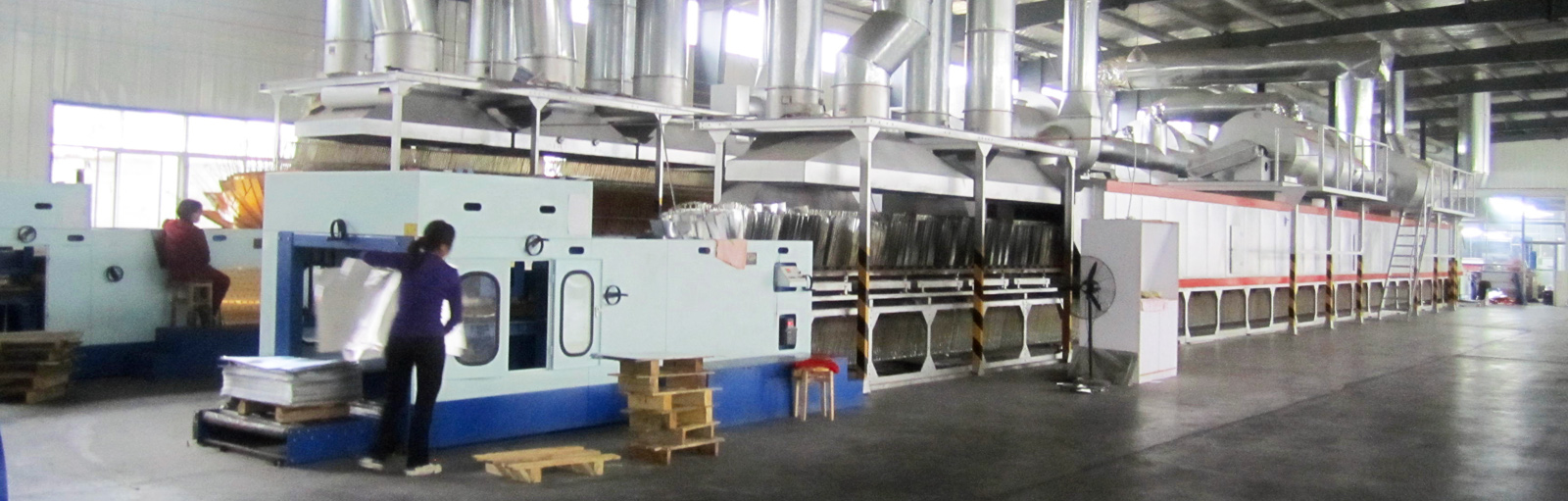
We manufacture 8011 aluminum closure strip through an integrated process designed for packaging-grade consistency. The process begins with carefully selected primary aluminum and alloying materials. Melt chemistry is analyzed before casting to ensure the required alloy range and cleanliness level.
After casting, the material is homogenized and hot rolled to establish a suitable microstructure for subsequent cold rolling. Cold rolling is then conducted through controlled reduction schedules. This stage has a substantial influence on thickness accuracy, surface finish, and final texture development.
Intermediate annealing may be applied depending on the target thickness and final temper. The final annealing process is particularly important for deep-drawing aluminum strip. It determines the balance between strength and ductility and contributes to low earing behavior. We maintain controlled furnace temperature profiles and coil soaking conditions to achieve uniform properties from coil head to tail and from edge to center.
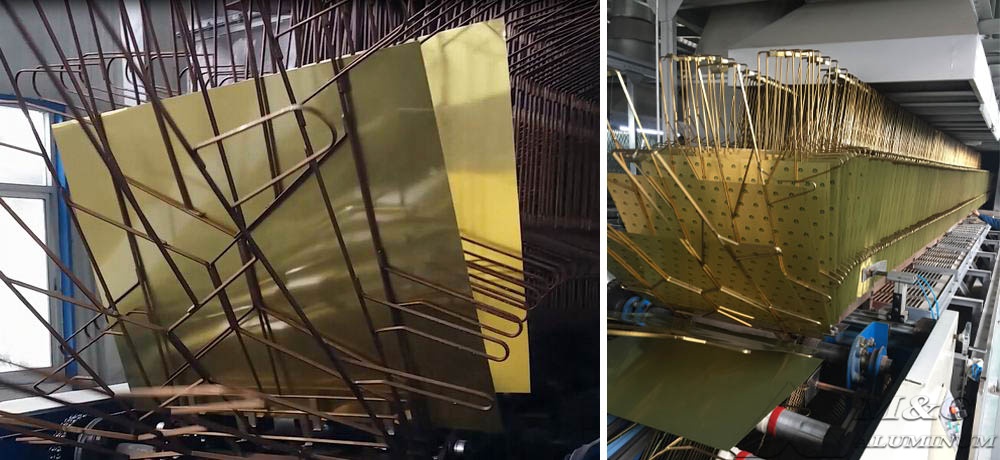
After annealing, coils may be leveled, slit to required widths, and inspected before packing. For pre-painted or printed aluminum closure sheet, the base strip is further processed through cleaning, chemical pretreatment, coating, curing, and, where required, printing operations.
Surface Requirements for Printed and Coated ROPP Caps
ROPP tamper-evident caps often serve both a functional and branding role. The aluminum surface must therefore support consistent adhesion of base coats, color coatings, inks, varnishes, and protective overcoats. Surface defects can become highly visible after printing, embossing, or bright-color decoration.
For bottle cap aluminum sheet, we control surface quality to minimize issues such as oil marks, scratches, roll marks, pinholes, edge damage, and localized discoloration. The appropriate surface condition depends on whether the customer will apply coating in-house or purchase pre-coated aluminum closure sheet.
When supplying substrate for coating, we provide a clean and uniform mill-finish surface suitable for standard pretreatment systems. When supplying coated material, coating weight, curing condition, adhesion, color consistency, and solvent resistance are checked according to the agreed technical specification. The reverse side can also be prepared for lubricant application or compatibility with cap-lining operations.
Performance During ROPP Cap Manufacturing
A well-produced 8011 low-earring aluminum strip contributes to stable performance across the main ROPP cap manufacturing stages.
Blanking and Cup Drawing
Uniform thickness and controlled mechanical properties help maintain stable blank diameter and cup height. Low earing reduces uneven rim formation and limits the need for excessive trimming.
Skirting and Thread Rolling
During skirt formation and thread rolling, the material must deform smoothly without localized cracking or wrinkling. Consistent annealing supports uniform response around the cap circumference.
Tamper-Evident Band Forming
The tamper band includes bridges that separate when the closure is opened. Aluminum strip must have enough ductility for bridge formation and enough structural consistency to maintain the intended break performance.
Decoration and Finishing
A smooth aluminum closure sheet surface improves coating uniformity and print appearance. Stable strip geometry also supports registration accuracy during high-speed decoration processes.
Quality Control and Inspection
Our quality control for 8011 aluminum strip covers incoming material, in-process production, finished coils, and shipment preparation. We use documented inspection procedures to verify the characteristics most relevant to deep-drawing closure production.
| Inspection Item | Control Purpose |
|---|---|
| Chemical composition | Confirms compliance with 8011 alloy requirements |
| Thickness measurement | Ensures uniform forming and cap dimensions |
| Width and edge inspection | Supports stable feeding and blanking |
| Tensile testing | Verifies strength and elongation consistency |
| Surface inspection | Identifies scratches, stains, roll marks, and other defects |
| Flatness and coil shape | Reduces feeding and printing problems |
| Earing evaluation | Confirms suitability for deep-drawn cap shells |
| Packaging inspection | Protects coil edges and surface during transport |
We also review application-specific requirements before production, including cap diameter, cap height, strip gauge, press speed, decoration method, lubrication condition, and required coil dimensions. This preparation helps align the aluminum strip with the actual conversion process rather than supplying a general material grade without closure-specific control.
Selecting the Correct Temper and Gauge
The suitable temper for ROPP cap material depends on the depth of draw, cap profile, thread configuration, and equipment design. O temper is generally preferred for demanding deep-drawing applications because it provides high ductility. H14, H16, or H18 material may be used for applications requiring a different balance of stiffness and formability, subject to cap design validation.
Gauge selection also requires practical consideration. Thinner material can reduce metal consumption and cap weight, but it may require tighter control of drawing conditions and handling. Thicker aluminum strip can provide greater rigidity, although it may increase forming load and material cost. Our technical team evaluates these factors with customers to define an appropriate 8011 aluminum strip specification for each ROPP closure program.
Conclusion
8011 low-earring deep-drawing aluminum strip is a reliable material solution for ROPP tamper-evident caps when alloy composition, rolling texture, annealing condition, surface quality, and dimensional tolerances are controlled as an integrated system. For cap manufacturers, the practical value lies in stable drawing, reduced earing, consistent thread formation, dependable tamper-band performance, and a surface prepared for coating and decoration.
As a manufacturer of bottle cap aluminum sheet and aluminum closure strip, we produce 8011 material according to the forming and finishing requirements of ROPP cap production. Our manufacturing focus is on repeatable coil quality, controlled low-earring performance, and technical specifications that support efficient closure conversion.


Applications

Related Articles
-
Advisory Message
Alloy Grade Thickness, Application, etc.
-
Quick Reply
Quick reply within 30 minutes
-
Getting Information
One-to-one design and customized production plan