- Address:Zhengzhou, Henan, China
- Mon-Fri (8am - 6pm)
- sales@alummc.com

Painted Aluminum Coil For Vial Seals
In pharmaceutical packaging, vial seals are small components with strict performance requirements. Their appearance must be clean and consistent, their forming behavior must be stable, and their material must support reliable sealing during high-speed cap production. As a manufacturer with long experience in bottle cap aluminum materials, we produce painted aluminum coil for vial seals with close control over alloy chemistry, rolling condition, surface cleanliness, coating adhesion, and dimensional consistency.
Painted aluminum coil for vial seals is typically supplied as pre-coated strip or coil for further stamping and forming into pharmaceutical caps and overseals. Compared with uncoated material, coated aluminum coil offers better decorative consistency, improved corrosion resistance, clearer color identification, and more efficient downstream processing. For pharmaceutical closure producers, this helps maintain process stability while meeting packaging standards for injectable products and laboratory vials.
What Is Painted Aluminum Coil for Vial Seals
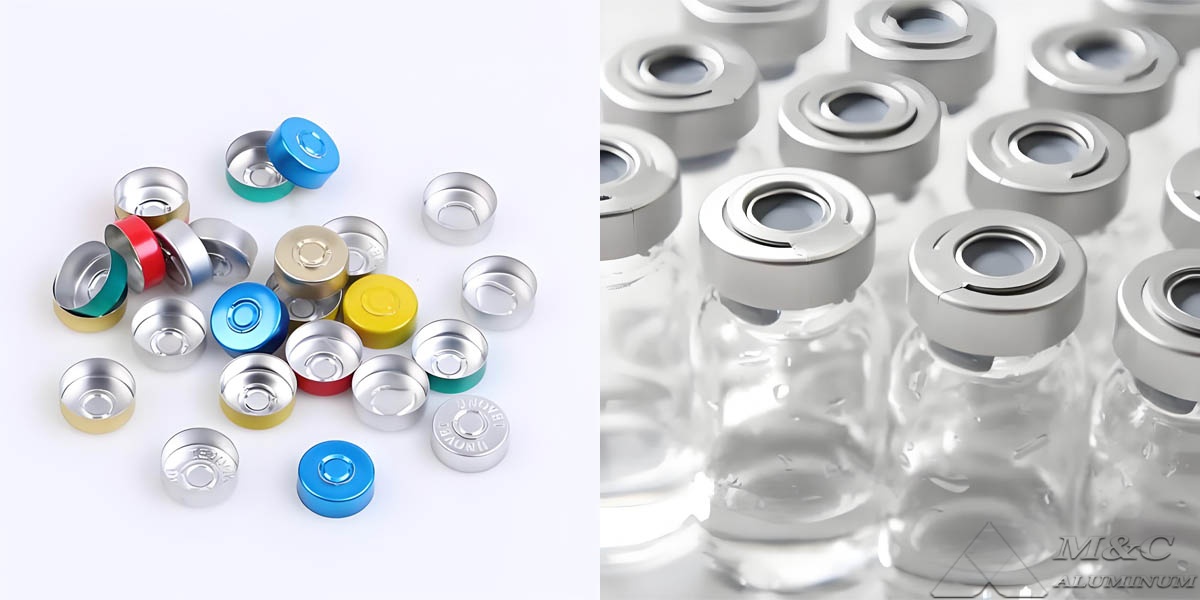
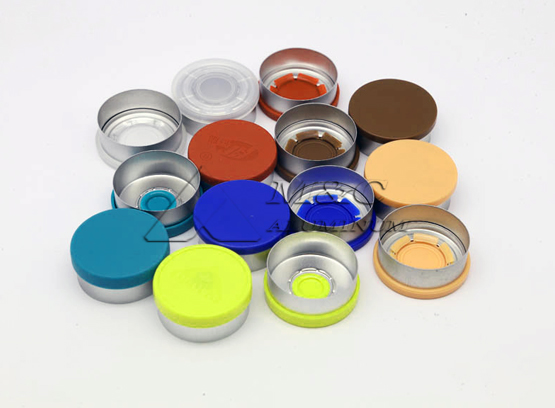
Painted aluminum coil for vial seals is an aluminum strip or coil that has been degreased, chemically pretreated, coated, and cured before being delivered to closure manufacturers. It is used to produce the outer metal shell of vial seals, commonly seen on antibiotic vials, injection bottles, infusion containers, and diagnostic reagent packaging.
In practical production, the material must satisfy several requirements at the same time:
Good drawability and stamping performance
Stable hardness for shell forming and curl formation
Uniform coating thickness and color
Strong paint adhesion after deformation
Clean surface suitable for pharmaceutical packaging applications
Tight thickness tolerance for high-speed feeding and tooling stability
The most commonly used base alloys are 8011 and 3105 aluminum alloy. Among them, 8011 aluminum coil for vial caps is widely used because of its good formability, suitable strength, and mature application record in pharmaceutical bottle cap production.
Why Painted Aluminum Coil Is Used for Vial Seals
Vial seals are not only functional but also part of packaging identification. In pharmaceutical production, different product lines often use different cap colors for specification control or brand distinction. Pre-painted aluminum coil helps vial seal manufacturers achieve this efficiently.
The main advantages of painted aluminum coil for vial seals include:
Consistent Decorative Quality
Color variation is easier to control on continuous coil coating lines than in separate batch painting after stamping. This is important for pharmaceutical packaging, where lot consistency is expected.
Better Surface Protection
The coating layer improves resistance to abrasion, humidity, and some processing-related contamination. During transport and storage, painted surfaces help preserve appearance and reduce minor surface damage.
Improved Production Efficiency
Closure producers can stamp directly from coated aluminum coil, avoiding an additional painting stage. This shortens process flow and improves manufacturing efficiency.
Clear Product Identification
Colored vial seals support product classification in hospitals, laboratories, and filling plants. Red, blue, green, silver, and gold are among the common specifications.
Common Alloys for Vial Seal Aluminum Coil
From a factory perspective, alloy selection affects not only mechanical properties but also rolling stability, coating performance, and final shell forming behavior.
8011 Aluminum Coil
8011 is the standard choice for many pharmaceutical closure applications. It offers a good balance of strength and elongation, and it performs well in shallow drawing and shell stamping. For painted aluminum coil for vial seals, 8011 aluminum coil is often supplied in H14, H16, or related tempers depending on cap structure and tooling design.
3105 Aluminum Closure sheet
3105 has good strength and coating adaptability. It is used in some closure applications where specific forming response or surface finish preferences are required. In practice, 3105 aluminum closure sheet is more common in certain cap types, but it can also be considered for vial seal structures under suitable process conditions.
Typical Technical Parameters
The following table shows common technical parameters for painted aluminum coil used in vial seal production. Actual values may be adjusted according to cap diameter, drawing depth, coating system, and customer line conditions.
| Item | Typical Range | Notes |
|---|---|---|
| Base alloy | 8011, 3105 | 8011 is widely used for pharmaceutical vial seals |
| Temper | H14, H16, H24 | Selected according to forming and strength requirements |
| Thickness | 0.17 mm - 0.25 mm | Common range for vial seal shell production |
| Width | 30 mm - 1000 mm | Narrow strip or wide coil available for slitting |
| Inner diameter | 150 mm, 300 mm, 405 mm, 505 mm | According to decoiling equipment |
| Outer diameter | Up to about 1500 mm | Depends on coil weight and line capability |
| Coating type | Polyester, epoxy-modified systems | Selected based on forming and end use requirements |
| Top coating thickness | 4 um - 8 um | Depends on color and performance target |
| Back coating thickness | 2 um - 5 um | For protection and processing stability |
| Gloss | Matt to high gloss | Customized according to appearance requirement |
| Color | Silver, blue, green, red, gold, custom | Color matching by approved standard |
| Tensile strength | Typically 130 - 200 MPa | Depends on alloy and temper |
| Elongation | Typically 2% - 8% | Related to thickness and temper |
| Surface quality | A side decorative, clean, no obvious defects | Suitable for cap shell stamping |
| Lubrication status | Dry or lightly lubricated | According to downstream tooling needs |
Manufacturing Process in Our Plant
As a manufacturer, we control painted aluminum coil for vial seals from melting and rolling to coating and final inspection. Stable quality depends on process continuity rather than only final testing.
1. Alloy and Ingot Control
The starting point is alloy composition control. Trace element balance affects grain structure, mechanical properties, and ear formation during stamping. For 8011 aluminum coil for vial caps, we keep composition within a controlled internal range to improve consistency from lot to lot.
2. Hot Rolling and Cold Rolling
After casting, the material goes through hot rolling and multiple cold rolling passes. At this stage, we control gauge precision, flatness, and surface condition. For vial seal aluminum coil, thickness uniformity is especially important because variation can affect shell height, curl shape, and fit with rubber stoppers.
3. Intermediate Annealing and Temper Adjustment
Mechanical properties are developed by rolling reduction and annealing sequence. If the material is too hard, cracking may occur during forming. If too soft, the shell may deform or lose dimensional stability. We therefore match temper to the customer's cap design and stamping process.
4. Surface Pretreatment
Before coating, the aluminum coil must be thoroughly cleaned and chemically pretreated. This step improves paint adhesion and corrosion resistance. Surface cleanliness is essential for painted aluminum coil used in pharmaceutical closures.
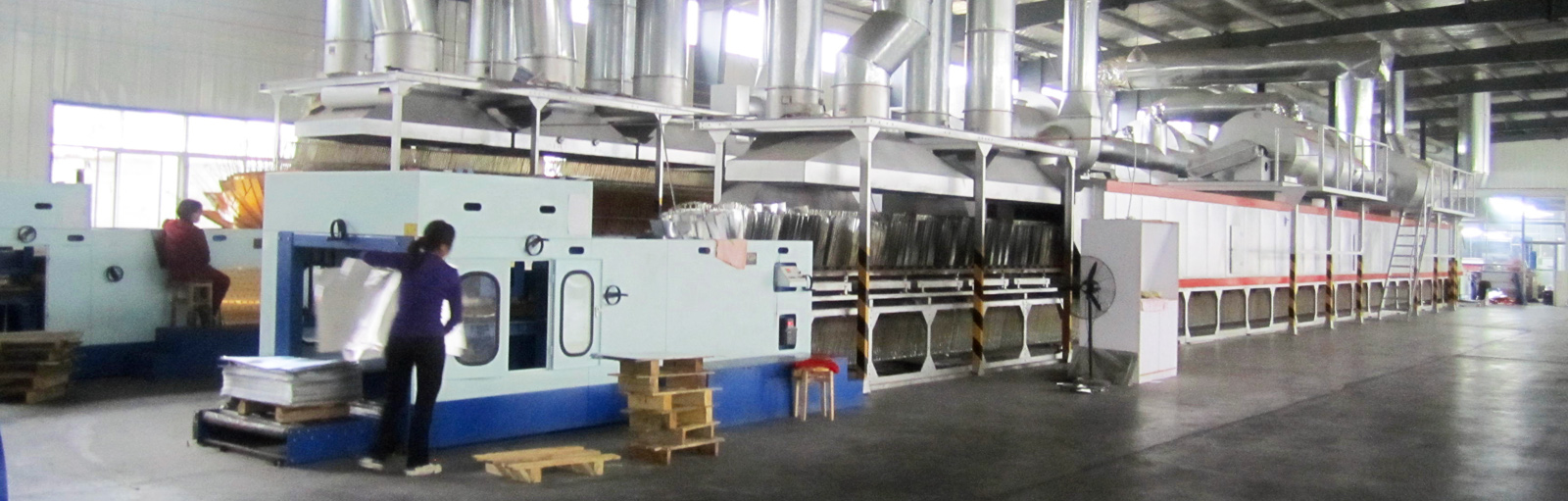
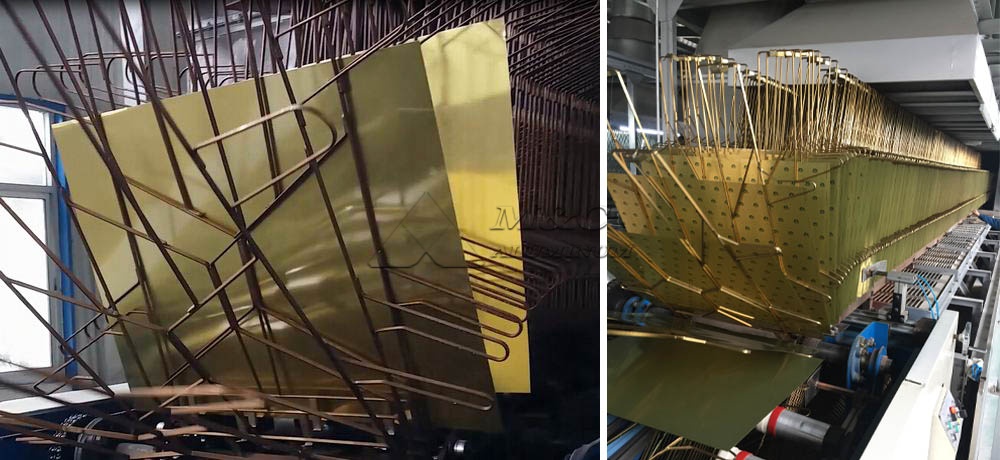
5. Coil Coating and Curing
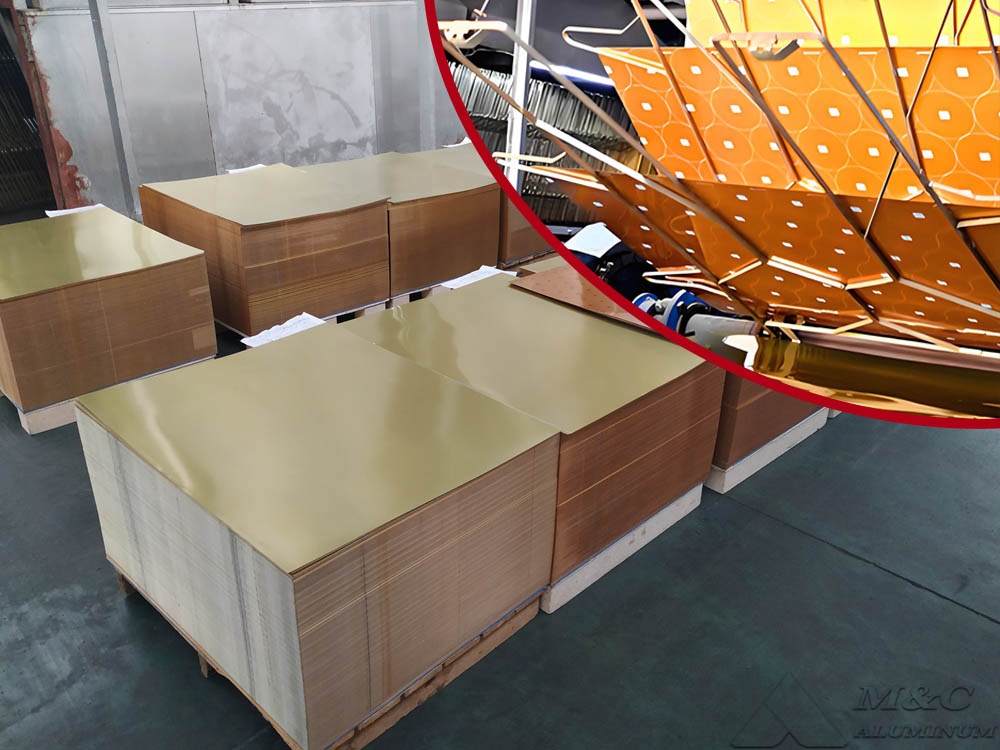
The pretreated coil passes through the coating line, where primer and finish coats are applied according to the required system. Oven curing parameters are controlled to achieve full film formation without over-baking. Coating flexibility is important because the painted layer must withstand subsequent stamping and curling.
6. Slitting, Inspection, and Packaging
After coating, the coil is slit to width if required, then inspected for color difference, adhesion, thickness, gloss, and visual defects. Packaging is designed to prevent edge damage, moisture exposure, and transport scratches.
Key Quality Control Points for Vial Seal Applications
Pharmaceutical packaging materials require more disciplined quality control than general decorative applications. In painted aluminum coil for vial seals, the following points are especially important.
Coating Adhesion After Forming
A painted surface may appear acceptable in flat coil condition but fail during cap stamping. We therefore evaluate coating adhesion not only on flat samples but also after simulated deformation.
Thickness and Width Stability
In high-speed closure lines, small dimensional variation can reduce feeding stability and increase die wear. Tight gauge control helps improve downstream productivity.
Surface Cleanliness
Oil residue, rolling marks, and embedded particles can affect coating appearance and stamping behavior. For pharmaceutical aluminum coil, a clean and uniform surface is a basic requirement.
Color Consistency
For vial seal manufacturers supplying regulated industries, color consistency is part of product control. We use standard color references and batch comparison procedures to reduce variation between production lots.
Flatness and Coil Winding Quality
Poor flatness or unstable winding tension can cause feeding issues during uncoiling and stamping. We monitor coil profile, edge condition, and winding quality before shipment.
How Painted Aluminum Coil Supports Vial Seal Manufacturing
In downstream processing, painted aluminum coil is usually punched into discs and then formed into cap shells. These shells are combined with plastic components and aluminum tear-off parts depending on the seal design. Material performance directly affects:
Disc blanking cleanliness
Drawing stability
Skirt and bridge formation
Tear-off opening performance
Fit with stopper and vial neck finish
Final cap appearance
For this reason, selecting vial seal aluminum coil is not only a matter of alloy designation. It also involves coating flexibility, temper suitability, and compatibility with specific tooling geometry.
Selection Considerations for Buyers
When sourcing painted aluminum coil for vial seals from a manufacturer, it is useful to confirm the following items in advance:
Alloy and temper required by the cap structure
Coil thickness tolerance and width tolerance
Required coating system and color standard
Gloss range and decorative side definition
Dry film thickness requirement
Stamping performance expectations
Cleanliness and packaging standard
Batch traceability and inspection documentation
From our production experience, early communication between coil manufacturer and closure producer reduces the risk of paint cracking, forming defects, and color inconsistency during mass production.
Industry Trend: Higher Consistency and Cleaner Surfaces
The pharmaceutical packaging sector is gradually moving toward tighter process control, more stable appearance standards, and better traceability. For aluminum coil manufacturers, this means not only supplying basic coated material, but also improving process capability in these areas:
More precise gauge control for thinner materials
Better coating flexibility for complex vial seal designs
Lower surface contamination risk
Improved lot-to-lot consistency in color and mechanical properties
Packaging solutions that better protect pre-painted coil during export transport
As demand grows for injectable drug packaging and diagnostic products, painted aluminum coil for vial seals remains an important specialized product in the aluminum closure material segment.
Conclusion
Painted aluminum coil for vial seals is a technical material that combines base alloy performance, rolling precision, surface pretreatment, and coating reliability. In our manufacturing practice, the quality of this product depends on coordinated control across the full process chain, from alloy design to final packaging.
For pharmaceutical closure producers, stable painted aluminum coil helps achieve efficient stamping, consistent cap appearance, and reliable sealing component performance. Among the available options, 8011 aluminum coil for vial caps remains a widely adopted choice, while 3105 may also be used in selected structures. The most suitable specification should be confirmed according to forming process, cap design, and coating requirement.
As a factory focused on bottle cap aluminum materials, we regard painted aluminum coil for vial seals as a product where consistency matters as much as specification. That is the basis for long-term supply to pharmaceutical packaging manufacturers.


Applications
-
Advisory Message
Alloy Grade Thickness, Application, etc.
-
Quick Reply
Quick reply within 30 minutes
-
Getting Information
One-to-one design and customized production plan