- Address:Zhengzhou, Henan, China
- Mon-Fri (8am - 6pm)
- sales@alummc.com

8011 H14 Gold-Colored Aluminum Sheet for ROPP Caps
8011 H14 gold-colored aluminum sheet is a widely used material for manufacturing roll-on pilfer-proof closures, commonly known as ROPP caps. These closures are applied to wine, spirits, olive oil, vinegar, pharmaceutical products, and selected non-carbonated beverages. The material must provide consistent deep-drawing performance, controlled strength, smooth surface quality, and reliable compatibility with decorative coatings and protective lacquers.
As a manufacturer of bottle cap aluminum sheet, we produce 8011 H14 aluminum sheet with process controls designed for closure conversion. Our production focuses on alloy chemistry, rolling accuracy, mechanical-property stability, surface cleanliness, and coating suitability. For gold-colored ROPP caps, the aluminum substrate must support a uniform decorative finish while maintaining the ductility required for shell formation, threading, knurling, and pilfer-proof band shaping.
Why 8011 H14 Aluminum Is Used for ROPP Caps
8011 is an aluminum alloy in the 8xxx series, primarily alloyed with iron and silicon. It is valued in the closure industry for its balanced combination of formability, moderate strength, corrosion resistance, and surface quality. In the H14 temper, the material has undergone strain hardening to a half-hard condition. This temper provides greater dimensional stability than softer tempers while retaining sufficient ductility for the multi-stage forming operations used in ROPP cap production.
During cap manufacturing, aluminum sheet is blanked into circular shells and then formed into a cylindrical skirt. The cap is subsequently threaded onto the bottle finish during capping. The lower pilfer-proof band is designed to separate when the cap is first opened. Material inconsistency can cause cracking, uneven skirt formation, poor thread definition, or irregular bridge performance. Therefore, the 8011 H14 aluminum sheet used for ROPP caps requires tightly controlled elongation, tensile strength, thickness tolerance, and surface condition.
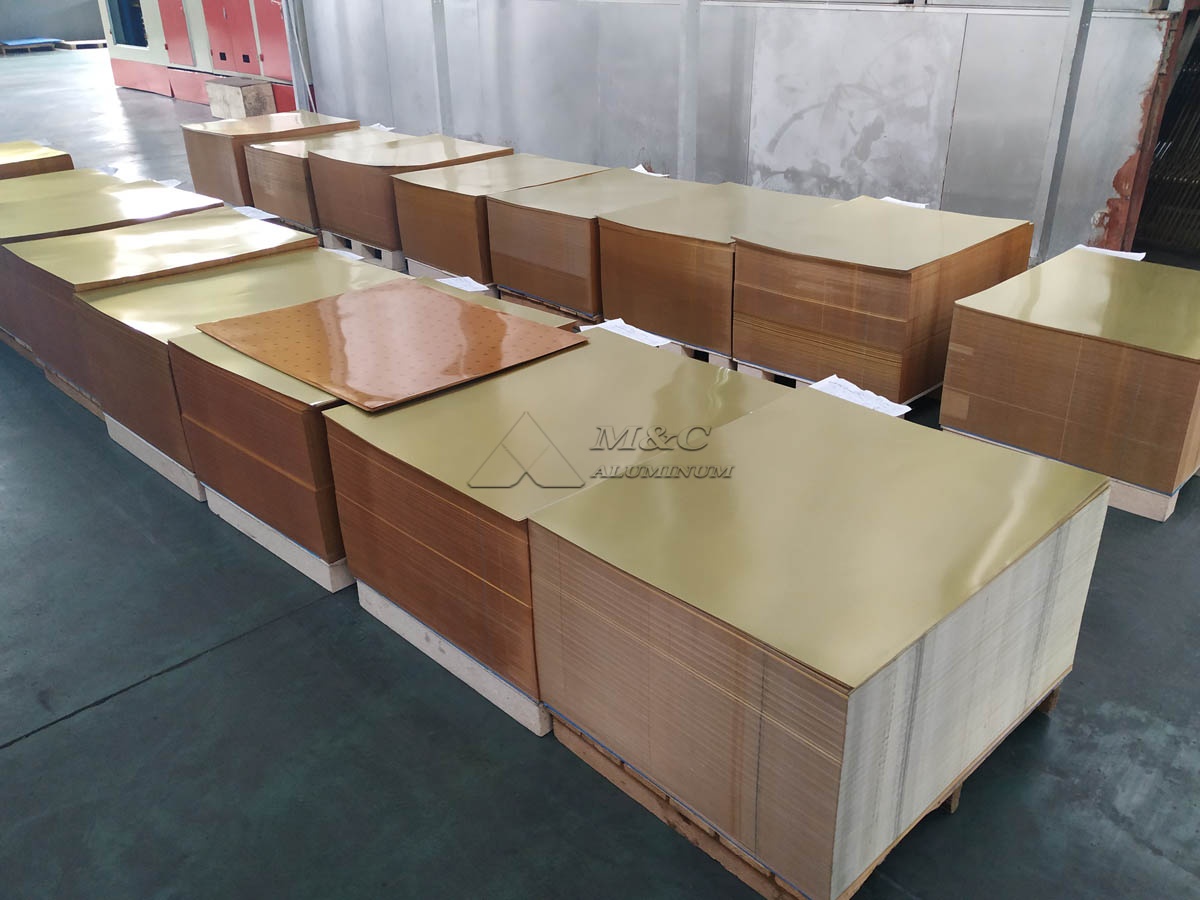
Gold-colored aluminum sheet is generally supplied as a coated closure stock or prepared substrate for the customer's coating line. The gold appearance may be achieved with a base coat, metallic printing ink, protective varnish, or a combination of decorative coating layers. The aluminum substrate must have a smooth, clean, and uniform surface to ensure color consistency and stable adhesion.
Typical Technical Parameters
The following table presents typical specifications for 8011 H14 aluminum closure sheet used for gold-colored ROPP caps. Final values can be adjusted according to cap diameter, cap height, decoration process, and the converter's forming equipment.
| Item | Typical Specification | Notes |
|---|---|---|
| Alloy | AA 8011 | Aluminum-iron-silicon alloy for closure applications |
| Temper | H14 | Half-hard strain-hardened condition |
| Thickness | 0.20-0.28 mm | Common range for wine and spirits ROPP caps |
| Width | 600-1,300 mm | Selected according to printing and slitting layout |
| Coil inner diameter | 505 mm or 610 mm | Subject to customer equipment requirements |
| Coil outer diameter | Up to 1,800 mm | Controlled by weight and handling conditions |
| Coil weight | 2-8 metric tons | Customizable for production efficiency |
| Tensile strength | Approximately 125-155 MPa | Depending on thickness and agreed specification |
| Yield strength | Approximately 105-140 MPa | Verified according to applicable testing method |
| Elongation | Typically 2-8% | Balanced for forming and shape retention |
| Surface | Mill finish, degreased, coated, or lacquered | Available for different decoration routes |
| Color | Gold or customized metallic shade | Determined by coating system and approved sample |
| Flatness | Controlled for printing and conversion | Important for stable feeding and registration |
Manufacturing Process for 8011 H14 Aluminum Closure Sheet
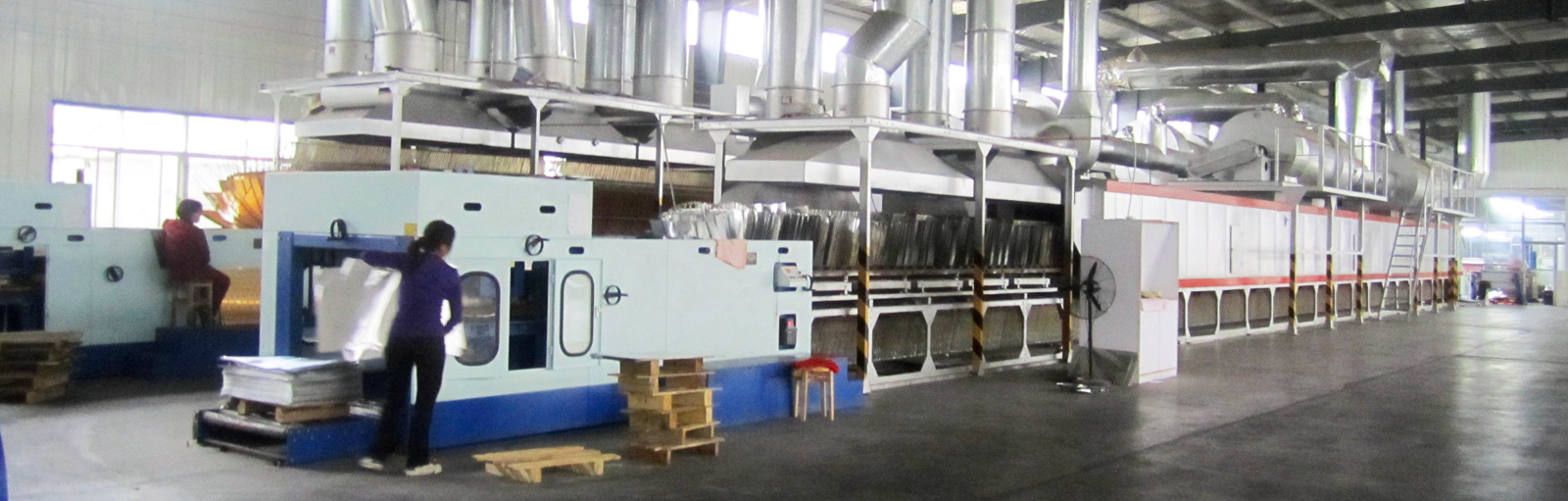
Our manufacturing process begins with controlled alloy preparation. The chemical composition of 8011 aluminum is monitored to maintain stable rolling behavior and final mechanical properties. Excessive variation in iron and silicon content can influence intermetallic particle distribution, surface appearance, and formability. For bottle cap aluminum sheet, composition control is not only a metallurgical requirement but also a practical condition for smooth downstream conversion.
After casting, the aluminum slab is homogenized to improve structural uniformity before hot rolling. Hot rolling reduces the slab to an intermediate gauge while establishing a suitable metallurgical structure for subsequent cold rolling. Process parameters such as rolling reduction, temperature control, lubrication, and coil handling are closely managed to limit surface defects and gauge variation.
Cold rolling brings the material to the specified thickness range for ROPP caps. Thickness uniformity is particularly important because even small variations can affect blanking consistency, shell depth, thread forming, and closure torque behavior. We use controlled rolling schedules and online measurement systems to maintain stable thickness across the coil width and length.
The final H14 temper is obtained through a defined cold reduction route. The aim is to achieve the required strength without sacrificing the ductility necessary for cap forming. We verify mechanical properties from representative coil samples and review material performance against the agreed application requirements.
Before coating or shipment as bare closure stock, the surface is cleaned and inspected. A clean surface reduces the risk of coating defects, pinholes, adhesion loss, and inconsistent metallic appearance. For gold-colored aluminum sheet, surface preparation is especially important because metallic colors can reveal minor visual irregularities more readily than opaque coatings.
Gold Decorative Coating and Surface Requirements
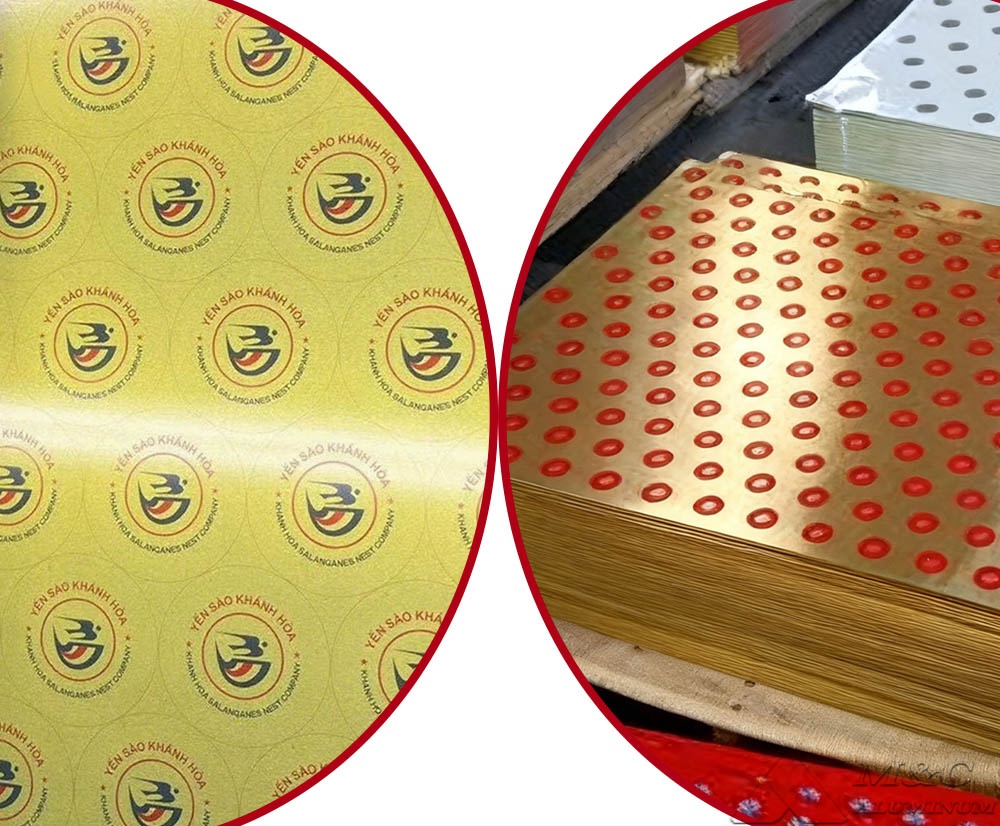
The gold finish on ROPP caps serves both decorative and brand-identification functions. Wine and premium spirits closures often use gold tones to complement label design, glass color, or product positioning. However, the appearance of a gold-colored aluminum sheet must remain consistent after forming, printing, embossing, and application onto the bottle.
Depending on the closure design, the coating system may include a primer, a gold base coat, decorative printing, overprint varnish, and an internal protective lacquer. The outer coating must tolerate deformation during shell forming without excessive cracking, whitening, or loss of gloss. The internal lacquer must be selected according to the filled product and closure liner system, particularly for products containing alcohol, oils, acids, or volatile flavor compounds.
As a closure sheet manufacturer, we evaluate the substrate characteristics that affect coating performance, including surface roughness, cleanliness, residual rolling oil, and coil flatness. Where pre-coated material is required, coating color and gloss are matched against approved reference samples. Color control can include visual inspection under standard lighting conditions and instrumental comparison when specified by the customer.
Performance During ROPP Cap Conversion
ROPP cap production places several demands on 8011 H14 aluminum sheet. The material must feed smoothly through slitting, printing, blanking, shell pressing, and cap-forming equipment. Good flatness and stable coil shape help maintain reliable registration during decoration and minimize interruptions during automated processing.
During shell forming, the aluminum must withstand deformation around the cap shoulder and skirt without edge cracking. During capping, the cap is rolled onto the bottle finish, creating threads and a tamper-evident pilfer-proof band. The H14 temper helps the cap retain the formed thread profile while allowing controlled deformation during application.
Key performance requirements for ROPP cap material include:
Stable thickness for uniform shell dimensions.
Adequate elongation for drawing and skirt formation.
Controlled hardness for thread definition and cap rigidity.
Clean surface for printing, coating, and lacquer adhesion.
Low defect level to reduce rejection during high-speed conversion.
Uniform gold color after printing, varnishing, and forming.
Suitable compatibility with food-contact or product-contact coating systems.
Quality Control for Bottle Cap Aluminum Sheet
Quality control is integrated throughout our production of 8011 H14 aluminum sheet. Incoming materials, cast slabs, hot-rolled coils, cold-rolled coils, and finished closure sheet are inspected according to production specifications and customer requirements.
For each production batch, we monitor key characteristics such as thickness, width, coil geometry, mechanical properties, surface condition, and edge quality. Surface inspection is essential because scratches, oil marks, roll impressions, inclusions, and dents may become more visible after gold coating or metallic printing. Edge condition is also controlled to support stable slitting and reduce the risk of defects during blanking.
For coated gold-colored aluminum sheet, additional inspection can include coating weight, adhesion, gloss, color difference, solvent resistance, cure condition, and forming performance. Cross-hatch adhesion testing, bend testing, and simulated forming tests help confirm that the coating system remains intact during cap manufacture.
Selecting the Right Specification
The optimum 8011 H14 aluminum sheet specification depends on the final ROPP cap design. Smaller closures for spirits or olive oil may use a different thickness from larger wine closures. Caps with deep embossing, extensive printing, or complex pilfer-proof bands may require adjusted mechanical properties or coating flexibility.
When defining a material specification, we recommend considering cap diameter, shell height, bottle finish, forming method, printing process, coating system, closure liner, and end-product contents. A material selected only by thickness may not provide the most stable conversion result. The alloy temper, surface treatment, coil geometry, and coating compatibility should be evaluated as one system.
Conclusion
8011 H14 gold-colored aluminum sheet for ROPP caps combines the forming capability required for roll-on closure production with the surface quality needed for premium decorative finishes. Its balanced strength and ductility make it suitable for wine, spirits, edible oil, vinegar, and other packaged products using aluminum pilfer-proof closures.
Through controlled alloy preparation, precision rolling, temper management, surface inspection, and coating compatibility evaluation, we manufacture aluminum closure sheet that supports consistent cap conversion and reliable finished-closure performance. For gold-colored ROPP caps, stable substrate quality is the foundation for uniform appearance, secure application, and dependable tamper-evident functionality.


Applications

Related Articles
- 8011 Aluminum Coil for ROPP Pilfer-Proof Caps - Low Earing, Food-Grade
- 8011-H14 and 3003-H16 Aluminum Sheets for Tamper-Proof Caps
- ROPP Aluminum Foil Cap 8011
- What kind of aluminum alloy is the aluminum alloy bottle cap
- Beer bottle cap material aluminum sheet
- 0.5 mm 8011 H14 Aluminum Sheet for Bottle Caps, Non-Toxic
-
Advisory Message
Alloy Grade Thickness, Application, etc.
-
Quick Reply
Quick reply within 30 minutes
-
Getting Information
One-to-one design and customized production plan